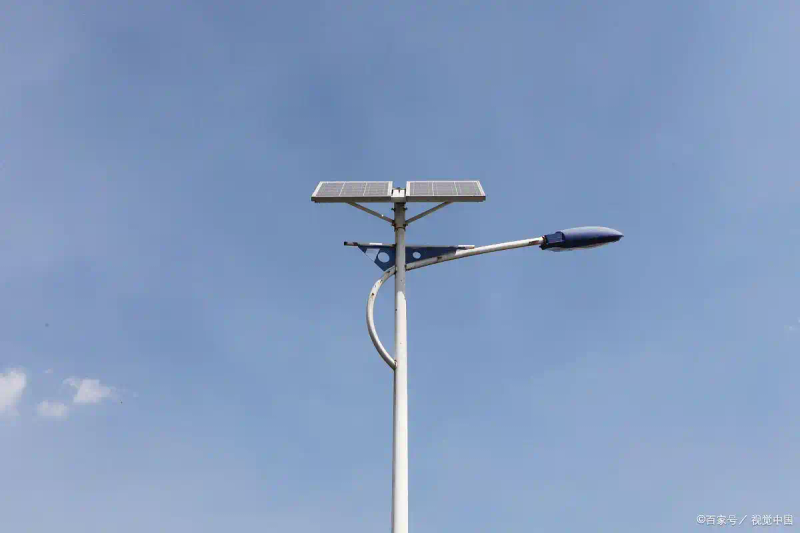
Solar street lights, as an important component of modern urban and rural lighting, are widely welcomed with their environmentally friendly and energy-efficient features. However, as a result of long-term exposure to the outdoor environment, solar street lights inevitably encounter various failures. This paper will provide a detailed description of the diagnostic and maintenance methods used for the frequent malfunctions of solar street lights and will help to improve the maintenance of this green lighting facility。
# i, frequent failures of solar street lights and diagnosis
# # 1. The lights are not on
Unlighting is one of the most common failures of solar street lamps. This failure may be caused by a number of causes, including damage to the controller, insufficient battery voltage and failure of the battery plate to generate electricity。
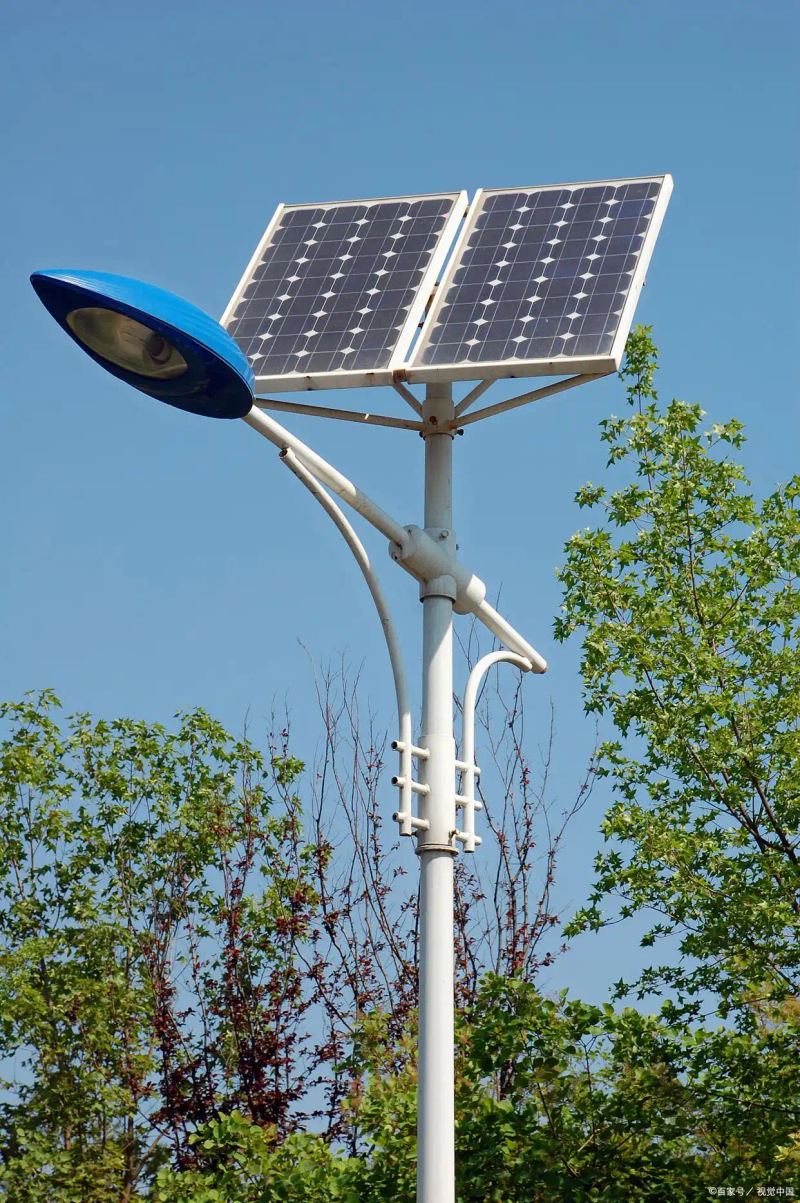
First, check whether the controller is watered or otherwise physically damaged. The controllers are usually installed inside the lampposts and may lead to short circuits if rain intrusion occurs. If the controller looks good, the battery voltage should then be measured. In the case of a 12v solar street light system, if the battery's voltage is below 10. 8 v, this means that the battery is no longer capable of saving electricity and needs to be replaced. In addition, it is necessary to check whether the panels are working properly and whether there is voltage and current output. If there is no output of the plate, it may be damaged and new panels need to be replaced。
## 2. Lights flashing
Light flashing is usually caused by poor line contact, battery loss or reduced storage。
First, check the robustness of the line connection, particularly between the battery and the controller, the controller and the light source. If loose or corrosive circuits are found, they should be replaced or repaired immediately. If the lines are well connected, but the problem remains, it may be that the storage of the batteries can be reduced or damaged. At this point, an attempt could be made to replace new batteries to see if the problem could be solved。
3. Short lights
Short lights may be activated due to insufficient battery storage capacity or continuous rainy weather。
If the problem of short-lived lighting occurs after consecutive rainy days, it is usually caused by a decrease in the battery storage capacity. Batteries with greater power storage capacity can be replaced. If the rainy weather lasts for a short period of time, but the lights are still short, it may be that the battery itself has a quality problem or is ageing and that it needs to be replaced. In addition, solar panels should be checked for being shielded by dust, leaves, etc., to ensure that the panels receive adequate sunlight and increase the efficiency of power generation。
## 4. The light is not bright enough
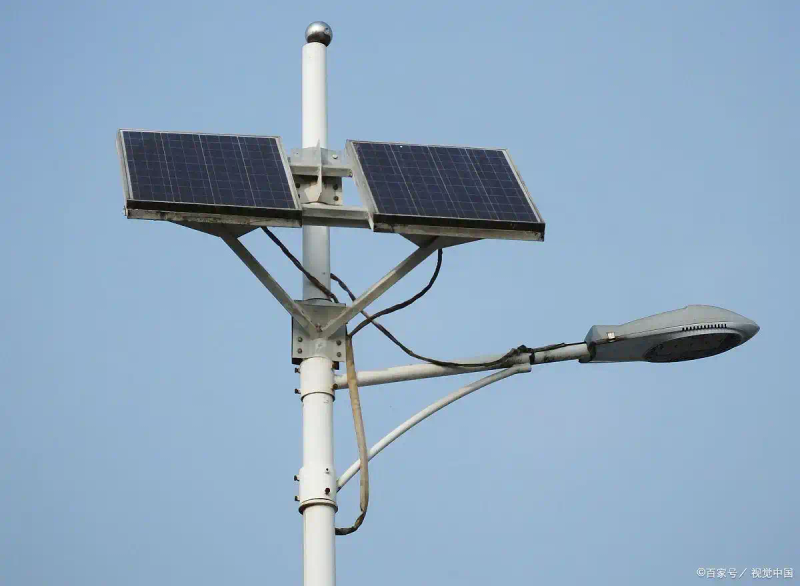
When solar street lamps are used as a point-formulated led light source, the lack of light may have been caused by welding or damage to led lamps。
First, check if all led lamps on the light source module are lit. If some of the lamps are found not to be on, they may be welded or damaged. At this point, an attempt may be made to re-weld a weld or replace a damaged lamp. If the problem remains, the entire light source module may need to be replaced。
# # # # ii, solar street lights maintenance steps
###1. Securely shut down power
It is imperative that the power supply of solar street lights be shut down before any maintenance work is undertaken to ensure safety. The power can be shut down by disconnecting the battery。
## 2. Check controller
The controller is one of the core components of the solar street light system and is responsible for the control of the light source switch and brightness regulation. First, check if the controller has visible physical damage or water entry traces. If the controller is damaged, a new controller needs to be replaced. If the controller looks well, it is possible to further check whether the controller's endpoint is loose or corrosive。
3. Measurement of battery voltage
The battery is a storage component of a solar street light system, whose state of voltage directly affects the time and stability of the light. The battery charger is used to measure the voltage of the battery if the voltage is below 80% of the rated voltage (e. G., 12v battery voltage is below 10. 8 v), indicating that the battery is no longer capable of saving efficiently and new batteries need to be replaced。
Check the batteries board
Battery panels are part of the electricity generation of solar roadlight systems, whose efficiency directly affects the lightness and stability of roadlights. First, check whether the plate surface is clean and covered by dust, leaves, etc. If the surface of the plate is dirty, the surface of the plate can be cleaned with a soft brush or light clean cloth. If the plate surface is clean but unable to generate electricity, it may be damaged inside the plate or poorly connected to the line, which requires further inspection and repair。
###5 replace failed parts
Based on the previous diagnosis, replacement of damaged controls, batteries or panels, etc. When replacing components, it is important to select components with the same specifications and models as the original component to ensure compatibility and stability of the system。
Reconnection
Reconnection is required after replacement of the faulty components. When connecting lines, it is important to ensure that the end of the line is robust and loose, and to prevent short circuits and electrocution incidents by using insulation tape to wrap the exposed segments of the wire。
## 7. Test system
Upon completion of the maintenance, the system will need to be tested to ensure that street lights are properly lit and stable. The return to normal operation of the system can be judged by observing the hours and brightness of the street lights. If problems are found to remain during the testing process, they need to be further examined and repaired。
# # # # # # iii, daily maintenance of solar street lights
In order to extend the useful life of solar streetlights and reduce the incidence of failure, they need to be maintained on a regular basis. The following are some of the recommendations for daily maintenance:
Cleaning batteries board
Regular clean-up of dust and dirt on the surface of the panels ensures that the panels are fully capable of receiving sunlight and generating electricity efficiently. Soft brushes or clean cloths can be used to wipe the surface lightly and avoid the use of hard or corrosive cleaning agents。
###2 check the line connections
Periodically check whether the connection between the panels, controllers and batteries is robust and free of loose or corrosive phenomena. In the event that the line is found to be poorly connected or badly corroded, it should be replaced or repaired immediately。
###3 detection of battery power
Periodic monitoring of the battery's electrical state using an accumulator detector to ensure that the battery is capable of normal storage and provides stable voltage output. New batteries should be replaced in a timely manner if insufficient battery power or reduced capacity is found。
## 4. Check for light sources and lamps
Periodically check if all led lamps on the light source module are lighted and evenly lighted. If some of the lamps are found to be unlighted or insufficiently lighted, the damaged beads or the entire light source module should be replaced in a timely manner. At the same time, the lamps' casings are checked for intact, ensuring their waterproofness and safety。
5. Checking out the risk of malfunction
Solar street light systems are regularly screened thoroughly to detect and remove potential failures in a timely manner. The functioning of the system can be detected by observing the lighting of street lamps, measuring voltage and currents。
# four, closing remarks
Solar street lights, as a green, environmentally friendly lighting facility, play an increasingly important role in modern cities and villages. However, as a result of long-term exposure to the outdoor environment, solar street lights inevitably encounter various failures. As a result of this presentation, it is believed that there is a better understanding of the methods used to diagnose and maintain the frequent malfunctions of solar street lamps. In day-to-day use, we should regularly maintain and maintain solar street lights, detect and remove malfunctions in a timely manner, ensure that they are properly lit and provide a safe and comfortable lighting environment for people. At the same time, it is hoped that more people will be able to focus on and support green lighting and contribute to building beautiful, liveable cities and villages。