In modern and automated industries, there is an increasing demand for precision control and efficient operation of mechanical equipment. Among them, a combination of planetary speed-reducing machines and servers can effectively achieve stable and efficient power transmission. The server is capable of accurately controlling movement in accordance with instructions and applies to various precision mechanical equipment. This paper will therefore provide a detailed description of the principles, types and areas of application of the server, which will help you to understand this key technology. What is a server? The server is a high-precision, responsive electric machine that can accurately control the speed, location and twist according to instructions. It consists mainly of electrons, controllers (server drives) and feedback devices (e. G. Encoders or resolvers). It is capable of continuously adjusting its operational status to feedback mechanisms to ensure high precision and stability in the operation of mechanical equipment and is widely applied in such areas as industrial automation, electronic equipment and space technology。
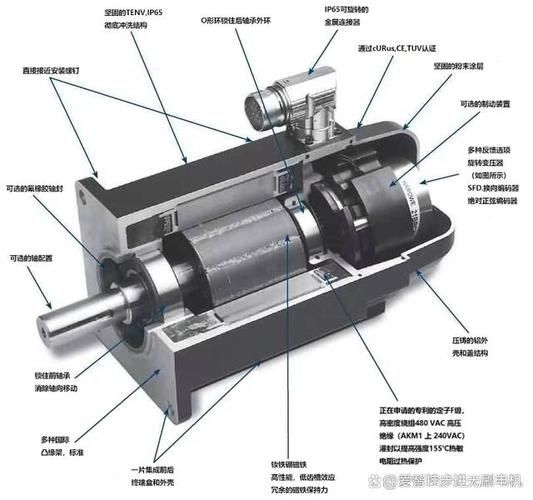
"extensive reading: what are the types of electric power? Useful, type, select mind! The working principles of the server service the generator function in the same way as those of the general exchange machine, which drives the rotation by input exchange generation magnetic field. When the controller sends a command, the drive regulates the current output and drives the motor to turn. At the same time, the encoder returns to the current state of operation of the feeder, such as speed and location, and compares the data transmission back to the controller to adjust the power to the speed and position of the command. This real-time feedback mechanism enables servers to respond quickly and maintain high stability。
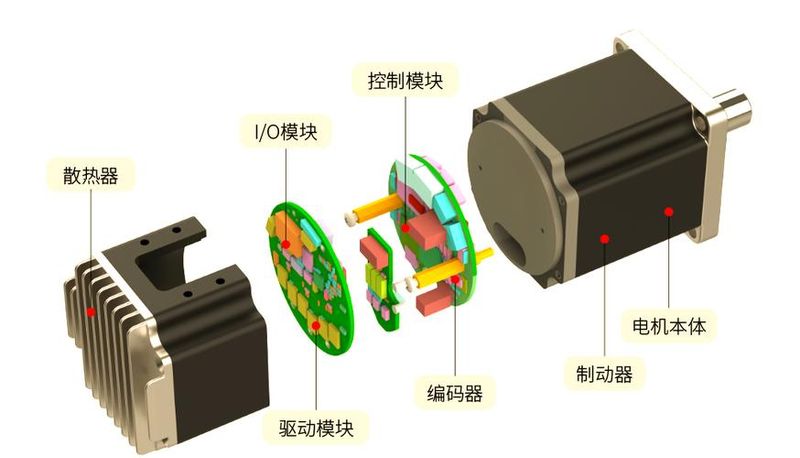
"extensive reading: what is a sensor? The principles, the types, the applications. The tectonic server of the server consists mainly of the following components: the type of server of the server can be divided into the following types of power supply and motor characteristics. Each type has unique characteristics that provide different operational efficiency and control dynamics to respond to specific application needs. Direct current servers use a direct current power drive, using an angle encoder and re-engineers to detect the physical mass of the power, such as the speed switch, the twist, etc., and the reuse controller will calculate back to the signal to achieve the output characteristics of the control direct flow servers. Direct-flow servers have high precision and rapid response features and are suitable for areas requiring precision motion control, such as electronic equipment, robots, drones, agv unmanned vehicles, amr autonomous mobile robots and medical equipment. The exchange servers are power-driven and can be controlled through voltage and frequency, thus achieving multiple control pathways. Their speed and location are highly accurate and precise. Communication servers are widely used and one of the most common and mainstream servers in current industrial automation and high-precision control applications. Available for robotics, numerical control machines and other applications requiring precision and variability. High durability and low maintenance costs. It operates smoothly and in large turn and applies to high-power applications such as industrial automation, cnc machines. Line-by-line servers are service-driven components that do not rotate and directly generate straight-line movement. It produces straight-line thrusts through electromagnetic drive, which, by virtue of being a direct-drive non-mechanical converter, is highly responsive and speed-reducing, makes rapid positioning easy and unrestricted and allows for high-speed, sophisticated straight-line motion control. For semiconductor manufacturing equipment, laser cutters, high-speed positioning platforms in cnc processors, medical automated detection and laboratory equipment, etc。
Comparison of common server types
Straight current server
Communication server
Line up the power
Sports type
Rotate motion
Rotate motion
Linear straight motion
Control mode
Pressure control, with retrofitting
Power and voltage double control, with precision code. Device
Direct driver control (no mechanical conversion) with precision back-to-control systems
Dynamic performance
Let's start fast, keep it simple and slow
It's wide-ranging, it's stable at high speed, and it's more powerful
No intermediate transmission, very dynamic, direct linear drive
Response time
Fast, but less than communication and straight-line
It's fast and stable. It's a good time to slow down
It's fast. It's high-speed precision
Application scope
Automatic doors, simple controls, small institutions
Industrial machinery equipment, automated production lines, robotics, precision equipment
Precision equipment (e. G. Semiconductor, laser processing, cnc workstation, testing platform, etc.)
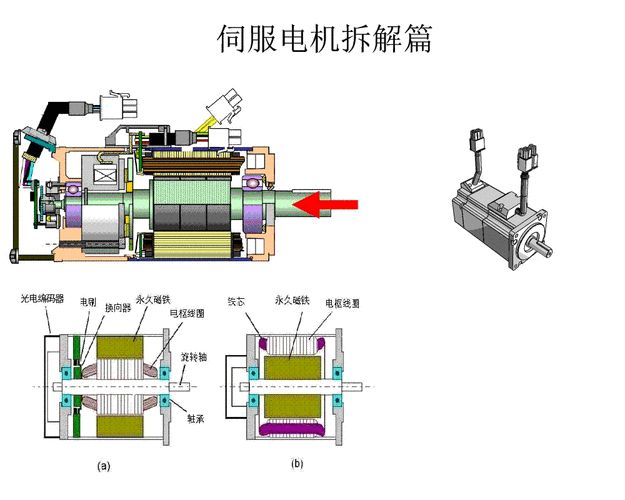
One of the greatest advantages of high-precision control of servers is their excellent high-precision control. Through a high-resolution encoder, the server system can provide real-time feedback on the actual position and speed of the rotor, creating closed circuit control. This allows the electrician not only to reach the target position with precision, but also to continuously correct the micro- and micro-level positioning accuracy. This control feature is well suited for applications requiring very high position and speed accuracy such as cnc processors, automatic assembly lines, robotic arms, etc. Rapid and dynamic response servers have an extremely rapid dynamic response capability to perform acceleration and deceleration in a very short period of time. This is because its internal inertia is small, its bandwidth is high, and the combination of a digital drive achieves a millisecond response time. Rapid and stable operational performance can be maintained even at a variable load or high-speed operation to ensure efficiency in production rhythm and motion control. This makes it particularly suitable for application in rhythm-sensitive automation equipment such as labelling, packaging, precision handling, etc. Through the closed circuit control mechanism, a stable high-server can automatically correct deviations and compensate for load changes under all working conditions, allowing the system to operate steadily and without the risk of speed drifting or concussion caused by load changes. In addition, modern server drives have multiple protection and adjustment features (e. G., add-ons automatic adjustment, suppression controls, etc.) that can effectively reduce vibration and resonance and enhance overall operational stability. It is an ideal option for a long, high-load, high-precision industrial application environment. Efficient servicing of electric power units is more efficient than conventional ones and can significantly reduce energy consumption. The key is that the server system usually uses closed circuit controls to adjust the power output to the actual load and avoid unnecessary energy waste. When the load is light or static, the current consumption of the server is significantly reduced. In addition, the design of servers is usually more focused on light quantification and reduction of internal frictions, further improving energy conversion efficiency. These characteristics enable servers to effectively reduce energy costs and meet energy-saving and environmentally sound requirements in applications that require long and continuous operation, such as automated production lines, mechanical arms and thermostatic control systems. Low-noise operating servers are designed to be energy-efficient, in particular long-magnetic-synchronous (pmsm) electric units, capable of operating efficiently within wide rotation speeds. Its energy conversion efficiency can generally range from 85 to 95 per cent, significantly reducing energy losses. Moreover, due to its precise control capabilities, excess movement and mechanical wear and tear have been avoided, further improving the performance of the system as a whole. This has significant energy efficiency and economic benefits for energy-cost-sensitive industries, such as large quantities of automated plants or electric vehicles. The use of electric power in the field of application is one of the core drivers of modern smart equipment, because of its high-precision, efficient and high-quality dynamical response and its extensive application to a wide range of fields such as industrial automation, electronics, space, medicine and logistics. Industrial automation equipment is in the field of industrial automation, and the servers are often used for such devices as cnc tools, automated production lines, machine arms, etc., to achieve precision positioning and rapid movement. To increase output twist and control accuracy, the server is often equipped with a planetary decelerator. Speed-reducing machines reduce the speed of electrics and increase output rectangles through gear gear sets, with structural compactness, high transmission efficiency and small back gaps, magnify the output rectangular of the servers and improve load stability, and are indispensable transfer components for high load and high accuracy applications. Semiconductor and electronic devices serve electric machines in semiconductor and electronic processes, which are often used in high-precision processes such as crystal round handling, photo mask pairing, ic sealing, smt stickers, etc. Because of the high level of location, velocity and vibration control requirements of these applications, the high resolution feedback and real-time compensation capabilities of the servers that effectively ensure the stable operation of the equipment within the micro-level are key drivers for high-speed high-density electronic manufacturing. Key components of space technology systems, such as attitude control, landing gear collection, radar rotation platforms, etc., can be seen in the servos. Its high reliability, precision control and resilience ensure the stable operation of key components during flight. In particular, in applications such as drones, satellite adjustment modules and space mechanics, the server needs to remain motorly accurate in extreme environments and is an indispensable driving core of space control. Medical equipment is used in medical equipment and the server is used extensively in systems such as surgical mechanical arm, electric bed, examination counter, x-ray and mri locator. Its low noise, smoothness and high accuracy positioning properties help to improve the comfort and accuracy of medical operations. The server system is also suitable for micro-surgery or remote manipulation of medical devices to meet the dual needs of modern medicine for safety and precision control. Logistics transport servers are widely used for intelligent logistics equipment, such as agv unmanned vehicles, amr autonomous mobile robots, autoclips, sorting systems and delivery systems. The server drive provides precision speed and direction control, allowing vehicles to stabilize the shuttle storage environment and accurately dock. A combination of encoders and navigation modules allows for smart features such as autonomous shielding, path optimization, and significantly increases logistics efficiency and operational automation. In addition to the above-mentioned mainstream areas, servers are widely used in many high-technology or day-to-day automation equipment. For example, in the camera cloud and automatic focus systems, the server can achieve extremely smooth fine-tuning; in intelligent household electricity, such as electric curtains, coffee machines, silent and stable motion; and even in entertainment facilities, such as mechanical theatres, game equipment, simulation driving systems, the server plays a precise control role. As smart technologies become available, server systems will be further embedded in more civil and cross-cutting innovative applications. Considerations for the selection of servers need to be based on application needs assessment of key factors when selecting the servers to ensure systematic optimization and longer lifetime of the equipment. The following are some of the main considerations:
Determine the type of driver load (inertial load, linear load, change load, etc.). The maximum and continuous rectangular requirements are calculated to select the appropriate power to match the speed reduction machine. Motion trajectory and speed requirements
Ensure that the electrical power meets the required speed range and speed reduction characteristics. For sophisticated applications, such as cnc processing equipment, robotic joints, etc., high-dynamic response servers are selected. Control requirements and feedback systems
Select the position, speed or twist control mode according to the application requirement. Encoder resolution affects control accuracy, and appropriate feedback devices should be selected according to needs. Work environment adaptation
If operating in a high temperature, wet or dust environment, the protection level (e. G. Ip65) must be considered. Low noise and low vibration properties should be considered in medical or precision fields. Branding and after-sale services
Choose a brand with good reputation and technical support. Ensure that suppliers provide sound technical support, maintenance and software upgrade services. A combination of these factors helps to ensure optimal performance and increased reliability in specific applications. As the main connection between the server and the application end of the system, the wapc-reducing plant must ensure that, while transmitting the power, the planetary decelerator ensures maximum efficiency and minimizes the back gap and does not allow for additional noise or heat to affect the temperature of the system. It may also face harsh working conditions such as cold, corrosive, high temperature and high pressure washing. How to meet these requirements in a sophisticated design within this limited volume has been the subject of continued refinement by planetary speed-reducing machines. The wacs high-quality, high-performance planetary decelerators provide a mix of machine design and performance options. Connector panels, which apply to plant servos, can be installed directly for use, with a wide range of applications to provide the best power transfer solution for clients. Precision gears are designed and processed to ensure optimal precision density and wear tolerance, combining integrated planetary gear frames and output axes to provide a higher direction load, longer useful life and a minimum dent. The conclusion is that, in modern and automated industries, the need for precision control and efficient operation of mechanical equipment is increasing, and the servicing of electric power is a key component in achieving these objectives. A comprehensive consideration of load characteristics, control needs, environmental conditions and branding services ensures that the selected server system is applied to its maximum effectiveness. Among them, the server mixer with the planetary decelerator is the ideal combination to increase power transmission stability and output twists, especially for all types of high-precision, high-load equipment. This mix provides not only rapid response and efficiency, but also sustained and reliable motor control, providing a powerful kinetic and long-term competitive advantage for smart manufacturing and precision mechanical applications. If you have any needs or questions regarding the server with the planetary speed-reducing machine, you are welcome to contact us or to fill out our form online。