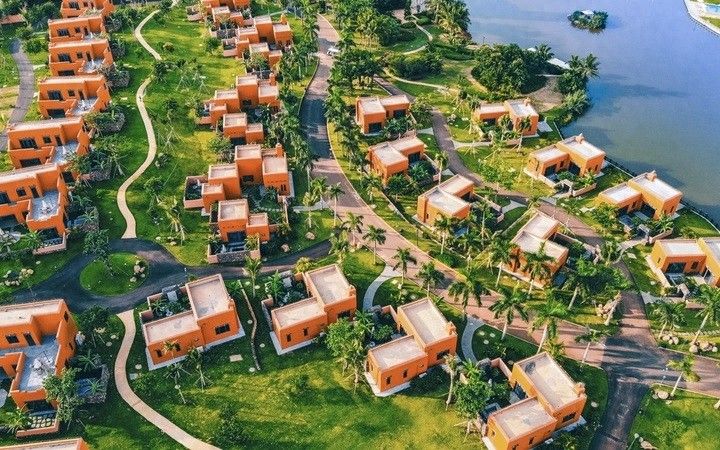
It's a lake house. Figure ic photo
A war is taking place from the north to the south。
According to the chinese news weekly, to date, policies have been put in place to promote the well-being of the tourist industry in the provinces and autonomous regions of hainan, yunnan, sichuan, guangxi and guizhou, as well as in the cities of sichuan climbing the flowers, henan was opened, guizhou, south-west province and guangdong. At one point, the “older” appeared to be the “sandings” in the eyes of all。
Objectively, the aim is to boost consumption and economic growth everywhere. So, "hot the old man" can, but one bee, it's over。
In the past, the most well-heard wars against human beings were directed mostly at young people, including graduates of higher education institutions, high-end talent, etc., who often represented innovation and the future. The introduction of preferential policies to enable them to live well is both an enabler of future development and an enabler of current industrial upgrading and consumption。
Today, the wave of robbery points to the elderly. According to statistics, by the end of 2025, the population over 60 years of age had reached 320 million, or 23 per cent of the total population. The silver wave is no longer a prophecy, but a social reality within reach. In this context, “old-age theft” is a big piece of cake that competes everywhere for a silver economy and an economic strategy for local governments to find new growth points in the context of ageing。
The elderly are, of course, more likely to be in the retirement group with a stable pension and a strong consumer capacity. In terms of income, the continued growth of old-age pensions, relative to the changes in jobs and competitive pressures in the workplace, makes them more affordable and less vulnerable to the economic environment. Compared to young people who require large amounts of education, employment packages and inputs, a healthy, old age group with stable pensions is considered a “low-cost, high-return” quality resource。
It is therefore particularly urgent in some places to “snatch the elderly” as if it were an open door. But the problems that lie behind the boom are equally worthy of attention. The first is the mismatch between supply and demand. At the sub-forum on ageing at the 2026 annual session of the forum, there is a set of data: the proportion of demand (15. 2 per cent) for migratory birds is much higher than the proportion of actual consumption (7. 5 per cent), the former about twice as high. This suggests that the rate of conversion of residential well-being is still low and the problem is the mismatch between supply and demand。
Rehabilitation is by no means a simple real estate development or tourism marketing, but an integrated industry that requires systematic support such as medical care, old age, transportation, community services, etc. As can be seen from the reported cases, in some places, large-scale housing projects have been carried out blindly, in the absence of any follow-up from the industrial base, medical support and public services, resulting in poor occupancy rates, which in the end have turned into a bad end. There are also areas that are over-dependent on the migratory population, with hot and cold seasons, inefficient resources and high pressure on public services. At the heart of these problems lies the misreading of “residence” as “residence-based”, while ignoring the word “residence” as the lifeline of the industry。
Secondly, homogenization is serious. There is still a large number of rest and recuperation products on the market, which remain at the level of “farm family music upgrades” or “simplified packaging of old-age apartments”, which are seriously disconnected from the complex needs of a new generation of older persons for cultural experience, health management and social life。
And then, blind expansion burys a long-term hazard. Investment in the rehabilitation industry is large, long-term and slow, and it is by no means simple building of houses and publicity to land. The bottom logic is fundamentally different from the pursuit of high-yielding real estate. However, a number of places and businesses have been caught up in the rush to achieve results in the midst of the fever of “popping for the elderly”。
As a result, in the face of this silver battle, local governments should not simply copy paste, but take the path of differentiation in combination with their own endowments。
For example, climate-friendly and ecologically liveable places, such as tourist resorts and healthy livelihoods; cities with abundant medical resources, which should focus on rehabilitation care, slow disease management; and places with distinctive folklore, where deep-scale cultural integration and experience can take place. Instead of building small towns and building houses blindly, they seek to locate them and avoid them, in order to avoid their internal rolls and form a sustainable development model。
Contributors / streamwater (mediaman)