Summary: the issue of improved repair of bridges has become a worldwide concern, and our country is developing new bridges at a faster pace, but the development of improved maintenance of bridges is lagging behind. The maintenance of bridges is currently a technical bottleneck for road maintenance, and systematic research and the development of bridge maintenance and repair technologies have become important topics for our road management. The author has therefore put forward his own thoughts on the status of the bridge, the principle of reinforcement, etc。
Keywords: bridges; reinforcement; maintenance
1. Status of improved repair of bridges
At present, the technology for the reinforcement of our bridges is not yet mature or systematic, and theoretical analysis remains at the theoretical level of new bridges. In 2004 the ministry of transport issued guidelines for the conservation of road bridges, jttg h112004 and august 2008, the ministry of transport issued guidelines for the design of road bridges and bridges for strengthening (jttg/tj22-2008) and the technical instructions for construction of road bridges and bridges for strengthening (jttg/tj23-2008), incorporating into the normative management the design and maintenance of bridges to classify damage and strengthen repair and repair techniques。
2. The principle of strengthening bridges
2. 1 depending on the structure and material characteristics of the different bridges, and subject to cost containment, different reinforced repair methods are used to replace or repair damaged bridge components, restore the bridge as a whole to its original design carrying capacity and ensure the useful life of its design。
2. 2 the actual load level and the remaining useful life of the reinforced bridge shall be determined for some bridges that cannot be restored to the original design carrying capacity but must continue to be used through reinforced maintenance。
2. 3 as a general rule, it is not appropriate to enhance the design carrying capacity of the original bridge by strengthening the bridge; nor is it appropriate to transform the structural stress system of the bridge by strengthening the bridge。
2. 4 materials used for bridge reinforcement and repair must be tested and certified by the national authority for testing, performance indicators to meet existing regulatory and design requirements。
3. Common technologies for bridge reinforcement
3. 1 proactive reinforcement technology
Methods: pre-resilience, structural change, etc., to change the behaviour of structural forces。
Characteristics: improved internal distribution of the bridge constant, increased intensity of the bridge, closed cracks and adapted deformations。
Factors involved: state of the built-in structure, construction process of the original bridge, strength of concrete, loss of pre-resilience, silo type, reinforced process, etc.: the method should be effective in changing the structural damage; the method failure can exacerbate the damage or even collapse。
3. 1. 1 implementation of in vitro response reinforcement
The reinforcement of the in vitro response power of the beams would improve the anti-curving cross-section of the beams, reduce the sorghum deviation, reduce the fractures of the beams in the lara region, and thus adjust the stress of the original structure, increase the stylization and resistance to fragmentation. Small increases in self-esteem have reduced the impact on the platform and base stress, saving the strengthening of the platform and base. Applicability: reinforcement work can be carried out without restrictions, either as a temporary reinforcement of the bridge through heavy vehicles or as a measure to increase carrying capacity permanently。
The construction process consists of: construction preparation to identify transfer blocks, drilling holes in anchor blocks, planting steel bars, pre-resilience holes, emulation of concrete piercings, zhang la, anchoring of beam repair and clean-up sites and completion of the inspection。
3. 1. 2 increased containment
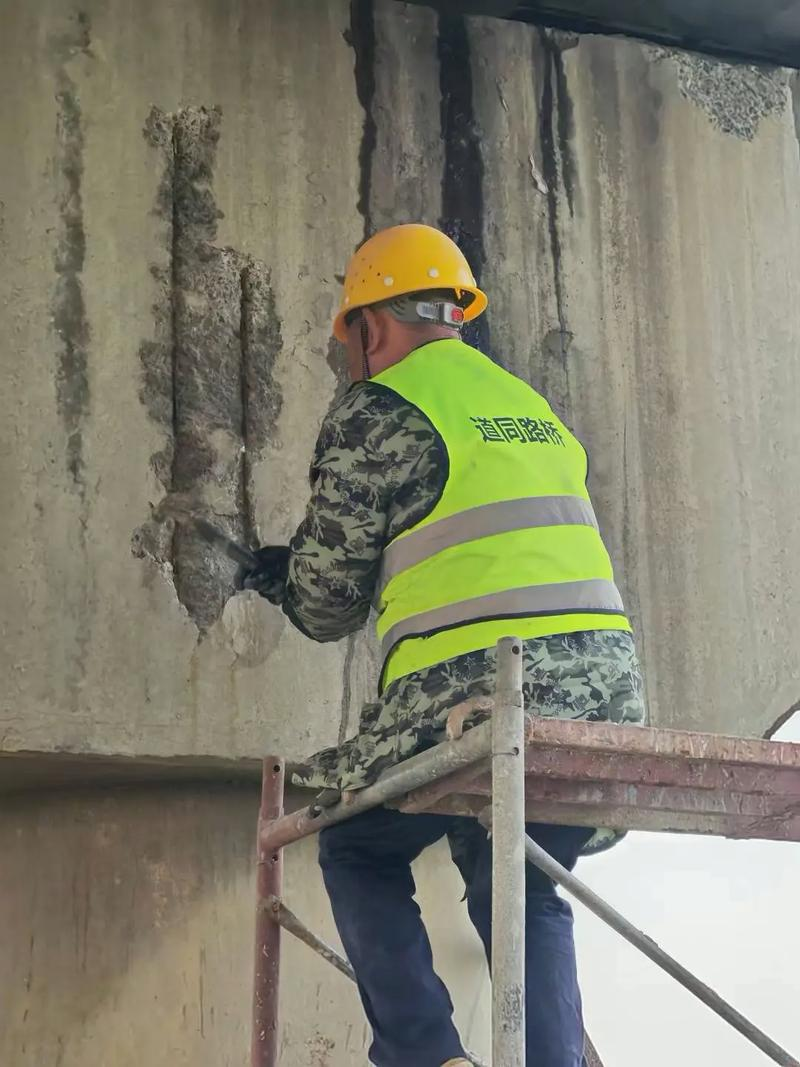
The reinforcement of the barrier will significantly improve the cracking of the t-brain bridge and prevent its spread。
Advantages: without prejudice to the cleanness of the bridge, there is little change to the original bridge landscape。
Applicability: the upper structure of the bridge, which is applicable to lower carrying capacity due to poor horizontal linkages。
The addition of additional partitions has only spread relatively concentrated loads, and there has been no substantial improvement in the overall capacity of bridges. The reinforcement is not obvious and needs to be carried out in conjunction with other methods。
The construction process consists of the construction of a frame to determine the location of the additional partitions, the cleaning of the concrete surface, the drilling of the pellets to detect drilling holes in the beam bars, the embedding of the bands to connect the bars, the binding of the bands to the emulsions, and the pre-planting of the mats, and the holding of the anchors。
3. 1. 3 increase in the surface of the bridge
The restoration of cracks by increasing the diameter of the steel band on the surface of the bridge is based on the design of a small diameter or grid on the original surface of the bridge, or a cracking condition due to the quality of construction. The method was all built on the bridge and required the interruption of at least half of the traffic。
Applicability: applies to a small traverse t-barrell or beam bridge that allows interruption of traffic。
Advantages and disadvantages: the bridge was blocked at the time of construction, and the bridge that did not allow interruptions was not suitable for use; it would add to the curves generated by the self-heaviness of the structure and the capacity of the structure would not increase significantly。
Construction process: traffic control shredding and dismantling of the original floor floors of the bridge, combined with the treatment of the grounding and laying of the surfaces of the bridge and the construction of the other floors of the bridge and the restoration of the reinforced structures。
3. 1. 4 increased cross-sections and reinforced bands
The purpose of increasing the capacity of bridges is to increase the effective height of the main beam's cross-section by generally increasing the size of the beam under or on its side and increasing the main band. Applicability: applies to situations where there is a higher net gap below the bridge, allowing for an increase in the height of the main beam。
Advantages and disadvantages: while the reinforcement is more visible, the construction process is complex and technically demanding. Bridges with net airspace restrictions below the bridge are not applicable。
Construction process: construction preparation to clear concrete surfaces and clear drill-drilling anchors and tie-up strong-stretched steel fences and refilled (jet-fired) reinforced concrete floors has been completed。
3. 1. 5 broadening the base
The main element of the broadening of the base is to increase the base area of stress to increase the carrying capacity of the bridge base and to prevent its further sinking. The reinforcement of the extended base has little impact on the original base and the construction is more secure. Construction process: construction preparation of basic concrete diseases and surface treatment of drilling holes, planting of additional anchor-laying and embedding of additional basic concrete concrete pits, completion of consolidation work
3. 2 passive reinforcement techniques
Methods: mainly crack repair, carbon fibre pasting, steel sheeting, re-enhancement of ordinary steel bars, etc。
Characteristics: the constant internal power condition of the structure is not changed, the method is flexible and can be set at will according to the position of the crack。
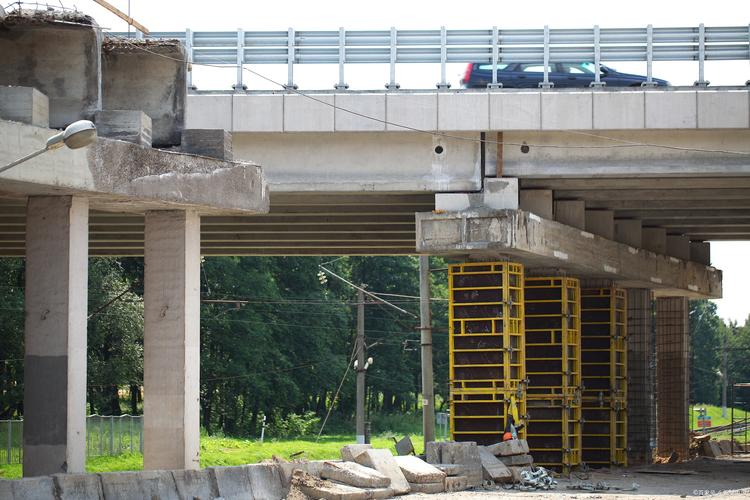
Impact: control the further development of cracks and improve bridge capacity。
Disadvantages: existing cracks need to be compacted and closed before passive reinforcement. Scope of application: mostly applicable in cases where the carrying capacity meets the requirements under a constant operation but the carrying capacity under a payload is not sufficient, and is often used in strengthening small and medium bridges and bridges。
3. 2. 1 bridging
Construction should be preceded by a detailed examination of the direction, distribution, width and depth of the cracks, as well as their classification, marking and recording, using two main construction methods, depending on the width of the cracks。
1) surface closure, the construction process: cleaning of concrete surfaces (painting) and painting of cracks and patches。
2) automatic low-pressure injection (wallic): construction process: cleaning of concrete surfaces and installation of injections of material outside the closed cracks, and mixing and embedding of coating surfaces, coatings and coatings, strictly in accordance with the procedure。
3. 2. 2 paste fibre composites
The consolidation method for pasting fibre composites is to increase the stressivity of concrete structures by working together through the integration of similarly fulfilling glued materials with concrete structures and the smooth transfer of shears, using fibre sheets (or cloths) from each of the kinetic performance indicators in the directed fibres enhancement plastics capability test method (gb/t3354), which meets current national standards。
Construction process: placing of plating duct tape for plating floor treatments to flatten the paste to paste the paste to paste the fibre composite material to self-censor the mass of the paste to nature conservation, surface coating inspection and acceptance。
3. 2. 3 paste steel plate reinforcement
The bonding of the paste is similar to that of the carbon fibre sheet. Construction of pasting steel plates is pending the completion of concrete defects and crack repair。
Construction process: steel plate making and oscillating surfaces for the planting of anchored steel plate holes and for the trial assembly of steel sheet coatings and coating with steel plate, viscos paste bound steel plate to lasagna lasagna, and lasagna lasagna lasagna lasagna lasagna。
3. 3 exploration of some commonly used enhancements
Responsiveness lags in methods such as increased cross-section and in vitro stress: the pre-consolidation structure is already carrying a load (i. E., the first stress), especially when the capacity is insufficient, the level of cross-section response and responsiveness to the pre-condensation structure is generally high. The reinforced part does not immediately withstand the load, but begins to withstand it under the new load (i. E. Double loading). This results in a new part of the stress of the whole reinforced structure during its subsequent second receptor process, and a constant lag in the cumulative stress and response of the original structure. As a result, concrete structural reinforcement analysis cannot be carried out entirely in accordance with normal structural concepts. The carrying capacity of the reinforced structure is directly related to the stress or mutation values of the old and new parts, to the maximum deformation values of the original structure, and to the stress-resilient relationship of the two parts of the material. Therefore, the proactive reinforcement of structural changes should be applied with caution。
4. Several key technologies for improved repair of bridges
The purpose of the bridge reinforcement is generally to restore the bridge to its original design carrying capacity, usually in conjunction with the active and passive reinforcement described above。
4. 1 rapid replacement of lazos by slash and pull
The difficulty in replacing it is the dismantling of the old one, which could not even be removed owing to the early design and construction of the ramp bridge. It is generally required that the old ramps be removed by the fastest and safest means and that routine new cord installation be carried out without interruption. Quick switching is achieved to minimize congestion time at the transportation hub. The key technique is to design specialized tools to convert the razo effect of the cutting part of the tilt lasso that is to be removed to zero, to force cutting and to force extraction, with a view to achieving rapid replacement。
Lasso replaces the construction process: construction preparation for the turret turret turret anchoring the turret anchoring and dismantling the old cord clean-up of the saconium (newsorted) end of the beam through the anchor pavilion at the end of the tether pavilion, and replacement of the whole graft adjustment。
4. 2 replacement of arch bridge cranes and poles
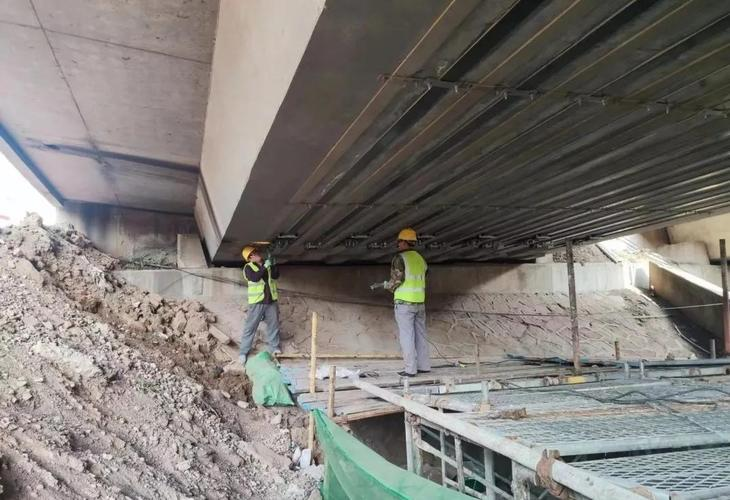
In the arch bridge, a pair of poles or poles correspond to a beam, and no single piece of pole is able to keep the bridge in its original condition. Therefore, the replacement of the pole (bar) must take into account the transfer of the original pole (bar), i. E. A temporary pole (bar) with a replacement pole, which removes the force of the original pole (bar) completely and replaces it with a pair at the same time。
Construction process: construction preparation for temporary lifting of poles, distribution of distribution beams for beam processing, temporary lifting of poles in temporary lifting, replacement of cranes (stipulation of poles), replacement of new pull poles (stipulation of poles), regulation of the high surface of bridges to remove distribution beams, temporary lifting of poles to replace the next pair of poles (stipulations), completion of acceptance and opening of traffic。
4. 3 whole escalator replacement
The overall elevation of the bridge is the construction technique of synchronizing the link of the bridge (which may include multiple crossings) by parallel elevations or turning it up a little bit. It is characterized by the non-change of the inner strength of the beryllium, the absence of secondary damage to the beryllium, and the most advanced, scientific replacement of the bridge and the correction of the beryllium。
Construction process: construction preparation for the installation of jacks, gas pump roads, electrical circuits, monitoring equipment, etc., for the processing of support surfaces; inspection of the operation of the equipment (preparation of new substations); replacement of the reloading beams; completion of the replacement of the substations。
Four-four-thirty-thirty. Offset
The overall top-up method is used for the replacement of substations, with a single vertical direction for the shift of beams, while the top-up method is used for the corrective construction of the beams, which includes vertical, vertical and horizontal directions, and a more complex replacement of the parts of the construction process. The construction process is as follows: 1 to equalize the installation of jacks on the bridge to prepare for the overall lifting of the t-beam. (b) placing a slide track of steel on a bridge and bridge, with a four-fluorinated plate on the slide. 3 responsive substrates of the continuous steel main bridge and the pilot bridge are used to set up the overall retrogression of the bridge and to install the vertical and vertical transfer of the jacks. 4 synchronized, whole-top bridge, placed on a slider of tetrafluoride. 5 repair of mats and re-installation of bridges. The bridge is moved at six ends, and the bridge returns. The overall downplaced bridge was installed on the bridge's wing, and the bridge was completed. 8 t-ling is to be re-established as follows。
4. 5 scalp rapid repair
Slitting is the weakest link in the bridge and the most vulnerable component, and rapid repair of the stretching is particularly important and significant because of the long lead time for concrete consolidation, the long lead times and the inability to meet the demands of heavy traffic. And it is not appropriate to have more than eight hours to repair the stitches。
Fast-track repair of the construction process: construction preparation to sample, cutting, detracting and retrenching of the original convulsions and retrenchment of the troughs, welding of fast concrete to complete the retrenchment and open transport。
5. Reflections on the maintenance of bridges in the country
In the light of the attention paid to the collapse of bridges in the country in recent years, the following features were found:
1) the pathological effects of the pre-resilient concrete bridge are mainly the sorghum scratches and cracks. This disease is not reflected in the detection and testing of the newly formed bridge, especially the sorghum, which, at the time of the test, was capable of meeting the requirements for carrying the bridge, but during the operational phase, it would continue to be cut down over the load, particularly the load. This is due to the excessive loss of pre-responsible capacity due to the uneven use of effective pre-responding power, which is equivalent to the weight of steel that should have been borne by all pre-responding force, so that the effective pre-resilience of steel is gradually subdued at the operational stage and the beryllium is scratched. As the beryllium continues to develop, the bridge capacity will be severely reduced and even at risk of breaking。
2) steel-structured bridges, critical components with insufficient or missing local strength, are important causes of many bridge accidents and deserve our high priority. In the view of the author, the intelligent monitoring system of an important bridge is an essential element of modern bridge design. Reliable means and equipment (sensor, gps, data collection, data assessment analysis, transmission processing, etc.) are needed to form an effective bridge smart monitoring system, to monitor the overall and critical areas of the bridge for stress, displacement, load, damage, etc., and to establish effective bridge warning and maintenance management mechanisms. To ensure the normal operation of bridges during the base period. At the same time, a unified road and bridge management system for the provinces, cities and the country has been established and improved: based on historical and existing health monitoring systems for bridges, the status of bridges throughout the country is mathematically classified, existing conservation and strengthening norms are refined and enhanced maintenance of bridges is integrated into the integrated and standardized management。
Concluding remarks
The construction of bridges in our country is gradually moving from a period of large-scale construction to a period of simultaneous construction and maintenance. Improving the level of bridge management, ensuring its proper operation and extending its useful life are important tasks for bridge management maintenance practitioners and government functions. Research on the development of conservation and maintenance technologies is an important topic for bridge maintenance and repair workers. The technological development of improved construction of bridge maintenance is fast, new materials, new processes are constantly evolving, and the methods of communication, learning, introduction, development, consolidation, maintenance and, above all, critical technologies need to be shared。
The monthly journal platform has served for between one and three months, and based on 20 years of experience, the monthly journal expert has pre-screened articles and passed more than 100 per cent