In the west lake district of hangzhou, dr. Zheatao zhang made a “print farm” in his garage using eight consumer 3d printers. He made smart teaching packages, delivered hundreds of smart hands for months — 5,000 for industrial products with the same function, and sold only 200 for 3d printing programmes, at a price more than 20 times lower。
This is not an incentive story for doctors to re-attack by hand, but a reality that is happening in 2026: a garage with only eight machines can deliver a few hundred-dollar suite to the national higher education laboratory, while traditional small-volume manufacturing costs millions of paces by opening models, cnc, professional programming teams。
When zhang zhang used eight “hand rubbing” robotic parts for printers in hangzhou, in shenzhen, over 1,000 kilometres away, the 3d printing farm under the kana-technology flag had been laid at 15,000 units, with 10,000 handmade items delivered on a single day。
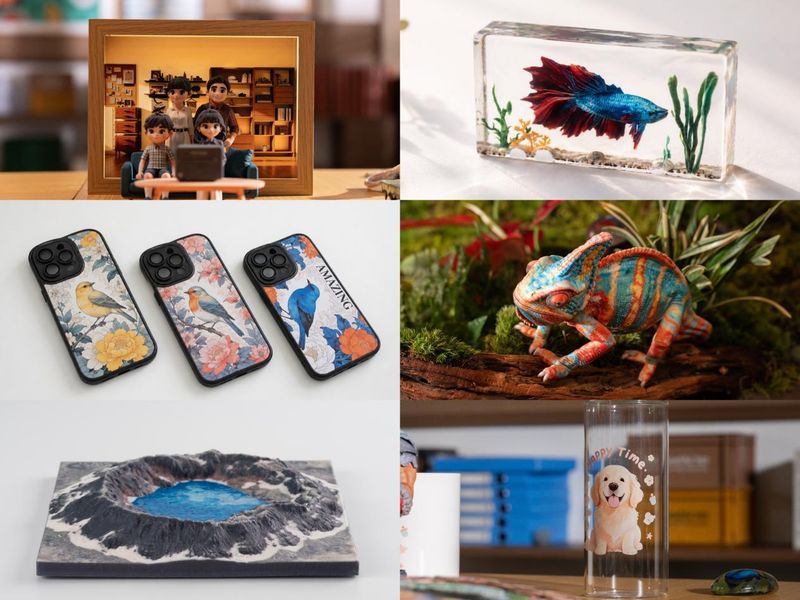
Showcasing handmade and creative products in all 3d printing categories
From eight to 15,000, from one person to a listed company, the same thing is occurring simultaneously at completely different scales — not individually — as a full penetration of traditional small bulk manufactures by “distributive flexible capacity”。
Change one, the access threshold is breached, the workshop is no longer essential
How high is the threshold for traditional small batch manufacturing? The threshold is hard for start-up teams, design validation and customization needs, which are set at tens of thousands of times per month. The “sink costs” of opening models, which are set at tens of thousands of times per month, do not allow many small orders to be made at all — within a hundred samples, all of which are at an extraordinary cost。
The logic of the 3d print farm is completely different: it does not need to be modeled, and the unit cost difference between one and a hundred is sharply reduced at grams. A consumer-grade 3d printer now needs only a thousand dollars, and the core parts are already highly domesticated — an idea 3d-related manager told reporters that the domesticization and size of the supply chain has kept the price of the equipment under constant review and that the value of the same price can increase significantly。
What does that mean? A university student can pick up a bill in a dormitory and a community garage can build a micro-plant. The entry threshold has been lowered from a million to a thousand steps, down by more than 99 per cent。
Change ii, period of delivery from “weekly” to “hourly”
The most painful part of the traditional small mass is the delivery. A soft model with a monthly cycle, with a longer period of time if the structure is complex and the mould design is validated and communicated back and forth. How can we afford a month for new energy cars, consumer electronics, tide games? An implosion ip derivative, the heat window could be weeks away and miss。
The 3d print farm compressed the cycle to days or even hours. Delivery of conventional items 2-3 days with peak capacity to deliver the goods as fast as 4 hours. In collaboration with the league of co-founders of goko, it is more straightforward: 3d printing can compress the two- to three-month cycle required for the traditional manufacture of moulds to produce products in the order of five days and help fast-temporal industries out the window of time for research and development。
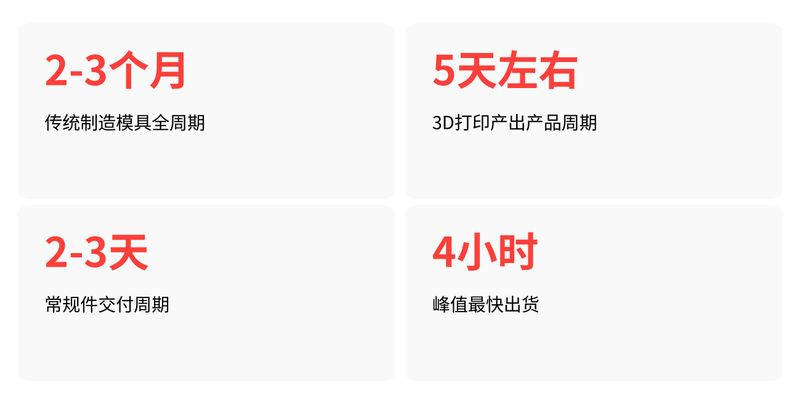
Now that clients are uploading documents, automatic quotations, online deliveries, who is willing to wait a month
Why now? Three conditions are ripe
This phenomenon did not emerge suddenly, but it was carried out at the same time with three structural conditions:
Equipment cost piercing critical point. Shenzhen's 3d printout of the "four small dragons" — mackerel, 3d, vertical cubes, intelligents — has already accounted for nearly 90 per cent of the global consumer-class market, and the price of single-desk equipment has generally fallen to 1,000-dollar zones. Without this supply chain, large-scale cluster deployments are not cost-effective at all。
Model ecology solves the problem of what to hit. The makerworld platform now has almost 3 million models and over 300,000 active creators, and the ai modelling tool allows a non-cad person to generate models. The farm is on order and the line is on the line。
Demand-side surge growth. Tide games, ip derivatives, consumer electronics, smarts are all pursuing small batches, multi-forms, fast-temporals, and the traditional model of plasticization is not keeping pace。
But it's not a substitute, it's a layer
However, “restructuring” is not equivalent to “replacement”。
It was made clear, in collaboration with goc, that industrial 3d printing was oriented towards high-end scenarios and that the requirements for precision and intensity were much higher than the consumer farm model, and that the two formed different application layers that would not be entirely replaced。
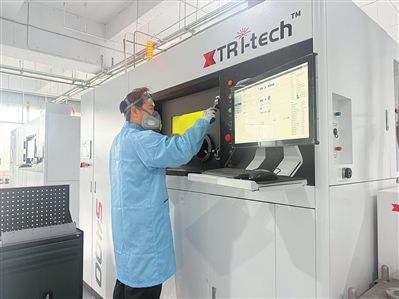
3d industrial printing equipment operated by staff at workshops
It is therefore accurate to state that within 100 pieces of fast and small mass scenarios with low material intensity are being systematically taken over by 3d print farms, and that high-precision, high-compliance industrial-grade scenarios are still held by traditional manufacturing and industry-level 3d printing. It's not who kills who, it's the chain that's reopening。
The way forward, traditional small batch manufacturing must go up
Traditional handcrafts can be dangerous if they also maintain low-value-added sample orders. The diversion of orders is already a fact, while data from the federation of mechanical industries show that the average period of recovery of receivables from the mechanical industry in the first half of 2026 has been as long as 109. 7 days, and that the heavy mine machinery industry is close to 180 days, with significant liquidity pressures。
The cost end is squeezed, the order end is diverted and, under double pressure, the plant's living space is becoming narrower and narrower。
There is only one way out: go to the higher value chain. Reprocessing, assembly of aircraft, engineering services - these dependencies of experience and people - cannot be done on 3d printing farms in a short period of time. The competitiveness of traditional manufacturing needs to move from being “manufacturing” to “building better, more stable, more complete”。
As for the 3d print farm itself, it will also continue to evolve. Full colour printing equipment is upgrading the farm from a “unicolored white model” to a “finished product”, with the cost of fuel materials ranging from one tenth to one-hundredth of similar products overseas. When farms are not only printable but also directly produced, their impact on traditional manufactures will widen further。