Today, nanjing bank is in a state of rapid asset expansion and accelerated capital consumption, with successive regulatory fines. To some extent, the bank’s survival and direction are understood, as is the future of most small and medium-sized banks。
Nice u-type reverse
In 2023, nanjing bank's performance was subject to brief fluctuations influenced by bond markets。
By 2024, the governor of nanjing bank, shenin, had set performance targets for the “double u curve” and performance had begun to change. Over the last two years of performance and asset size, a continuing positive business performance has been maintained。
The growth in performance was mainly reflected in both operating income and net profits. In 2024, nanjing bank earned 50,273 million yuan, representing a net profit of 20,176 million yuan for the mother, an increase of 11. 32 per cent and 9. 5 per cent over the same period. In 2025, net profits received and returned to the mother were 55. 510 billion yuan and 21,807 million yuan respectively, representing an increase of 10. 48 per cent and 8. 08 per cent respectively。
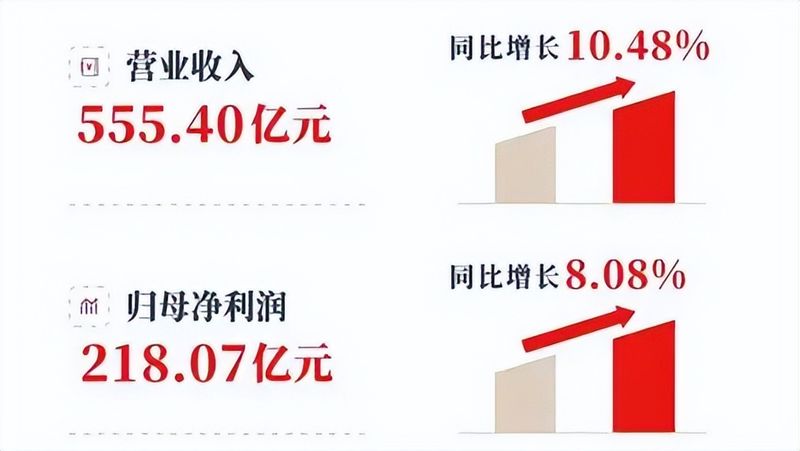
Source: nanjing bank for public numbers
At the same time, the bank's assets have grown on a growing scale and the pace of expansion is accelerating. At the end of 2024, the bank's total assets amounted to 2. 59 trillion yuan, which in 2025 was 3. 02 trillion yuan, an increase of 16. 63 per cent over the same period。
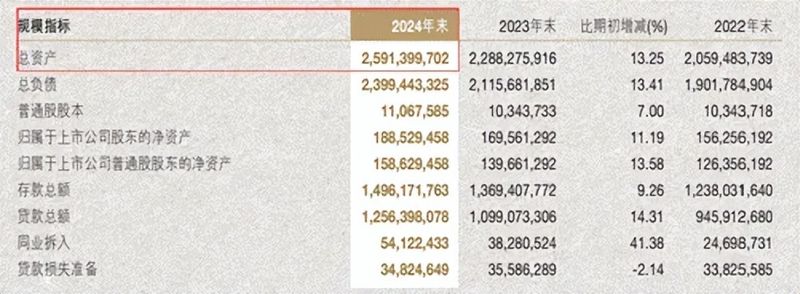
Source: nanjing bank 2024 annual report
Against the backdrop of the current overall slowdown in banking growth, nanjing bank's performance is sufficient to enter the “first class” of listed banks. In practice, however, nanjing bank relies mainly on interest income. This approach is vulnerable to the impact of debt markets。
The most obvious manifestation is the “severe” of the income structure。
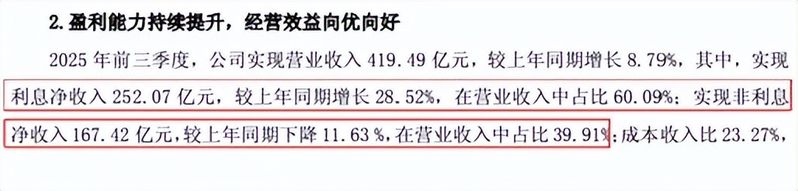
First of all, there has been a rapid increase in net interest income. According to the financial data, in the first three quarters of 2025, the net interest income of nanjing bank amounted to 25,207 million yuan, an increase of 28. 52 per cent over the same period, accounting for as much as 60. 09 per cent of operating income, which is the main force behind the growth of profit。
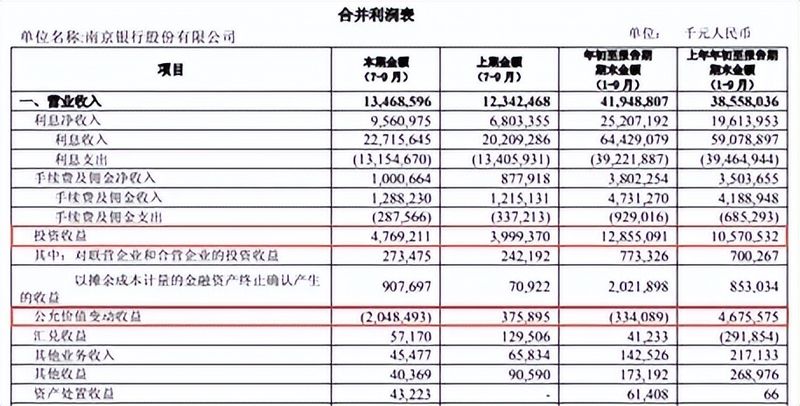
On the contrary, non-interest net income is declining and the share is declining. In the first three quarters of 2025, net non-interest income was only $16,742 million, a decrease of 11. 63 per cent over the same period, representing less than 40 per cent of operating income. Of these, the impact on investment returns was most pronounced。
Source: nanjing bank third quarter report 2025
The nanjing bank has been known as the “king of bonds” and has consistently accounted for a high share of total revenue from non-interest income generated by financial investments。
Since 2025, however, the bond market has fluctuated and performed poorly. Although the bank of nanjing earned $12,855 million in investment during the first three quarters, an increase of $2,284 million over the same period last year, it lost $330 million in fair value movements, a decrease of $5. 01 billion compared to $4. 68 billion during the same period last year. This directly led to a decrease in net non-interest income。
Source: nanjing bank third quarter report 2025
The truth about capital consumption
In 2025, the bank's assets expanded at a very rapid pace。
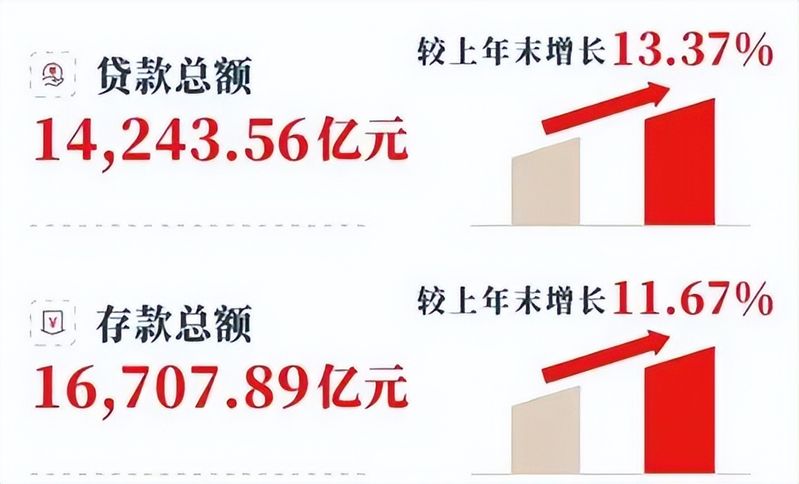
In addition to the total amount of assets at the 3 trillion-billion mark mentioned earlier, the bank of nanjing's loan stock has reached 1. 42 trillion yuan, an increase of 13. 37 per cent over the previous year; total deposits have reached 1. 67 trillion yuan, an increase of 11. 67 per cent over the same period。
Source: nanjing bank for public numbers
Another rapid increase is in the size of the creditor category. By the end of the third quarter of 2025, the bank of nanjing had invested 45. 993 billion yuan in its claims, an increase of 46. 14 per cent over the $31. 471 billion invested at the end of 2024, and an increase far exceeding total assets, loans and deposits。
The expansion of banks has always been linked to capital consumption. Thus, the rapid expansion of nanjing bank is bound to lead to a rapid depletion of capital。
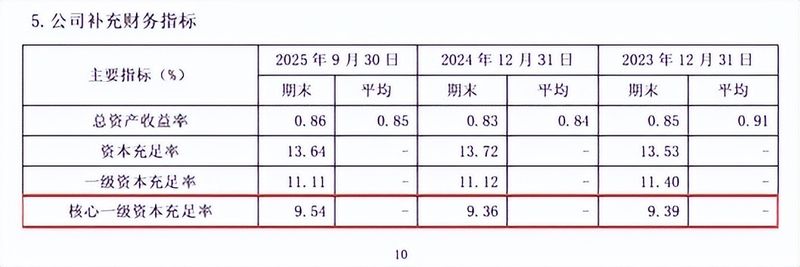
From 2022 to 2024, the bank's core level capital adequacy rate was 9. 73 per cent, 9. 39 per cent and 9. 36 per cent, respectively. By 2025, the bank's core level capital adequacy rate was 9. 31 per cent, a decrease of 0. 23 percentage points from 9. 54 per cent at the end of the three quarters, and a decline for the fourth consecutive year since 2022。
Source: nanjing bank third quarter report 2025
More serious than the successive downturns, the bank's core level capital adequacy rate is not only approaching the regulatory red line but is well below the industry average. According to data from the general directorate of financial supervision, at the end of the third quarter of this year, the core capital adequacy of commercial banks was 10. 87 per cent, while 9. 31 per cent of nanjing bank was 1. 56 percentage points below the average。
The “blood loss” of capital is approaching the limits of its expansion, and the urgency of capital replenishment has grown。
Compliance with frequent ticket-receiving "suffering"
Under pressure from revenue structures and capital consumption, the nanjing bank has experienced problems in compliance governance。
On the face of it, in recent years large shareholders have been confident in the future development of nanjing bank and have continued to increase their shares through “gold and silver”。
In 2024, bnp paribas and bnp paribas (qfii), the largest shareholders in nanjing, also increased their shareholding by 17. 14 per cent as of september 2025。
In 2025, nanjing purple investment group holdings company. On two occasions, the trust held 77,131. 05 million shares and 56,779. 98 million shares. Eastern airfield group investments ltd. Held an additional approximately 173 million shares, or 1. 56 per cent of the bank's total equity。
In august of the same year, when nanjing bank had secured an early buyout of the south bank's debt, nanjing koko, the main shareholder, had an additional 7. 507 million shares in the bank, representing 0. 06 per cent of the bank's total equity, and the cumulative share had risen from 8. 94 per cent to 9. 00 per cent。
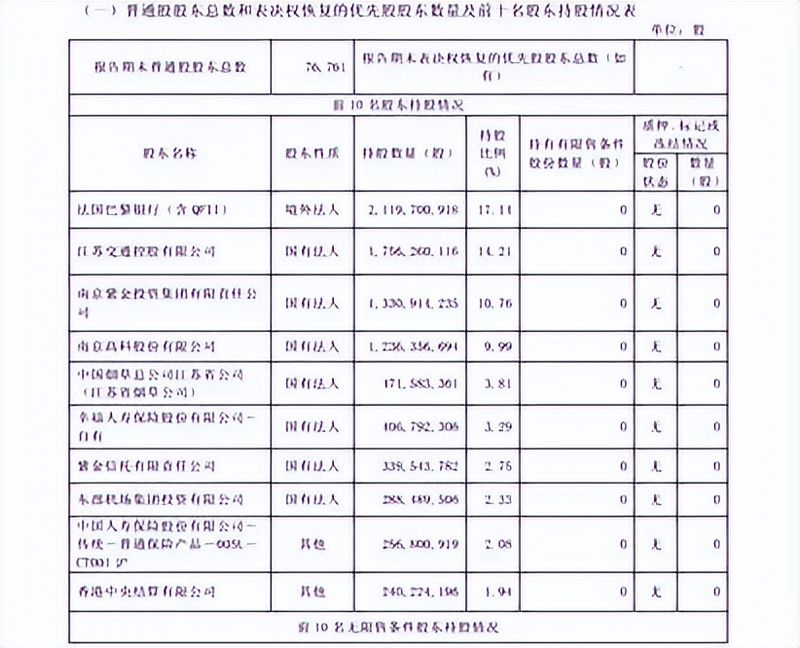
Source: nanjing bank third quarter report 2025
However, while shareholders frequently increase their shareholdings, nanjing bank and its various branches receive successive regulatory fines amounting to nearly 11 million。
Three of these fines have been imposed since 2025: the thai branch has been fined 1. 45 million yuan for its pre-credit survey and post-credit administration deficiencies; the yang canton branch has been fined 400,000 yuan for “ineffective management of employee behaviour”; and the nanjing bank general has been fined 700,000 yuan for “inaccuracy in measurement of regulatory statistical indicators”。
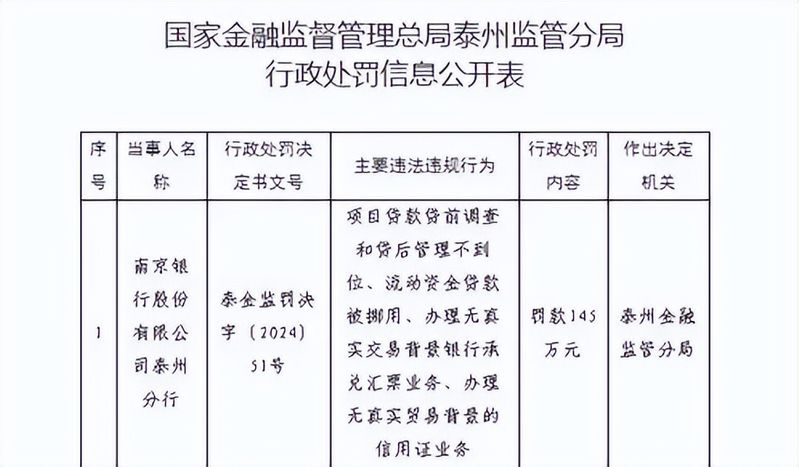
Source: jiangsu supervisory authority, national financial supervisory authority
Most of these irregularities were found to be the result of a false trade background, misappropriation of funds, a bourgeois loan, etc., which exposed weaknesses in internal management and risk control, as well as putting nanjing bank at the forefront of public opinion。
This combination of “capitalization” and “compliance gaps” highlights the importance attached by bank management in nanjing to expansion over compliance governance, and undermines the brand image and market reputation of banks。
From the king of bonds to the eco-enabling
Of course, as a city comptoir with a clear vision of development, nanjing bank is trying to find new ways through strategic transformation。
One is to explore the path of differentiation. In an effort to reduce reliance on traditional real estate and platform lending, nanjing bank follows the regional economic pulsations, constantly exploring differential development paths and developing brand features in areas such as science and technology finance, green finance, inclusive finance, old-age finance and digital finance。
As of the third quarter of 2025, the balance of these five financial sectors had increased considerably over the previous year. Of these, green finance, science and technology finance and inclusive finance balances increased by 33. 03 per cent, 17. 47 per cent and 16. 16 per cent respectively。
The second is to promote a shift in its orientation towards “ecological enablers”. The bank of nanjing seeks to deepen its integration into the client's productive life landscape by integrating services to increase its viscosity and interest-free income share。
In the financial sector, nanjing bank has built a business stratification classification ecoosphere that allows clients to receive full service support. Among them, efse has served 200,000 microentrepreneurs, the standard product system of 鑫e 微 鑫 , has reached nearly 240,000 customers, and the scale of `transfers' has exceeded rmb 30 billion。
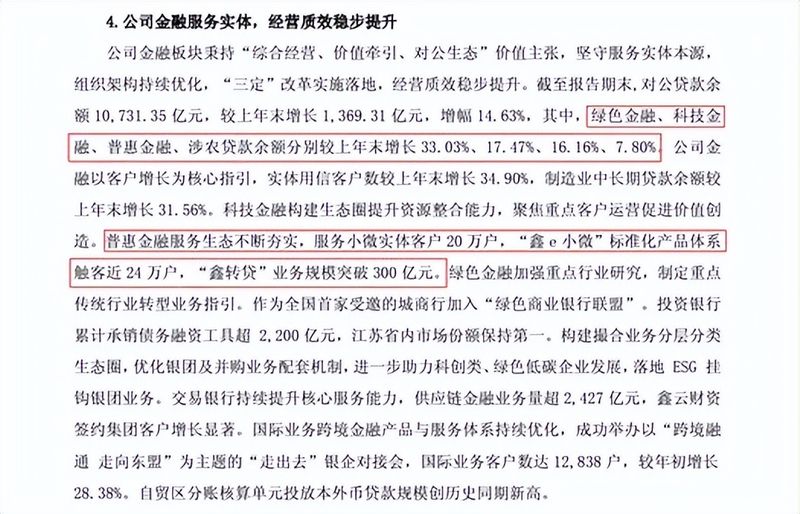
Source: nanjing bank third quarter report 2025
Concluding remarks
The current difficulties faced by nanjing bank are more of an opportunity on the road to transition than pressure。
It is undeniable that the bank of nanjing has chosen the right path in the right direction and that if it continues, it is likely to move beyond path dependence and structural imbalances to long-term development。
However, the core course of competition in city comptoirs has shifted from mere scale versus size to high quality long-term development. Thus, the nanjing bank cannot “run” at once, but rather “go” at the same time。
Balancing the scale of asset expansion with the risks of compliance governance will determine whether nanjing bank can stand on the “first floor”。