With the rise of the delivery platform, it became normal to order out-of-pockets to hit workers. However, the problem followed, with many consumers indicating that, in order to order meals on a delivery platform, there are often “outsale assassins”, i. E., after using coupons, the price of the outsale is still more expensive than under-line purchase, or even the same price, and the value of the outsale is lower than in the store. What the hell is going on? Why is it more expensive? In response, journalists conducted multiple visits。
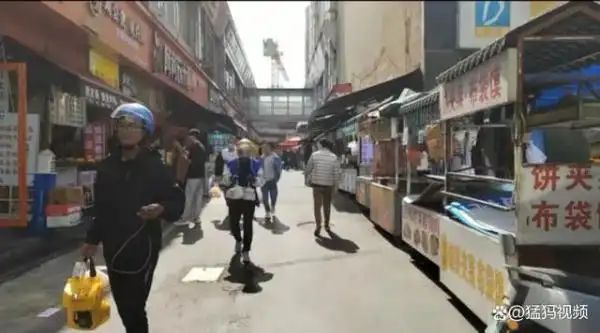
That's $17. 8 in the shop
Thirty-two dollars after a little discount
“i often order a take-out in the vicinity of a unit, where the price of a fan with a meat clip is over $22, plus the cost of packing and distribution, the total price is over $27. The platform often issues coupons, and i always feel like i've been emptied.” mr. Zhengzhou stated that it was not until recently that he had passed through the shop to eat in the restaurant that he had regularly ordered the package at a price of $19, which was more significant than the take-out, and that it had also been packed and taken away without payment。
Young people who came in on the line in an easy and cheap way suddenly found themselves caught up with a “assassador” who sold the same business, the same commodity, and then under the line was more profitable. Journalists also compared this。
In a fried restaurant, journalists bought a seafood pineapple rice and paid $17. 8. The price of the same merchant, the same fried rice, is $40 on an out-of-a-pp sale, counting the packing and distribution fees, and some coupons, which are worth $32, almost twice the price of the store。
In another out-of-pocket app, the merchant's rice price for seafood pineapple is the same as $40, and after having participated in activities such as full-time, coupons, etc., it is required to pay $22。
The journalist then went to a restaurant and ordered a chicken with rice at a price of $16, while the cost of selling the two apps was $21 and $22, respectively。
In addition, journalists noticed that the price of a coffee in a brand-made coffee shop was $18, while the cost of the delivery platform was $20。
It is clear from this that consumers purchase the same meals in the same store and that the prices paid on the delivery platform are higher than those paid in the lower-line store。
Up or off
A lot of merchants are hesitant about the delivery business
“for each item we sell, we pay a commission of 6 to 8 per cent, and we pay riders an average of $5 for the distribution fee, utensils and beverages, which does not include the online traffic costs of the merchants themselves to promote the sale.” mr. A., a restaurant chain owner, told the press。
Mr. A described the fact that more and more young people were now used to order meals online and that they had to move some of their businesses to delivery platforms. “in fact, we prefer consumers to shoplift. Because even if the prices of food items were raised, the same products would still be less profitable than they were.”
During the visit, a number of restaurant operators, like mr. A., expressed a common dilemma: out-sale can expand the coverage of restaurants and attract more consumers; but on the out-sale platform, the profits are lower than below the line。
The owner of a zhongqing chicken shop in zhengzhou told journalists that his restaurant sold more than 4,000 copies per month on the delivery platform and that, while the back office showed that the platform had a commission rate of 8. 2 per cent, the shop actually incurred a distribution fee, and that if the order was not as expected, they would buy some traffic charges themselves, sometimes more than 20 per cent overall。
Journalists were informed that the cost of off-site platform services was based on parameters such as the type of shop, the price of the guest unit, the number of orders, the location of the area, etc. Businesses may choose the platform's distribution services or take the form of self-distribution, depending on their needs。
Earlier, journalists had also consulted on the issue of commissioning, and the platform's guest service had indicated that the opening of the platform itself would not charge any fees until an order had been made。
According to the platform's guest service, the door shop delivers itself, the platform charges 5-10 per cent of each order and, in the case of out-of-pocket deliveries, the platform collects a delivery fee for settlement to out-of-home vendors。
There's a businessman who's turning the money off for free
It's actually in the food bill
During the interview, a catering operator revealed that, in many cases, customers order out-of-home meals at low unit prices, with more than one meal at around $20, and that, given that some consumers would skip shops that were overpaid, some would change the distribution fee to free。
Such behaviour appears to be beneficial to consumers, but it actually costs them more. “this expenditure is actually taking place, so that the shopkeepers have in fact hidden the distribution fee into the food bill.” according to the above-mentioned catering industry practitioners, when merchants add the distribution fee to the food fee, consumers are often unaware, as they see the words “free distribution”. However, when consumers finish their meals, they find the cost of meals to be higher than expected, which has led some customers to order out and eat more and more。
At the same time, a survey of journalists found that some of the vendors, in an attempt to reduce costs, had taken another approach, with out-of-sale prices consistent with those in the shop, but had quietly reduced the weight of the out-sale, which was also the subject of more complaints in the daily media。
In the view of many people in the industry, out-of-home deliveries are made by riders, so that there is a need for, for example, the cost of distribution fees, which are to some extent higher than the cost of meals in the canteen. Market take-outs could have been well marked, with information on the amount of food sold, so that customers could understand the consumption。
Counsel for a beijing law firm also stated that “there is no requirement that the prices of the delivery platform must be the same as those of the real store, and that the pricing already guarantees the consumer's right to know, but that if there is a shortage of vendors, it can be reported to the platform, complained about, and exposed to the media”
According to counsel, delivery platforms and sellers should be considered more from the consumer's perspective, for example, by informing consumers on the consumer list page about the difference between the delivery price and the meal price, or by labelling the product at the price difference to give consumers a choice. This would not only enhance the brand effect and reputation of catering enterprises, but would also be very beneficial for their sustainable development。
Synthesis: new express, elephant news