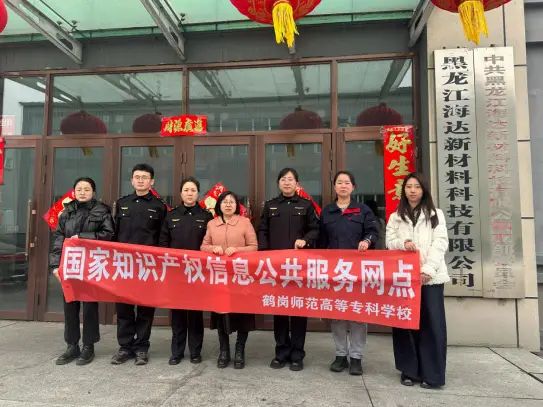
In order to further implement the intellectual property rights (ipr) market construction requirements and optimize the private economy's intellectual property development environment, in recent days, the intellectual property protection section of the xueang market monitoring authority, the promotion unit, in collaboration with the state intellectual property information and public service network of the xueang college of higher studies, has been conducting a public intellectual property service guidance exercise at heilongjiang river new materials and technology ltd., which is tailored to match business needs, solves development challenges and contributes to high-quality enterprise development。
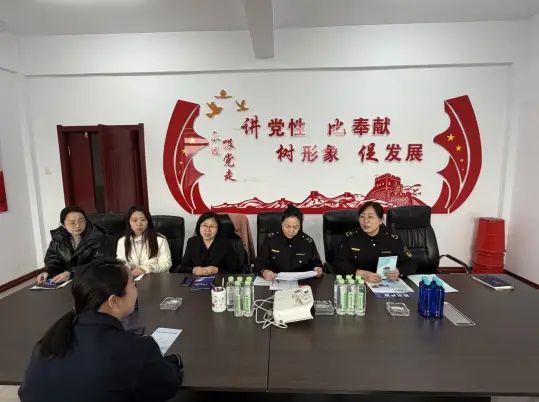
In the course of this exercise, i have focused on the business development challenges, providing guidance on the full range of services around the three main thrusts of policy on intellectual property regulation, patent licensing and scientific cooperation. In the form of on-site lectures, information distribution, staff members have provided the heads of enterprises and the staff concerned with a detailed reading of core regulatory policies such as the regulation on the protection of intellectual property rights in heilongjiang province, the private economic promotion act, the measures for the implementation of intellectual property rights for private economic development, focusing on the scope of intellectual property protection, the protection of the rights and interests of private economic organizations, and support for the use of patent conversions, in conjunction with the requirements of intellectual property protection in our province and the actual development of the private sector, so as to give enterprises a clear grasp of the policy dividends, increase awareness of the protection and application of intellectual property rights, and lead enterprises to regulate their operations and proactively protect against intellectual property risks in accordance with the law. Among these, the section, in the context of business development, focused on the needs related to the protection of intellectual property rights (iprs) of enterprises abroad, provided detailed information on the difficult areas in which enterprises operate in overseas markets, protected intellectual property rights, etc., and paved the way for follow-up precision in providing guidance on the protection of intellectual property rights (iprs) abroad and for enabling enterprises to protect against the risks of iprs abroad. The promotion of simultaneous demand mapping, the collection of financial and technological needs for intellectual property from enterprises, and the development of a comprehensive picture of the actual demands of enterprises in terms of intellectual property pledge financing, patent conversion, technology development and so forth, provide the basis for subsequent optimization of services and precision of resources. At the same time, it leads enterprises to open licences to “fall-to-land” patents, effectively build on the patent value of their inventories, encourage companies to actively participate in patent openings, broaden patent access through licensing, cooperative conversion, and increase patent conversion benefits, and assist firms to reduce r & d costs and increase core competitiveness。
The national public service centre for information on intellectual property in the national institute of training and research (inpi) of the zhuang institute of higher education is fully engaged in its research and service functions. It focuses on further cooperation between schools and enterprises in the field of graphite science, building bridges of synergy and innovation, helping enterprises to break technological bottlenecks in research and development in the graphite industry, and promoting a precise match between the results of research and the production needs of enterprises. At the same time, the internet points explicitly provide enterprises with a full range of public intellectual property services, including, in addition to free intellectual property access, annual royalties, such services as intellectual property policy advice, training in intellectual property, and upgrading the full range of enterprise intellectual property creation, application, protection and management capabilities。
As a next step, our bureau will continue to work with the public service for intellectual property, focusing on priority local industries, priority enterprises, regularization of public service guidance on intellectual property, continuous optimization of service initiatives, enrichment of service content, promotion of a deeper integration of intellectual property and industrial development, and provision of strong support for high-quality economic development in the community and for the construction of intellectual property markets。
Contribution: intellectual property promotion section
Prepared by: liu yang