Future generations have spoken about the historical links between chu and anhui, and it is often the point of knowledge, “senior spring is only nineteen years”, that hastily weakened the place of anhui in the system of civilization in chu。
Many people on the web are debris-coated receiving history: a few short video clips, a summary of the words, and a dead end to remember: “su chun is chu's capital for 19 years”, and a rigid conclusion is reached — culture is only 19 years in anhu. Many do not distinguish between the time fixed by the regime and the time inherited from territorial culture, and get an isolated point of time, as if it were the whole historical truth, the truth, the truth, and the lack of deep thinking, which in fact is the perception bias of oblivion。
This recognition, which essentially equates the length of regimes with the time of territorial culture, confuses the boundaries of political history with that of civilization. The dynasty is flourishing, the capital is moving, but the land is not running, the mountains and rivers are in place, and the people who have lived on this plain for generations will not disappear. The anhui region is both the centre of orthodoxism at the end of chu's civilization and the key hub of civilization for summer merchants, for integration between north and south, and for future generations, with its civilizational pulse extending well beyond a thousand years。
I. Arrangements: the priority and the standing of the country
The côte d ' ivoire civilization was not formed overnight, having undergone a long process of tribal sprawl, feudal statehood, and gradual maturity, with the core time and personal connection being clear:
1. Communal sprawl: early the end of the business, early in the week, the fall of the bear rate week
In the 11th century b. C., the king's power fell, and the chief of the clan, the zhubong pong pun, was active in the han water basin at the border between china and china. At that time, the clans, which are not officially divided, have become known as “inherent to the chinese civilization and compatible indigenous traditions”, creating a cultural background for future generations. This stage is the birthplace of the chu people and has yet to develop an independent culture of the country。
2. Formal nationhood phase: king zhou, the bear seals tanyang
Queen zhou cheng's queen regent (about 1042 b. C.), in recognition of the success of the song bear, he sealed the name of his great-grand bear in tanyang (the mainstream view of history in today's nam river) and taught the viscount that the land is 50 miles away. This is the official starting point for the zhou dynasty, which led to the arrival of the zhong dynasty for 800 years。
The country, which was originally established in a small country, was considered “predominant” by the chinese people, but the central strength of the chu people was not to destroy the civilization of the subjugated area by force, but to absorb, in a compatible manner, the legacy of summer commerce, ceremonialism and the indigenous culture of the south. In ancient times of material scarcity, good land, water, mature urban pools and craftsmanship are valuable assets. The rulers will not want to destroy them, but will choose to inherit and exploit them. In centuries of expansion, the chu state has gradually built a unique cultural system。
Ii. Analysis: cho's 100-year operation in the anhui area
The entry of chu culture into anhu is not a sudden drop in the spring, but rather a centuries of infiltration, operation and deep cultivation from spring to autumn. Anhui is not a place of refuge that chu chooses when he cannot find his way, but rather a core strategic area that extends eastward and northward。
1. Spring and autumn: integration of the north into chujiang, with the city's father becoming a major town in the north
After the rise of chu in the middle of spring and autumn, it continued to expand into the river basin. King chuping, for six years (523 b. C.), ordered the crown prince to be stationed at his father's home (south-east of the town of zhuang, anhui region) and the town to guard the northern border, while arming and building cities. This marked the formalization of the northern part of the country as a central part of the country, which has begun to be fully impregnated by decrees, laws and protocols。
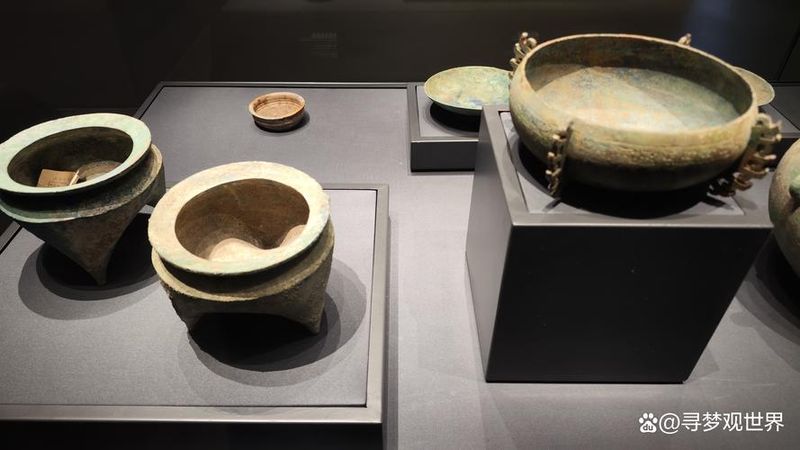
During the same period, chu ordered uncle yoon sun to host the construction of anfung tong, today's su county. This was one of the first major irrigation projects in china's ancient history. It irrigated the land and turned the river's wasteland into a thousand miles of grain and laid the most important economic pen for the rise of the future spring。
2. The state of war: jiangye became the core of eastern chu
The territory of chu has gained ground in the war countries, covering the regions of hokkai, hunan, anhui, jiangxi, jiangsu and henan. In anhui, the area of uibei and jianghua is both a link between chu and china and an important food and military base. The culture of chu is deeply integrated here with the indigenous business civilization and culture, creating a stable geographical cultural identity that is by no means condescending。
It's a vast plain, fertile soil, dense river webs. Crops are easy to grow, rivers and lakes are rich in shrimp and wild animals are abundant and naturally suitable for large-scale farming and population reproduction. This is where the soldiers have fought, never a wasteland, but a civilization that has built up its population, its property and generations. Population is the simplest proof of land civilization。
Iii. Conclusion: thehistorical position of suspung as the late trudu
In the late stages of the war, the qin nation moved eastward, the western line of chu collapsed, and the political centre gradually moved eastward, culminating in the spring, making anhui the final orthodox of chu civilization。
1. Relocation: strategic shift from west to east
In the twenty-first year (278 b. C.), the qin will attack the capital city of chu for more than 400 years (kinan city, north lakes state), and king chu will be forced to relocate to chen (yeiyang, south of the river)。
King chu koly, 10 years (253 b. C.), to avoid qinpei, chu moved back to zhengyang (today, anhui zhenta and the county). This is the first time that the capital city of chu has moved into anhui, marking a complete shift in the focus of his country's affairs towards jiang yi。
- king chu koly, in the 22nd year (241 b. C.), the five countries, chu, zhao, and wei, failed in their efforts to further evade the qin army, and chu officially moved to su-chun (today's anhui huanansi county), still known as “sun-sung”。
2. The city of su-chun's location: no temporary shelter
From 241 b. C. To 223 b. C., su-chun served 19 years as the official capital of chu. But this “nineteen years” is the age of the regime that came to pass and that, for chu at that time, the su-chun was built as a permanent capital in accordance with the specifications of its capital:
Geographical advantages: suh chun is located in the geometry centre of the remaining territory of the state of chu, with a strong strategic focus on the north of the prefecture, the central hinterland of runan, the south of the western river, the old lake, the south of the river, the south of the river, the south of the river, the south of the river, the south of the river, the south of the river, the south of the river, the south of the river, the south of the river, the south of the river, and the north of the east, the south of the river, and the roads and roads。
Economic support: the water project, which has been running for hundreds of years, has ensured a steady production of the surrounding food, sufficient to support the royal family, the officials and the army。
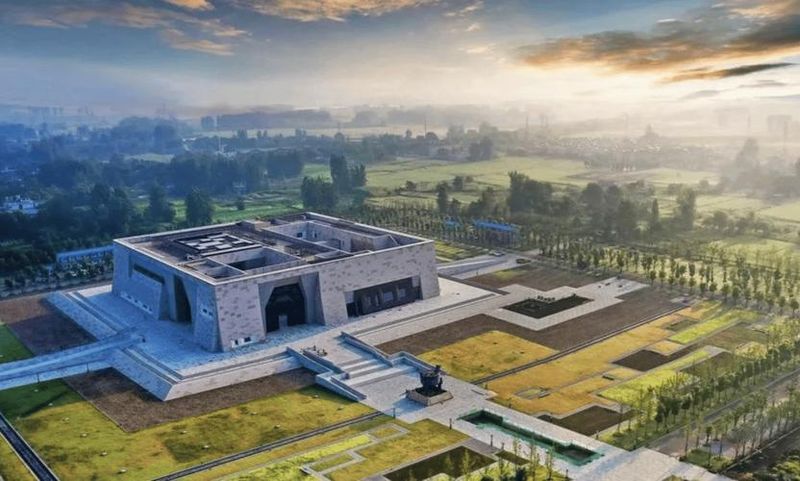
Urban size: archaeological excavations show that the total area of suspung city sites is about 26 square kilometres, with large palace sites, handicraft workshops, burial areas for nobility, and the complete layout of the city, one of the largest cities in the south at the time。
In short, 19 years has been the life of the chu regime, and by no means the culture of chu has lived in anhui. In essence, the relocation of chu's royal family, statutes, craftsmen and ceremonial institutions to the heart of the river, which has been under cultivation for hundreds of years, is a central upgrading of chu's civilization, not a beginning。
Iv. Structure: the pre-historical and commercial department of the regional climb of anki
The roots and growth of chu civilization are rooted in the very existence of this land, which is far beyond the depth of its history. The culture of chu did not grow out of space; it was inherited and developed on the foundations of previous civilizations。
Prehistoric civilization: the foundation of 5,000 years of civilization
The history of civilization in the north goes back to the new stone age. The site is one of the core centres of the culture of the country. Some 5,000 years ago, a large number of pottery, jade and architectural monuments were laid, proving that the land had matured into a culture of farming and social organization。
2. Commercial civilization: the core cities of the east
According to the traditional historical view, the core area of the southern ocean, where merchants have been living since the summer, is in the vicinity of today's state. The northern part of the country is an important area for the early years of commerce, with well-established copper smelting, farming techniques and comity systems. The civilization of this land has not been interrupted since the end of the commercial dynasty。
3. Succession and integration of civilizations
After the occupation of the country, the country did not destroy the original civilization of the region, but rather inherited the commercial tradition of farming, handicrafts and folklore, combining the country's own system and culture, creating a more viable regional civilization。
Here we can draw an example that is familiar to many: the yellow crane building and the ray peak tower are not the original buildings of song dynasty and tang dynasty, and the generations to come have been destroyed and rebuilt many times, but no one will say that the yellow crane building and the ray pagoda's historical culture are false. Building entities can collapse in fighting, wind and rain, and can be rebuilt, but the historical memory of names, soil and water is real。
The same is true of the culture of chu, and the fact that the chu regime has existed for only 19 years in the life of the country cannot be interpreted as a complete rejection of the culture of chu, which has existed for hundreds of years or even thousands of years。
V. Continues: the contemporary context of current currents of current and historical impacts
In the five years (223 b. C.), king qin broke his life, captured king qiu and ended his regime. The demise of the regime does not amount to the demise of civilization, which continues in another form and is deeply integrated into the backbone of chinese civilization。
1. Qinmou uprising: the outbreak of chu civilization
For just over a decade, qin ii (in 209 b. C.), chen sheng, wu guang, and osawa commune (now anhui zhizhou) were defeated. The uprising began with zhang chu. Since then, he has been a soldier, no. “the king of west chubas”, and liu bang has been in pé county and is also part of the country. The prophecy of “tru, the late qin qin” was finally answered, and the central force for overthrowing qin came from a river centred on the life-spring, which was the culmination of centuries of civilization。
2. Integration into the united nations system: the continuation of chu civilization
Since the establishment of handy, chu has been fully integrated into the conglomerate system of huaxia civilization: it has become the core source of han enthusiasts, and the paint and copper processes of chu have become an important foundation of the handyman industry, and the folklore and beliefs of chu have gradually spread into a national cultural tradition。
So far, the “culture of chu” as an independent regional civilization has withdrawn from the historical stage, but its spiritual nuclear, aesthetic and institutional achievements have forever become an important component of chinese civilization。
Concluding remarks
At the heart of the relationship between anhu and chu civilization is to emerge from the political historical perspective of the “the great lord” and to build a great historical view of the “scatter of civilization”:
From the standpoint of the limits of the regime, chu has been in office for 19 years and has been in office for 800 years
In terms of cultural dimensions, the culture of chu has been growing deep in anhui for hundreds of years, soaking up the river and the land
In terms of the dimensions of civilization, the land of anhui bears a 5,000-year-old pre-historic civilization, a millennia-old business civilization, and an 800-year-old civilization, with successive layers that have never been broken。
In many places, indigenous history ip has been promoted, and the strong culture of anhui is buried between fields and sites, and has always been low-profile and unpopular. It is also for this reason that deep-rooted misunderstandings arise when many remember “19 years” as a fragmented knowledge point without thinking about the vast historical picture behind it。
The value of anhui lies in the fact that it is an important “relay station” for chinese civilization — the foundation for summer commerce, the end of civilization and the opening of qin han. Statehood and death have all flourished, but the civilization of the land has passed on from generation to generation. That is the message of chu civilization left to succeeding generations and the fundamental code of chinese civilization, which has lasted for 5,000 years。
# anhui # culture # history