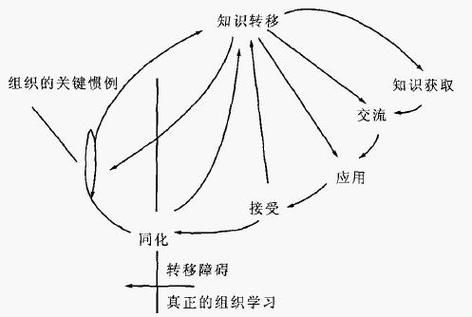
Business research papers - a knowledge innovation system based on industry clusters and a knowledge transfer study summarize how chinese enterprises form clusters with regional innovation advantages, and how knowledge alliances can be used to compete and develop their own competitive advantages is a subject that needs urgent research. This paper examines the motivations and institutional frameworks for building knowledge innovation systems under industrial clusters, analyses in detail the knowledge characteristics of industrial clusters and examines systematically the ways and means of transferring knowledge under industrial clusters. Keyword industry clusters; knowledge innovation systems; and knowledge transfer in the face of global economic integration challenges, with chinese enterprises facing a competitive market environment dominated by variability and uncertainty. Thus, the question of how chinese enterprises form clusters of industries with regional innovation advantages and how to use knowledge alliances to compete and develop their own competitive advantages is an issue that needs urgent study. First, the meaning and role of industrial clusters is a spatial phenomenon, as well as a similar concept put forward by prominent economist marshall as early as the late nineteenth century, who believed that specialized industries could be concentrated in particular locations for various reasons, especially because of the successful development of high-technology industries, which made industrial clusters an important economic phenomenon. The theoj. A. Roland study describes industrial clusters as a combination of benefits derived from the use of external assets and knowledge in order to acquire new and complementary technologies, accelerate the learning process, reduce transaction costs, overcome barriers to entry in (or innovation) markets, achieve synergistic economic effects, diversify the risks associated with innovation, and bring together interconnected regional space networks of highly relevant enterprises (including professional suppliers), knowledge-producing institutions (universities, research institutions, engineering companies), intermediaries and customers through the role of value chains. Early industrial clusters rely on static comparative advantages such as natural and labour resources in the region; modern industrial clusters, such as high-technology industries such as information technology and biotechnology, have a more dynamic competitive advantage by virtue of their special locational advantages, which are closely linked to productive research and development and are conducive to knowledge innovation and application. Industrial clusters are organized in the form of a network system of long-term cooperative and stable relationships between members, dominated by enterprises in the region, which is more stable than full markets and more flexible than hierarchical organizations and can be considered an “organized market”. Inter-firm exchanges, based on economic exchanges involving cultural, technical, institutional and political aspects, can better achieve complementarity of resources and information. The unique contribution of industrial clusters to technological innovation can be seen in the close collaboration and imitation of innovation among its members, leading to faster information flows and awareness, from which firms can derive much more knowledge than autonomous innovation. Cooperative knowledge innovation in industrial clusters is more effective than in-house innovation in individual firms, and the competitive advantages of enterprises are determined by their knowledge and structural factors such as their own resource factor conditions with competitors, market demand conditions, matching and associated enterprises. The interactive symbiotic relationship between knowledge and structure provides an industry-clustered idea of knowledge alliances: taking full advantage of industry clusters as a virtuous and competitive relationship between associated firms, and creating innovative synergies in industry clusters through structured knowledge management to help enterprises gain better access to knowledge, nurturing factor resources and achieving the multi-win goal of increasing the competitive advantage of all enterprises within the clusters. Knowledge innovation systems under industrial clusters 1. Motivation for creating knowledge innovation systems (1) complex learning motivations for enterprise learning are very complex and broad in scope, including the unique professional manufacturing skills, organizational management capabilities, marketing management capabilities, marketing networks and skills of other subjects in the cluster, familiarity with business practices, market structures, policy regulations and unique values. (2) it is very difficult to maintain technological sophistication in the long term, given the rapid and ever-changing evolution of modern science and technology that drives innovation and that no enterprise is likely to take a full lead in the various technological areas relevant to its products. (3) for internationally competitive enterprises to have a place in global economic competition, there is a need to participate at a higher level in international competition and to continuously upgrade their position in the international division of labour in the technological economy. Thus, it can be seen that the motivation for enterprises to form knowledge alliances is that they can benefit from such alliances. In summary, this gain is to improve the core competencies of enterprises. 2. Knowledge innovation under the business cluster of knowledge innovation systems under the industry cluster is the result of complex interactions between different subjects and agencies and of interactions and feedback between elements within the system. At the heart of the system is enterprise, which organizes production and innovation and acquires external knowledge. The main sources of external knowledge are other enterprises, public or private research institutions, universities and intermediary organizations. Knowledge characteristics 1. Knowledge can be classified as explicit and implicit. Visible knowledge refers to knowledge that can be accurately and officially expressed and that has normative and systematic characteristics, such as product specifications, mathematical formulas, facilities in the enterprise sector, personnel and superficial information such as external market survey reports, which can easily be communicated and shared. Invisible knowledge, on the other hand, refers to highly personalized knowledge, which is difficult to codify and which cannot be disseminated to others or which is very difficult, such as some expertise, market experience, etc. Invisible knowledge is the result of the long-term creation and accumulation of individuals, and it exists in the potential quality of the owner and is related to his or her personality, personal experience, age and upbringing. Knowledge characteristics in industrial clusters (1) are hidden. Visible knowledge is easy to manage in relation to hidden knowledge, mainly through coding, databaseization, etc., while tacit knowledge is more difficult to manage, and its sharing is influenced by a wide range of factors, including employee values, culture, psychology, social and corporate systems, while the management of tacit knowledge is largely through implicit intellectual visibility. However, only a small part of hidden knowledge can be expressed in language, and most of it can be understood rather than spoken. Thus, the hidden characteristics of knowledge determine that innovation requires close interaction. The innovation efficiency of geographical proximity interactions is higher than that of decentralized innovation. (2) dispersion. The diversity of individuals with knowledge carriers and the unique ways in which knowledge is produced inevitably lead to the heterogeneity of knowledge, and the wide distribution of knowledge individuals in enterprises and industrial clusters leads to the dispersion of knowledge. Fragmentation of knowledge actually stems from the division of professionalization, which can generate more knowledge because of the fact that individuals involved in the division of professionalization, whose breadth is reduced and its depth increases. Industry clusters that include decentralized specializations will be further enhanced in terms of both breadth and depth of knowledge. (3) rooting. As science and technology advances, the acquisition of visible knowledge is very low-cost and efficient, and therefore hidden knowledge is irreplaceable for the competitive advantage of building enterprises and industrial clusters. Because of the difficult to codify nature of tacit knowledge, scientific and technological instruments are not effective for the acquisition, use and dissemination of tacit knowledge. Invisible knowledge is often disseminated through face-to-face exchanges. The hidden characteristics of knowledge give roots to knowledge (space viscosity). Geographical proximity facilitates the continuous, intensive and rapid exchange of knowledge. The spatial stasis of knowledge contributes to preserving the competitive advantage of enterprises or industrial clusters. Knowledge transfer in industrial clusters is in the silicon valley innovation system, and the convergence of technical experts and entrepreneurs has facilitated the timely flow and diffusion of the latest technologies, expertise and know-how and the integration and integration of new ideas, resources and technologies. An important concept of silicon valley is the sharing of resources, manifested in the compatibility of product design, the symbiotic nature of enterprise development and the universality of production cooperation. The innovation owners in silicon valley, including research universities, high-technology entrepreneurship companies, the interaction between a large number of production technology companies and non-productive service providers, and collective learning are increasingly woven into a vast network system that provides various channels for information and resource sharing among the innovation owners, thus promoting the inheritance, integration and multiplier effects of innovation through a holistic integration effort. The role of industrial clusters in innovation is manifested not only in the provision of physical resources such as human and financial resources to enterprises within clusters, but more importantly in the transfer of knowledge within clusters. The homogenous clustering of enterprises not only reduces the cost of coding knowledge dissemination, but also makes it possible to disseminate knowledge of implicit empirical origin. 1. Technical cooperation and other informal interactions between enterprises are the most direct and important forms of knowledge flow and transfer, yet inter-firm cooperation is based on trust rather than on contract。the development of clusters meets the requirements in this regard, and enterprises within clusters are based on geographical proximity