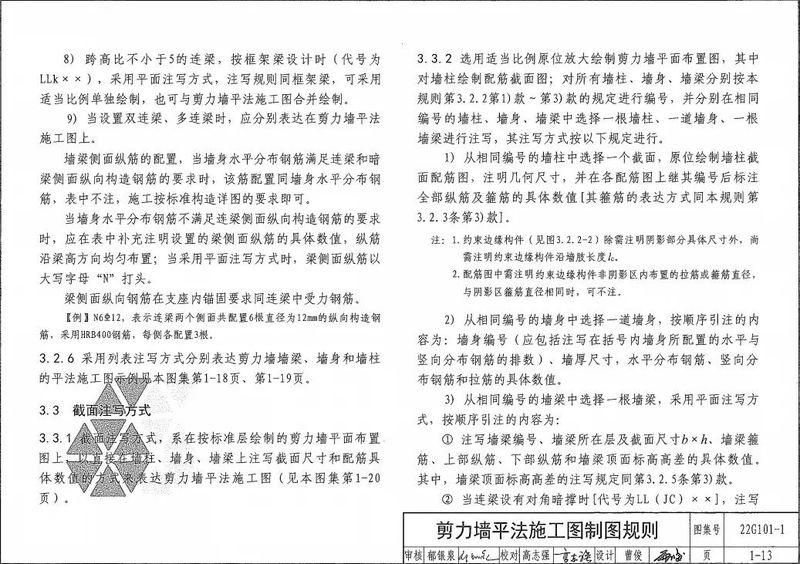
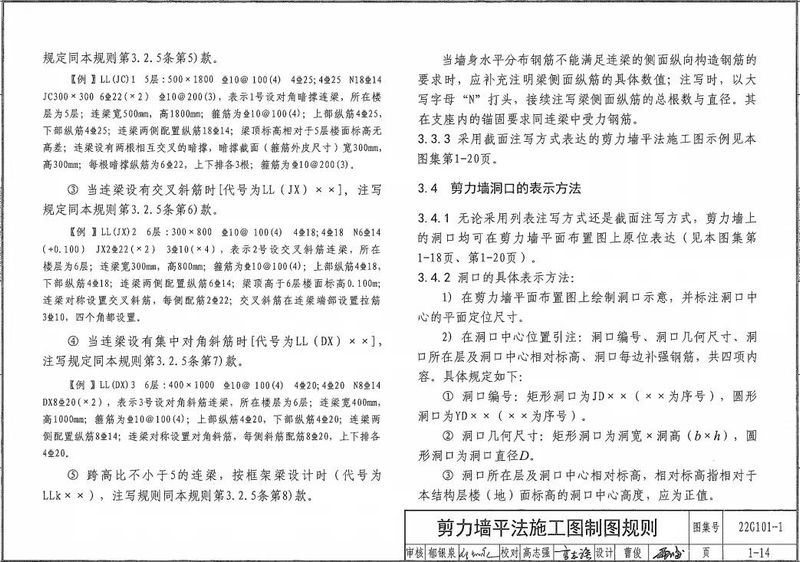
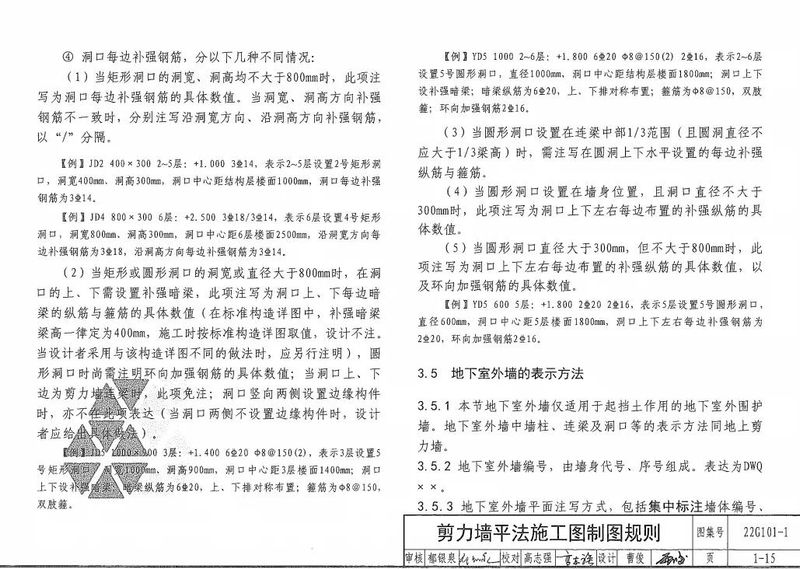
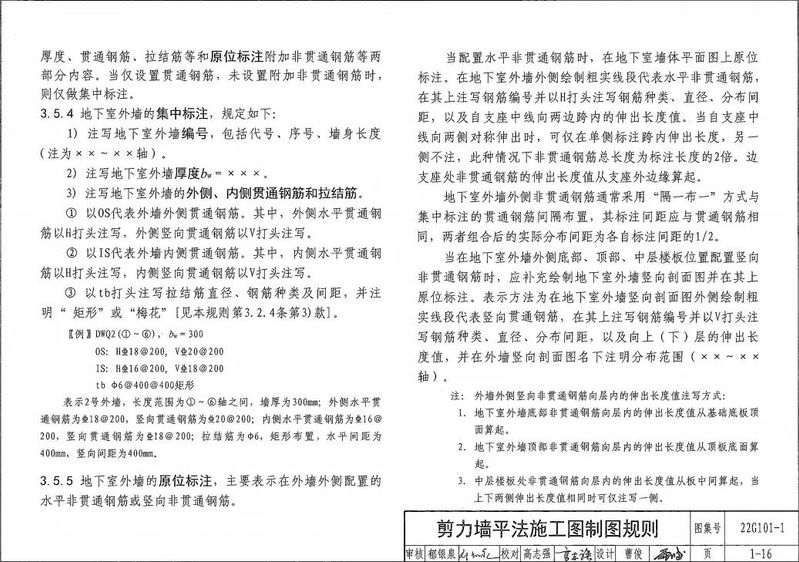
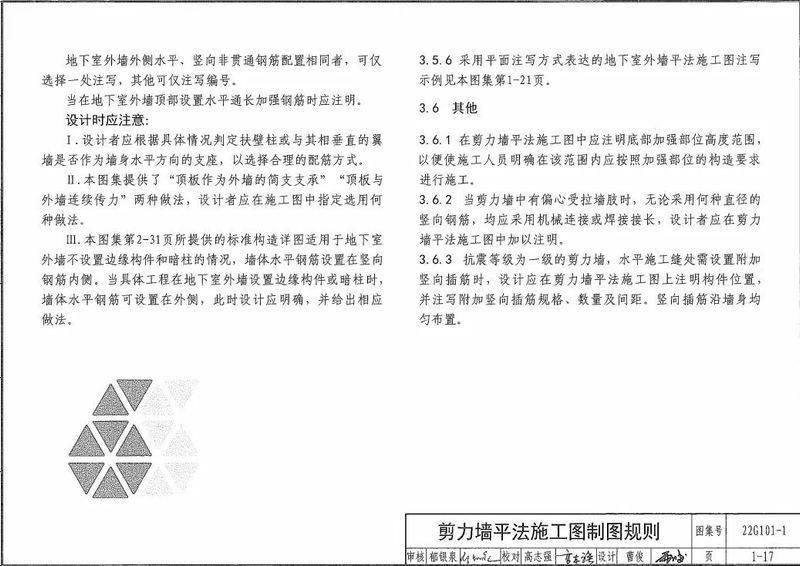
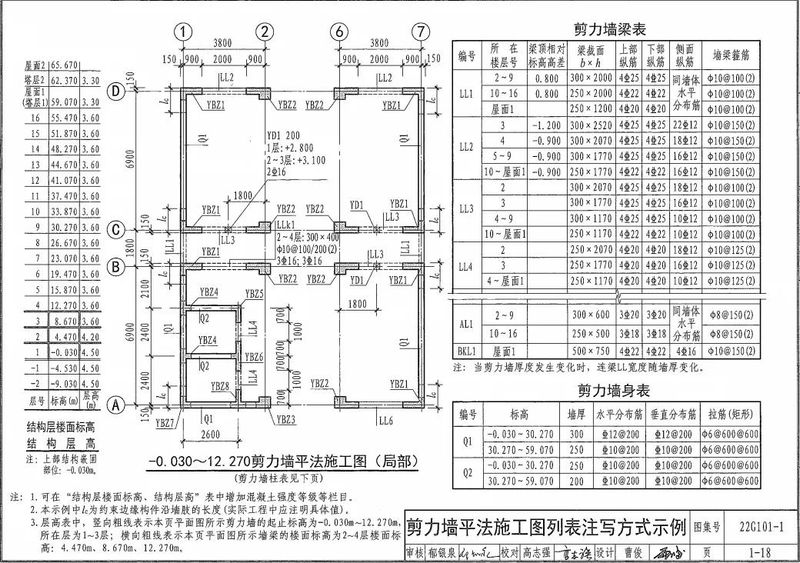
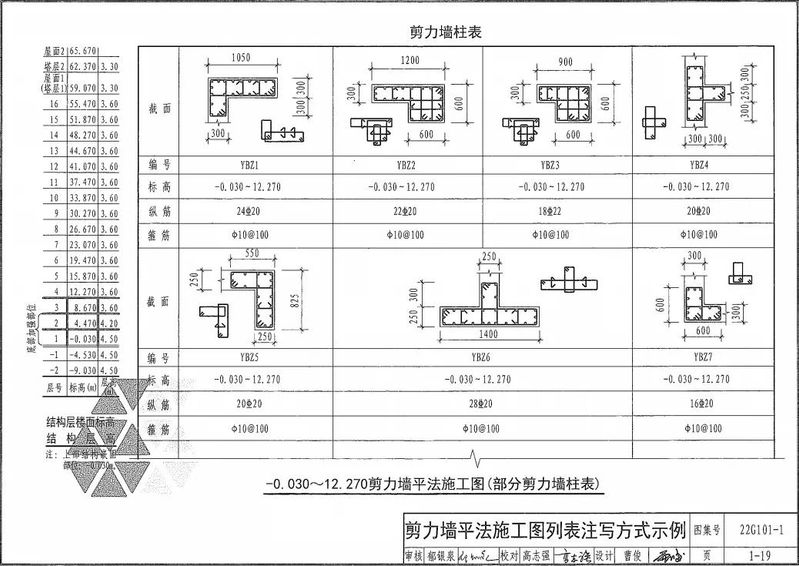
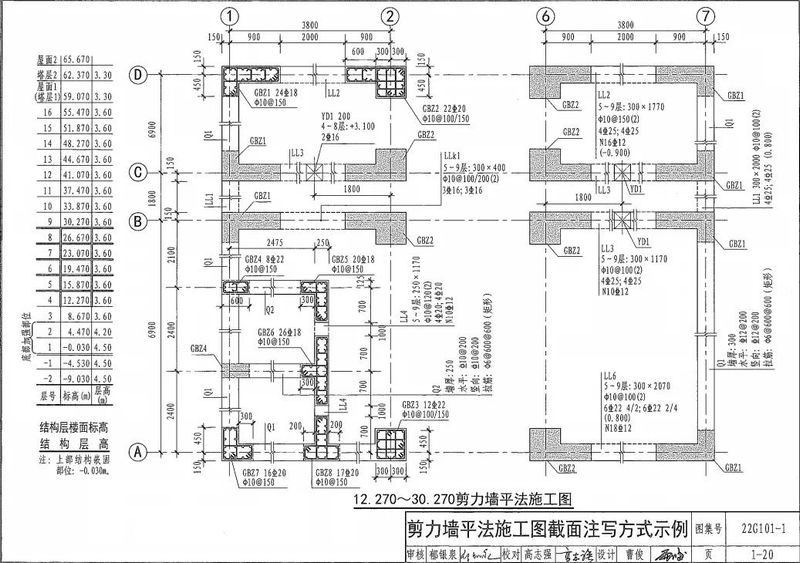
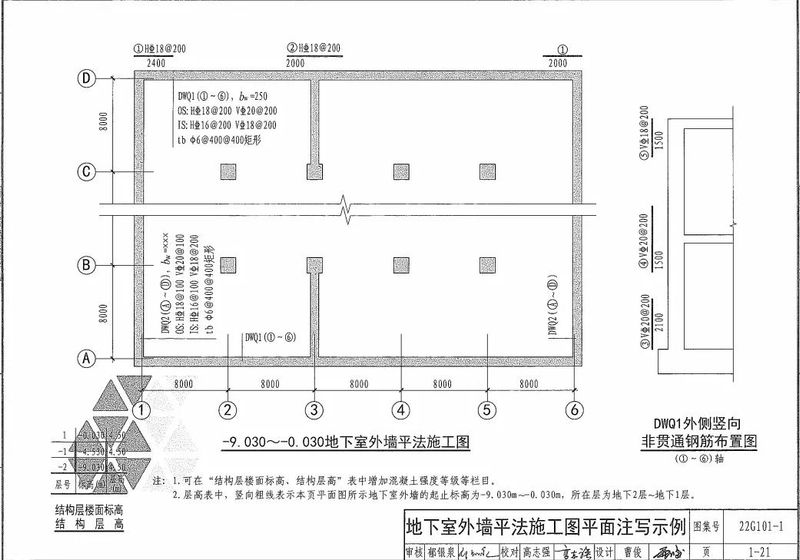
The article ends with the original atlas
Core rules for the shear wall flattening plan
1. Numbering rules
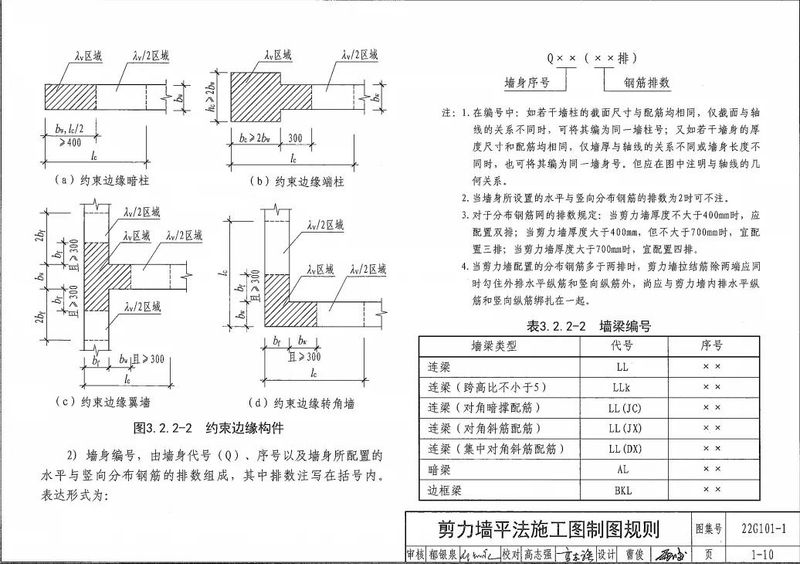
- wall (q): numbered in order, e. G. Q1, q2, with wall thickness, horizontal/vertical distribution, stretching。
Example: q1 (2 rows) denotes a wall with a number 1 number, double-team band。
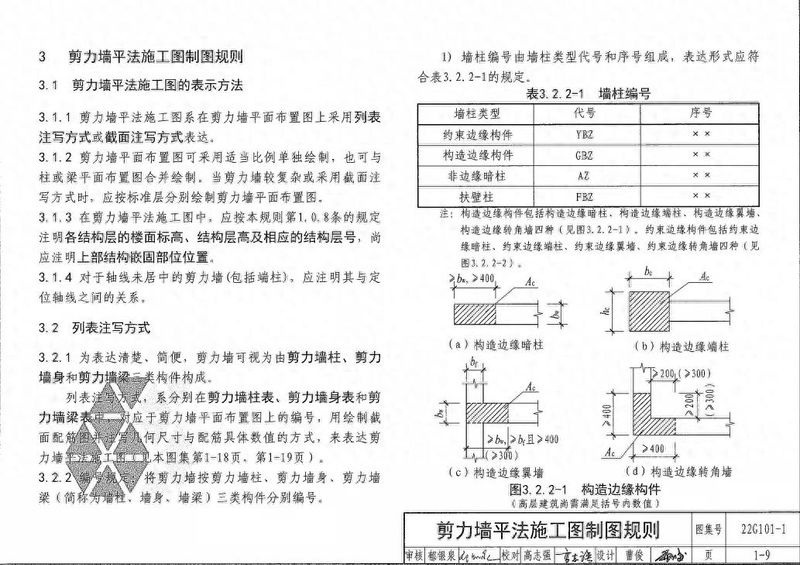
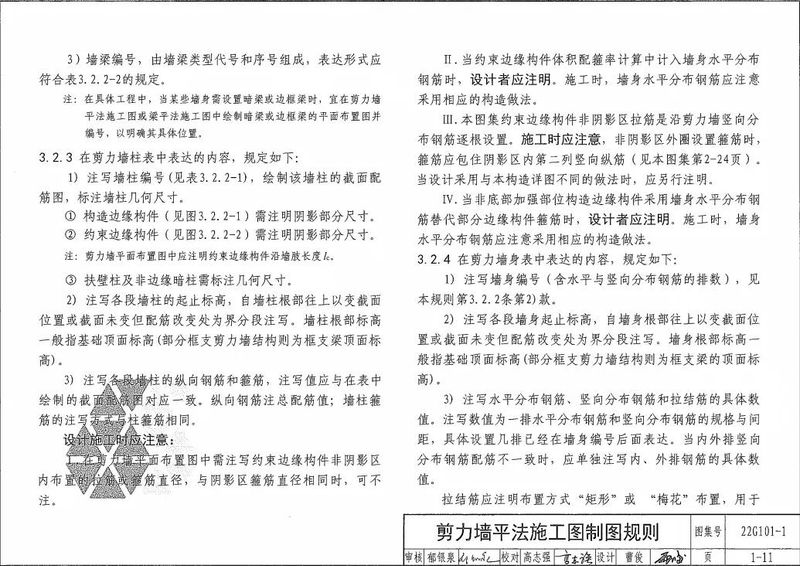
- walls (yz, yy, yj, etc.): partly bound edge components (ybz) and tectonic edge components (gbz) need to be marked with cross-section dimensions and bands。
- walls (ll, al, bkl): lines (ll), lines (al), borders (bkl) need to be marked with numbers, cross-section sizes, upper- and lower-banding, cramping。
2. Cross-reference notes vs list notes
- cross-referenced: a description of the band directly at the location of the plan, visual but complex。
- list notes: tables summarize wall bodies, wall columns, wall beam parameters, clear but read against plan。
Ii. Detailed composition of the steel band
1. Horizontal distribution and vertical distribution
- format: Φ12@200 (12 mm steel in diameter and 200 mm distance)。
- two row bands: when labeling "2 rows", internal and external steel bands may vary in size and need to be separated by "+"。
Example: Φ10@200 (outside)+88@200 (inside)。
2. Tightening
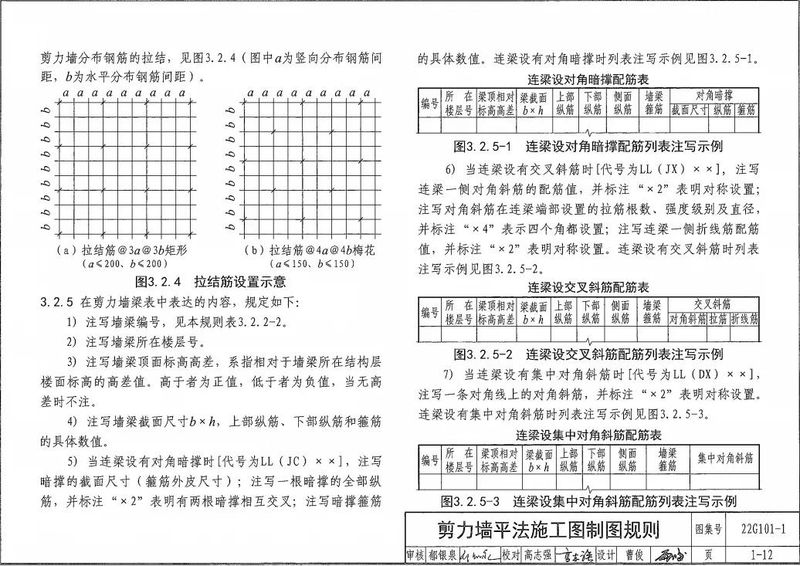
- default rule: the stretching space is twice as wide as the distribution, and is made of plume。
- special requirements: if rectangular placement or different spacing is required, it should be indicated separately。
3. Key points for wall pillars
- marginal components: the constraint edge component (ybz) is highly resistant to earthquakes and more condensed; the construction edge component (gbz) is used for non-critical parts。
- crafts and spasms: the number of spasms is determined by the size of the cross-section, and the spasms need to be marked by level, diameter, spacing (e. G. Φ8@100/200)。
Iii. Description of hole and edge components
1. Hole expression
- rectangular hole: mark jd+ number (e. G. Jd1) with a long width and a patch。
- round hole: marked yd+ number, indicating diameter and ring-to-strength。
- rule of strength: 50 per cent of the steel bars have been cut off on each side of the hole and 2 Φ12。
2. Marginal building
- obsolete edge components: used in high-intensity anti-earthquake zones, which need to have a minimum band ratio。
- tectonic edges: the bands are simplified and the lengths and lengths can be reduced as appropriate。
Iv. Construction care
1. Impermissible reminders
- curving direction: when a plum shape is made, the adjacent layer must stagger。
- holes: when the edge of the hole is less than 300 mm away from the wall, it needs to be reinforced by an additional slope。
- end of wall: vertical bands should bend to the top and anchor into the floor, length 12d。
2. Distinction from 16g101
- spacing: 22g101 clearly sets the plum pattern by default, and 16g101 requires design designation。
- marginal components classification: 22g101 finely bind edge components with band requirements to increase seismic tectonic measures。
It's..
V. Conclusion
Three elements of shear wall flattening: numbering, steel bands, edge hardening
Horizontally vertically distributed bands, stretching plumes without neglect
The hole is full of sight. The edge is anti-shock
By mastering these rules, the construction staff can quickly read the drawings and avoid returning to work. It is recommended that the original 22g101-1 atlas be read more deeply in relation to actual learning in the field
(dissolve end, suggest collection backup