Moderator: the sunflower is one of the four largest oil crops in the country, with sunflower seeds that extract low cholesterol, high-quality sunflower oil and are known as the 21st century “healthy nutrients”。
In northern china, a moderate reduction in the area under wheat cultivation and the replacement of sunflowers with drought-resistant saline is one of the directions of future crop-making plans. Earlier, farmers in hebei suzhou wanted the publication to recommend a variety of sunflowers with high oil rates, resistance and production. To this end, the newspaper's journalist has made special contact with the chinese group, to the ministry of sunflower enterprise, and has invited businesses to provide suitable varieties for farmers。
Who's got a high fuel rate for sunflower
North china has overextracted groundwater and has proactively adjusted its cultivation structure
Oil output, resistance, acre production, no less
“experts are invited to recommend several species of sunflower seeds that are well-oiled, highly resistant to drought and have high acre yields and suitable for cultivation in the eastern light of the state of finality.” following an article published by the farmer's daily “modern crop industry” twitter public, a farmer from east guangzhou, hebei province, left a message。
The reporter contacted the farmer, who is a villager of li yanchang from west wang point, east gwang county. “we usually grow a season of wheat corn here, two years of structural adjustment, and the economic benefits of growing corn have fallen, and i want to grow some more efficient crops.” i have grown wheat and corn for more than a decade, and i've thought about changing sunflowers since the beginning of the year, but i don't know what kind, and i don't know who to ask, but in the modern industry. The following message to the public has been sent for the press to contact the recommended species。
The idea of li is not only consistent with the current general trend towards a restructuring of cultivation throughout the country, but is also an option in the context of water scarcity in hebei suzhou。
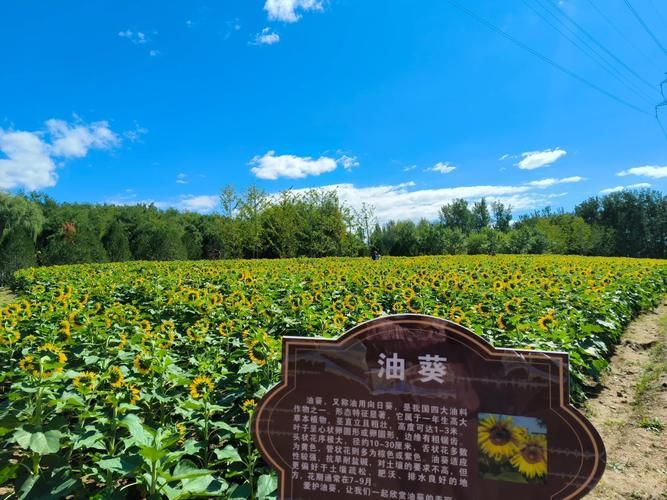
As a result of years of excess mining, an area of approximately 70,000 square kilometres of groundwater overmining has been lurched beneath the hebei subsurface, creating 26 groundwater table landing leaks。
To this end, the ministry of agriculture issued the national plan for the restructuring of cultivation (2016-2020), which provides for “a modest reduction in the area of wheat cultivation in northern china, in the context of a steady increase in food production capacity, and the replacement of crops such as cotton and sunflower, which are resistant to drought and saline”。
"if there's a good sunflower, i'll plant it next year!" li's decision was made。
The chinese group's director of sunflower business, wu hai:
Recommended two species of sunflower: "dumphead 567dw" and "s668"
The average acre yield is about 30 kg different and the oil output is about 5% different
The needs of the villagers of hebeiguzhou, li zhang, were identified, and journalists first contacted wu hai, manager of the chinese seed group ltd.'s ministry of business in hebei. He recommended to his farmers' friends two varieties of “middle head 567dw” and “s668” sunflower, which are medium-prematured species, with a birth season of about 100 days, a summer season of about 85 days, a height of 80 cm ~ 120 cm, and a short-sized plant, with a strong ability to grow well, withstand natural disasters such as volleys, wind, etc., and are particularly active, and can serve as a view to developing recreational tourism agriculture, as is the case with parades。
In addition, these two varieties are drought-resistant, salin-resistant and have been able to achieve water conservation and drought-resistant in the final, fixed, water-coast and salin regions of the hebei groundwater supermining area; in the arid salin soils of the shandong region, the ribbon region and the east camp in the rim bay region, they are able to effectively exploit their advantages and maximize their cultivation value. Moreover, the variety is very productive, with an acre production of up to 300 kg under scientifically managed cultivation and good hydrofertilizer conditions, as well as high sub-oil acid varieties, which are internationally prevalent raw materials for healthy food。
At present, there are many species of sunflower in the market, and it is easy for farmers' friends to “choice their eyes”, as shown in particular by wu hai: “there are many species in the market called `dwarf heads', mixed fish beads, but only the real `dumhead', operated by china seed group limited, and the other `dumheads' in the market are simply constricted, with an average acre production of 20-30 kg different from `dwarf heads' and a 4-5% oil outlet ratio, and a large number of farmers' friends are asked to identify with the chinese group for packaging.”
Main cultivation measures
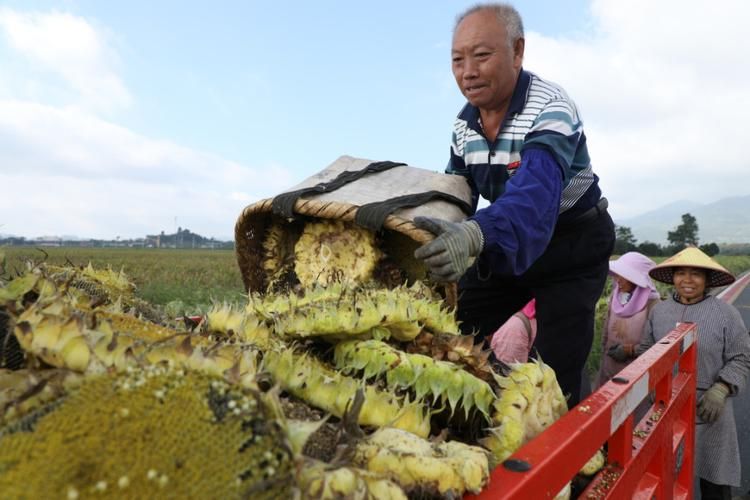
(b) land selection and consolidation: it is important to avoid heavy stress, to sweep the ground deep down, and to carry out the masonry。
The seeding period: these two varieties are highly adaptable and can begin planting when soil temperatures are stable at 10°c or more in the spring; summer planting should normally take place between mid-june and early july。
Seeding and sowing depth: seeding is generally around 0. 4 kg per acre and sowing is generally around 3 cm。
Field management: weeding should be done in a timely manner during the seeding period, and water should be used as little as possible in the pre-growing period without a special drought; water should be pumped in a timely manner at the beginning of the present bereavement, depending on the soil, and in the case of drying during the slurry period, on the basis of irrigation。
What do you think
High income: acre production is generally above 200 kg, with a conservative purchase price estimated at $5 per kg and an acre income of $1,000。
Low cost: due to the high adaptability of the sunflower, its combined resistance, relatively simple management of the plant, special savings in terms of labour, fertilizer and water。
Cost-effectiveness: sunflowers are more efficient than cotton and maize at lower current prices. In particular, where market orders exist, returns are better assured。
The sunflowers can be rotated
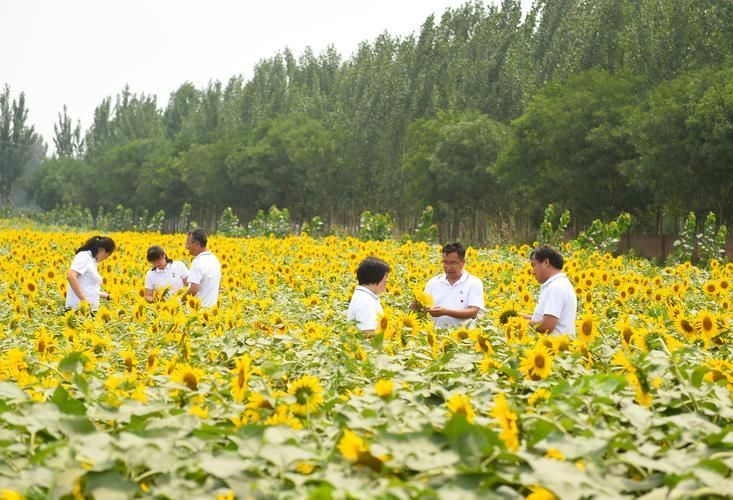
A study of the project “research and demonstration of critical planting techniques for two high-yielding high-yielding salinous lands `oil' in the ring of the sea `oil'” proved that oil crops in demonstration fields with medium salin levels were being used for sunflower and peanut rotations, with sunflower being sowed in mid-march and harvested approximately 90 days later; peanuts were then planted in late june and harvested in mid-october. Through the implementation of this model, which combines key technologies, it is expected that the harvest of sunflower and peanuts will yield an economic benefit of 3,000 to 4,000 yuan per acre, with prospects for development, which will also provide a new direction for the development of saline。
Fertility dynamics
Over the years, the national technical research centre for semi-arid agricultural engineering has worked with countries such as romania, slovenia, germany and hungary on scientific and technical cooperation in the introduction of sunflower varieties, breeding research, technical exchanges and training of personnel, with the introduction of 32 long-finished, high-resistant, high-oiled sunflower varieties, and the screening of a collection of early-cooked sunflower varieties and high-quality resource materials suitable for cultivation in our dry zone in the north of the country。
The projects of the international scientific and technical cooperation programme, “putting of biodiesel for solar sunflower and new breeds” and “modeling of early decorated sunflowers”, are implemented by the national technical research centre for semi-arid agricultural engineering. Among them, biodiesel diesel-diesel golodor and pre-literated sunflower ss1 fields performed well, with ss1 producing more than 5 per cent in comparison with the increase in production, and the resistance to bacterial nuclei was significant. In addition, pilot studies such as the expansion of home-grown gestations, hybrids, and the demonstration of lineages were conducted simultaneously at the nanlonggui integrated experimental base at the national semi-arid centre, which provided a good basis for further breakthroughs in breeding research。
His rock
In recent years, the white river county agrotechnical centre in shaanxi province has been actively leading farmers to a bold attempt, based on the cultivation of traditional oilseeds, sesame, peanuts and other oil crops, to the success of testing sunflowers in towns such as mini-tubs and huts。
Through experiments to demonstrate the cultivation of more than 150 acres of sunflower on the puddles, agricultural technicians have found that sunflowers have a greater advantage over traditional oil crops, vegetables, sesame and groundnuts: first, production is stable and more efficient. The average acre production, measured in the field, can reach 320 kg, with an oil production rate of about 42% to 45%, extractable oil of about 140 kg, market prices are 50% and 25% higher, respectively, of vegetable oils and peanut oils, and growth cycles are short and fast. In the white river county, the "dump head 567dw" sunflower is introduced for 90 to 100 days; the third is low input and easy to manage. Compared to other oil crops, sunflowers have few infestations and pests, and because of their rapid growth and abundance of leaves, there are fewer weeds in the fields, with little use for medicine and weeding; fourth, they are simple harvests, which save energy. The sunflower harvest requires only cutting off the head, pulling it home, drying it up a little bit and taping it off, while the oilseed requires harvesting, drying, rolling and beating procedures, while the peanut labour is more intense and requires digging, picking and drying; and fifth, resistance is strong and high utilization. The sunflower, which is dry and dry and adaptable and suitable for cultivation along the arid lands, dry slopes and roads, and in the yard, both benefits the environment and reaps by-products such as the accelerations, the straws and so forth, in particular the oilseeds, commonly known as “shea cakes” after the extraction of oil, are excellent protein feeds, which facilitate the development of family by-products such as pigs and sheep。