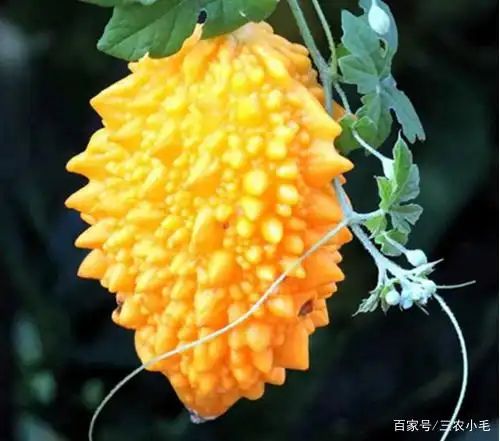
White, ben is a regular customer in gangnam. Today, however, this warm and cold aquatic vegetable has taken root on the salinous soil of the north-east pine plain town。
In recent years, the county has continued its intensive cultivation of the “southern north” specialty industry, with the two leading enterprises, jilin federation agricultural technology co. Ltd. And white city tianwon eco-agriculture development co. Ltd., in their respective jurisdictions, insisting on scientific innovation to solve the challenges of cultivation in the north, breaking through multiple dimensions, such as seedling improvement, planting techniques, seed testing, product development, etc., and building a modern agricultural system that integrates research, planting, processing and services, bringing salt-alkali cultivation techniques to the forefront of the nation。
Ifig: “chemical + biological” twin engines for industrial anti-farming
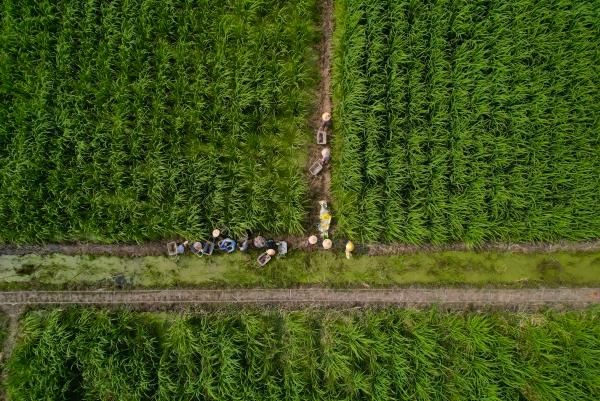
The union agricultural science and technology ltd. Initially settled as a lemonate producer. In the process of deep-tilled local development, firms are keen to exploit the regenerative value of industrial by-products and find lemonate plaster and organic waste to be natural green raw materials for improved heavy salinity. Based on autonomous r & d techniques, enterprises have developed green efficient soil improvement agents, using the calcium sodium-replacement core principle, combined with acidity and soil alkalinity, which have succeeded in adjusting the pre-high soil ph from above 9. 5 to suitable crop growth areas, and in laying the foundations for saline soil species。
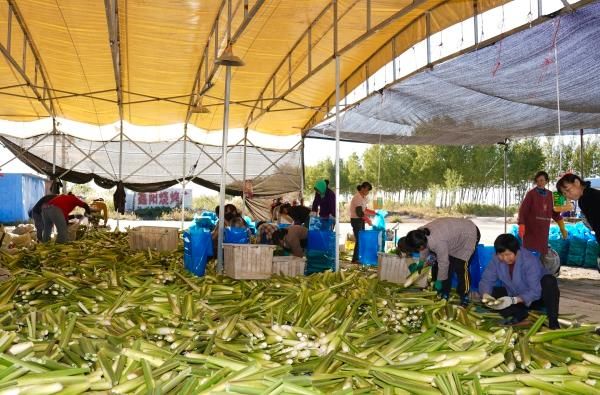
It's a good field, a good seed. Based on improved quality soil and water conditions, enterprises have introduced the southern white industry into the town and officially launched the innovative exploration of the “southern north”. Since 2025, icrf has initiated a white-scale testing programme with the development of a dual technique of chemical precision precipitation and seedlings, with strict stabilization of surface water ph to the optimal growth range of 6. 0-7. 5. In 2026, the size of corporate white cultivation was over 800 acres, and in the first ph up to 9. 6 heavy saline wasteland, the rate remained stable at over 90 per cent。
At the same time, white cultivation has led to ecological improvement and increased agricultural production in both directions. A year after cultivation, the ph value of the plot can be reduced by 0. 3 to 0. 5 and the organic content of the soil increased by about 10 per cent, achieving the ecological benefits of “season planting, permanent soil conversion”. The economic benefits are equally high, with project acres growing at an average cost of approximately $7,000, measured at an acre production rate of 4000 kg and a market price of 2. 5 to 3. The average annual acre production value can be 10,000 to 12,000 yuan, with real efficient use of saline。
White city tianwon: a sample of “production studies” at the science and technology college
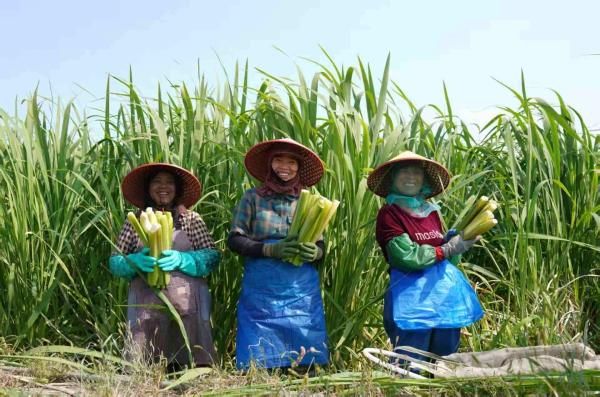
The white city tianwon eco-agricultural development co. Ltd., established in 2011, has emerged from a unique development path of scientific empowerment and integration of productive research. In 2024, in an effort to tackle the bottlenecks in the localization of saltline lands in the cold, kac-girin province, in collaboration with the jilin agricultural university, and the white city tianwon complex, a town called the white science college, moved high-end research positions directly into the fields。
Scientific teams have taken root in saline beaches and conduct all-weather pilot studies on breeding, soil and water adaptation and optimization of cultivation patterns. After several rounds of screening and nurturing, the team succeeded in producing a new white system of saline soil and water suitable for the saline and saline areas of the town, which solved the problem of the southern species of “continuation”. The industry grew steadily over the years, with 360 acres being planted on a pilot basis in 2024, 700 acres in 2025 and 900 acres in spring 2026. In 2025, base white products were successfully certified for green food and the quality was widely recognized in the market. Industrial development is more likely to sustain the growth of wealth among the population and to ensure that niche industries are a solid support for the rich villages。
From the production of a seedling to the harvest of a field, from the recycling of industrial by-products to the establishment of a field in a small technology complex — both paths prove the same answer: saline lands can also grow puss. Today, the white one from the south, with its green and sweet fruit, writes a story of persistence and innovation on the saline. And the town, it's making the story more rich every year。
Jilin network, china
Photo provided by the communications department of the county council