Hello, i'm the star watcher on the gobi, who brings you up to date every day
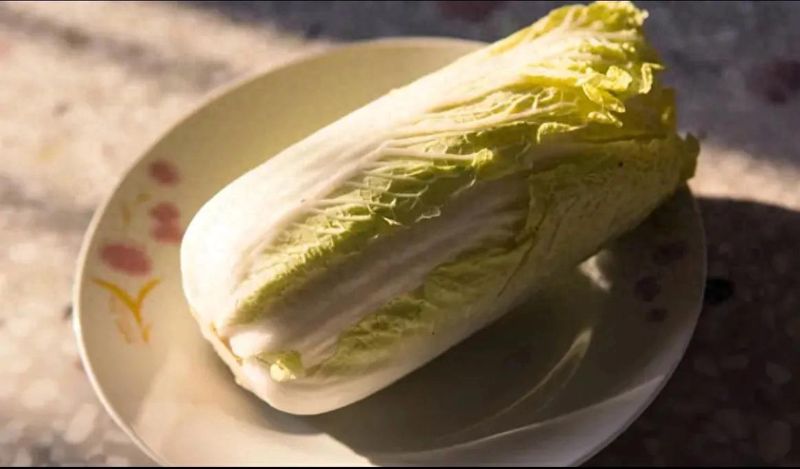
The large cabbage is the core vegetable in our autumn and winter gardens, stored in the north for the winter and kept at the southern autumn and winter table. There are two models of large cabbage, one directly on-demand from daejeon and the other on seedling before planting。
Many family gardens, with limited plots of land or staggered mouths, choose to migrate. However, many of the varieties of vegetables tend to have problems with cabbage: slow planting after planting, dead seedlings, stagnating seedlings; loose end-of-life care; and softness and bad root after planting。
Most of these problems are not bad seeds, but the timing of planting is not right, the roots of seedlings, planting operations, water management. The cabbage is simple to look at, with a lot of details and a week's error, and the long gap at a later stage is very clear。
Many newcomers can't tell the difference: when will cabbage be the most suitable plant? How big can you move it? How can you try to keep the roots down? How deep is it? How far is it? How can you water it? What's next? The following is a step-by-step description of the whole process in conjunction with the practical operation of open-air family gardens。
I. Optimum timing of large cabbage migration
The cabbage migration consists of two temporal concepts: the planting time, the timing of the planting time, and the reversal of the local frost date。
The full growing cycle of cabbage, ordinary autumn cabbage, ranges from planting to maturation, usually 60 to 85 days. There are differences between varieties: 60 – 70 days for pre-literate varieties; 75 – 85 days for medium- and late-literate mainstream stocks. It is important to ensure that the encumbrance is completed before the local frost arrives。
1 see the size of seedlings (age of seedlings)
Big cabbage migration, best sapling age four and five。
The seedlings are too small, 2-3 leafs are weak, plant resistance is weak, and the rate of survival is unstable; they grow too big, 6-7 leafs above, and the roots are already rooted, with large breaks when the seeding takes place, slows down for long periods of time, and tends to become unheard and twitchy later。
Cultivation is usually 20-25 days, and the length of a leaf growing up to 4-5 is a golden window period. Don't just chase the seedlings again。
2. Looking at the calendar and geographical time
• north china, the yellow and yellow areas: autumn cabbage seeded mostly in mid-august and the planting was completed in late august and mid-september. The plant was moved after mid-september, leaving insufficient time for condensation, which was tempered and ill-conceived。
• yangtze basin: nursery in mid-august and planting in mid-september and late. Winter cooling is late and time is more flexible。
• north-east, nemont and other high-hot areas: deplantation is due to be completed in early august, with insufficient later temperatures。
• south china: all seedlings can be grown from 9 to october, with high winter temperatures and longer windows。
The plant is designed to avoid high temperatures in the midday sun. The sun is preferred, or the sun is changed in the evening. The solar venomous midday seedlings, fast water loss of the leaves and multiplication of the time of the seeding。
3. Simple comparison between live and transplant
There are a lot of questions about whether the cabbage is live or not。
Live: direct inch seed, unharmed roots, strong and steady; the disadvantage is multiple seedlings, with long land occupancy。
Cultivation: small plots can be concentrated, land saved and seedlings can be easily managed; the disadvantage is that the roots are bound to be damaged, if not properly operated, slow down, and there is a risk of causing soft decay。
Family gardens are broadcast live if the plots are large and small, and if the crops are too small to open, they are selected for planting。
Preparatory work for the transfer
It is not the seedlings that go straight to the ground and are not ready to be planted, and the problems that follow。
1. Land consolidation
The large cabbage is fertile and lax soil and requires a high level of fertility. The front crop is cleaned up and all the weeds are cleared out of the kitchen and not left in the ground with rotting worms and bacteria. The land was plowed to about 25 centimetres and the earth was broken into pieces。
The bottom manure is dominated by decomposed organic fertilizer, which, in combination with a small amount of compound fat, is spread evenly into the ground and then into the soil. The use of raw manure without decomposition is strictly prohibited, which burns roots and induces maggots。
It's critical that the plot recommends planting. It's 15 to 20 centimeters high, and it's made of cabbage. Cultivated soil is airy, rain, water is not easy to accumulate, cabbage is most afraid of water, which is the main cause of the rotting roots of soft disease. Low-lying plots must rise up, flat-watered。
Two, stay long enough
The cabbage is large, cannot grow too dense, has a low density of ventilation, is sick and has a small heart。
Pre-cooked species: 50 cm by row and 40 cm by row; approximately 2,500 ~ 2800 per acre。
Large species are stored at mid- and late-time: 55 - 60 cm in rows and 45 - 50 cm in rows; 2,200 per acre。
The family garden does not count the acres and simply understands that the two dishes leave a distance of 45 to 50 centimetres. The balconies are not suitable for large cabbage, the varnish space is limited, it is difficult to cover normally and the cabbage is more suitable for planting。
3. Watering of nursery beds the day before the planting
The seedlings are soaked in water 12 hours to 24 hours before they rise. Many missed this step。
The soil is humid after water has been poured and the earth is not easily scattered when seedlings are raised, and it is able to carry the root soil and protect the root system to the greatest extent possible. If the soil is dry, the seed is hard to pull, the roots are mostly torn apart, and the stripping is particularly slow。
Iii. Shrimp operation, with as few roots as possible
Shrimp is the most easily neglected part of the process, the more roots are injured, the harder it is to slow down, and the higher the risk of disease。
1. Do not draw seedlings by hand. With small shovels, the seedlings were inserted down 5 to 6 centimetres around the seedlings, and the saplings were pulled out together。
2. The earthwork is as complete as possible, with a diameter of approximately 6-8 cm. Protecting the root, which is the key to fertilization in later years. The ground is broken, the roots are bare, and the seedlings are much slower。
3. Scrutinizing seedlings: throwing the seedlings, the seedlings, the bugs. Only strong saplings of equal size. Small and small seedlings are planted separately, rather than small seedlings, so that they will cover up their nutrients and they will not grow。
No, no, no. Short-term planting, covered with wet sacks or wet cloths on the roots of seedlings to prevent the drying of roots。
Caution: cabbage moves as much as possible with seedlings and plantings, without raising seedlings for hours and plantings, with bare roots tan for hours, severe damage to roots and a significant decrease in survival rates。
Iv. Depth of planting, critical
Dig the pits, put the seedlings in, and bury the ground in a shallow and shallow manner。
Just bury it under the leaves, and not the cabbage of cabbage。
Two errors:
One, too deep: bury the vegetable heart in the dirt. After watering, the soil is covered with the leaves, which remain inhaled for a long period of time and are highly susceptible to morbidity, depravity and the whole tree is destroyed。
It's too shallow: roots are out there, roots are dry, roots are difficult and seedlings fall。
The dirt and the surface are basically flat. (b) refill the earth, fill the sutures around the earth's body with earth, gently press the soil around the ground, so that the earth's contents and the soil of the daejeon are closely bound, and not leave open holes. There are holes, roots do not reach the soil, water is not inhaled and seedlings are dying。
V. Watering: water that separates roots, water that slows down, water that cannot be broken
Watering is at the core of migration, and many people can get through the heavy or too little water。
One, root water
And when they have done so, water their roots. It's not watering the surface. The purpose of watering is to fill the soil with water, so that the roots and the soil are closely integrated。
Water is being poured as slowly as possible, and no heavy water is being washed, which will wash down the seedlings, wash off the roots of the soil, and even slurry the vegetable heart。
If the soil is sandy and permeable, the roots can be re-fed for 10 minutes to ensure that the root soil is fully watered。
The focus is on watering not into the heart, mud into the heart, and the probability of later heart failure is significantly higher。
2. Water management during slow-growing periods
Upon completion of the transplantation, it enters a detoxification period of 3-7 days. During this period, the soil is watered, and the earth's surface is dry. The soil is so wet that it cannot be flooded with water every day. The soil has been damp for a long time, and the broken wounds are susceptible to bacterial infection and the outbreak of morbid disease。
It is normal that the sun rises in the first two to three days after the planting, when the sapling occurs. The root system has not recovered its capacity to absorb water. When the seedlings recover in the evening, they will not have to deal with it; if the evening is still aging, they will be able to refill it with a small amount of water, and do not pour it。
After three to seven days of planting, the saplings were re-stuffed and new leaves were produced, representing the success of the sapling. After success, the seedlings enter normal management of water fertilizers。
Vi. Ending seedlings after planting and follow-up field management
1. Single seeding
A week after the planting, the garden was visited. Dead, dead, ready to be uprooted and replanted. The sooner the seedling is filled, the smaller the long-term gap. It is also done in the dark or in the evening。
2. Cultivated pine land
When the seedlings are alive, they can sow loose land. Crush the floor and remove the weed. China should be careful not to be too close to the roots to hurt the root of the large cabbage. A little deep in the ditch, a little shallow in the edge of the root。
3. Phased pursuit of fat
The cabbage consists of three stages of growth: a tarantula, a congeal, and arrhythmia。
After the success of the slow seedlings, the lotus leaf is able to catch nitrogen fat once to help grow a tree; when the heart begins to hold, it is necessary to increase potassium fat and promote a tight leaf ball. Fertilizers are applied in shallow ditches 10-15 cm from the root and are not stacked directly to prevent the burning of roots. Fertilizers are followed by a combination of water。
4. Focus on disease and pest prevention
After planting, the greatest risk is morbid disease because of wounds on the roots. Soft decomposition is a bacterial disease, with high temperatures and high levels of wet water highly prone to outbreaks. The main focus of prevention is to pump and drain, so that the water does not overflow and so that the mud does not spill into the heart. As soon as the individual scavengers were found to be rotting roots, they were removed from the vegetable garden and some lime was cast out。
Insect pests, larvae, aphids, are still high in autumn. Home gardening gives priority to physical control, yellowboarding and manual pest hunting。
Vii. Summary of high-frequency permutation pits
1 the seedlings are too old to move: the seedlings are 6-7 and above, the roots are severely damaged, the seedlings slow and the heart is poor. Controls the four-and-five-real leaves。
2. Raised seedlings from dry soil: without dirt, with bare roots, with low productivity. The day before the rise of the seedling, the nursery bed was poured。
3. Buried too deep to cover the heart of the vegetable: a plume of rotting heart with high hair, without covering the growth point。
4. Unaffordable cultivation: rain-fed water and widespread outbreaks of molluscs give priority to planting。
5. High-temperature displacement: the seedlings are severely aging, slow-down periods are lengthened, and shades or evenings are chosen。
6 after planting the water daily, the roots are contaminated with bacteria and the soil is dry and humid。
7. Over-intensity of cultivation: there are a large number of trees with poor ventilation, small hearts and sickness and long distances。
8. Sapling size blends: small seedlings do not capture light-ray fertilizers, vary widely lateral sizes and graded plantings。
Viii. How do you choose to live and move
If there is enough time, the plots can be opened and live live, with the roots intact and the most stable。
There is a need for upswing, land stress and planting. Catch the best of the four and five leafs, and plant them in the sun or at evening; raise the earthy seedlings, so as not to bury the vegetable's heart; pour down the root water, so as to slow down the seeding seasons; and rise up against the molluscs. Getting this set of processes right, moving cabbage to a high rate of activity, and getting back to work. Many people have problems with big cabbage, mostly ignored in detail。
Topical discussion:
Did you grow cabbage live or grow? Have you ever had a heartless, unconscionable experience with a child? Welcome to the comment area to share your experiences in growing vegetables, and feel that the content can be useful for some attention, followed by the continuous sharing of dry products from the autumn and winter vegetables。