It's original
Sphygmomanometers of major medical discoveries (up)
Humans invented sphygmomanometers for more than 170 years, experienced an industrial revolution and two major wars, and can be said to have been the inventive history of sphygmomanometers and recent world history. Today i'll tell you about the sphygmomanometer invention。
For the first time, humans measure blood pressure very cruel and bloody. In 1733, the great qing dynasty, the british priest stephen found a white mare, which fell down and was tied to a doorboard. He took a 3-metre-long glass tube, attached one to the copper pipe and inserted it into the horse's carotid artery. Blood sprayed into the glass tube at a maximum of 2. 7 metres。
This is the first time humans have measured animal blood pressure, and the white horse is dead。
Source network
The medical community had no idea what blood pressure could be measured at that time, nor did it have the concept of high blood pressure. The first industrial revolution was also triggered by the prevalence of empiricalism at that time, and by the enthusiasm for instruments and accurate measurements. This is the context of the times。
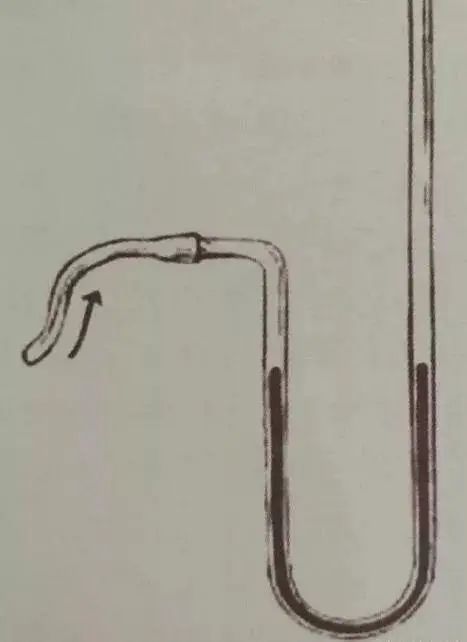
With a 3-metre-high tube, the house is too low, and one is too expensive. By 1828, that is, eight years of the great quinoa, the french physiologist, pussali, had improved. With a u-type tube, he fills it with mercury, one in the artery of the animal, and the other in the water column rises. The mercury density is 13 times that of blood, so 40 centimetres of glass tubes is enough. Pusa used this method to record the height of the mercury column in mm mercury. So far we're still using this unit。
Source network
However, this direct measurement can only be done for animals. In 1855, when the crimea war broke out, the british, french and turkish mob beat russia and built a huge field hospital in turkey, where nandinger took the lights to examine the wounds. This sphygmomanometer was inserted into the artery of the wounded soldier by french field doctor favell, who for the first time accurately measured human blood pressure, 115 to 120 mm mercury column, which is very close to modern figures。
It's human curiosity to do something about sphygmomanometers. By 1896, italian pediatrician livaroc had made a real breakthrough. So it's no longer an intrusive direct measurement of blood vessels, but an indirect measurement like modern. It's a more brain-brushing principle. Let me explain。
Riveroch found the inner part of the bike and tied it to his arm, the location of the artery. And then he breathed into the inside, and his veins were slowly crushed. This is when the mercury column was also lifted. And that's when we're measuring blood pressure, and the doctor's breathing that move, the figures for the mercury column are up and down to 200. Then, when the internal pressure drops, the mercury column drops, the crushed vein slowly recovers, and it can feel a beat on its wrist. At this point, the pressure of the gas in the inner womb is equal to the pressure of blood. Write down the value of the mercury column, which is blood pressure, which is high pressure, which is the pressure of contraction。
Riveroch's sphygmomanometer is a step away from modern sphygmomanometers. And then the doctors found that the inner part of the bike was too narrow and turned into a wider cuffband, the way we are. But there are two problems with his method, one that is not accurate, and the other that is more important, it can only measure high pressure, i. E. Constriction, and not pressure, i. E. Stress. What do we do
Later, the issue was resolved in china by a russian military doctor。
Sphygmomanometers for major medical discoveries (down)
In 1905, japan and russia fought for injustice in north-east china. The two robbers used a large number of new weapons, machine guns, modern artillery, torpedoes, especially in japan, to play with russia with the nation's strength, with the compensation of mrs. Jubilee's midday war. The soldiers were badly wounded. Particularly common is the disruption of the artery of the limbs and the development of a large blood pack that forms an aneurysm。
Back then, the russian hospital was in harbin, where nikolai sergeyevich kotkov, a handsome man, was a military doctor. He found that the aneurysm and the abscess were particularly similar, and that it led to an explosion. Kotkov figured out a way to listen to it first, and there was a blood flow saying it was an aneurysm. How? Both heads were laced to avoid haemorrhaging。
However, the artery was strangled, and the arms and legs were likely to give insufficient blood and could only be amputated. How do you judge the blood supply from the limbs? Kotkov came up with a way to measure the blood pressure of the limbs using the sphygmomanometer invented by italian doctor rivaroc. Isn't he still listening to blood flow from the artery with a hearing device? I'm going to put it briefly。
Put your cuffband on your arm, and your veins are crushed. At this point, the weight of mercury is also on top of this pressure, and the higher the number of inflating pillars, the higher they are up and down to 200, and then they start to breathe, and when the pressure drops, the column drops, and when the pressure of the cuff belt is equal to that of the pressure in the veins, it records the height of the column, which is our blood pressure。
How do you judge the time when the cuff pressure is equal to the vascular pressure? Touch the pulse on the wrist. When the pressure is equal, the crushed vein goes through and the wrist moves. So as soon as you get to the beat, you remember the number of the mercury column。
There's one flaw in this approach. It's inaccurate. This long distance from the elbow nest to the wrist, the crushed artery recovers the flow of blood, spills to the wrist and then comes out with its hand. A few seconds later, as we know from blood pressure, the mercury column is falling fast, and more than a dozen millimeters of mercury have gone down in seconds. Kotkov found that the hearing device was located in the artery of the elbow den, and that the sound would be heard immediately after the blood of the artery, at a time when the height of the mercury column was recorded as the exact blood pressure, which is our high pressure, which is also called contraction。
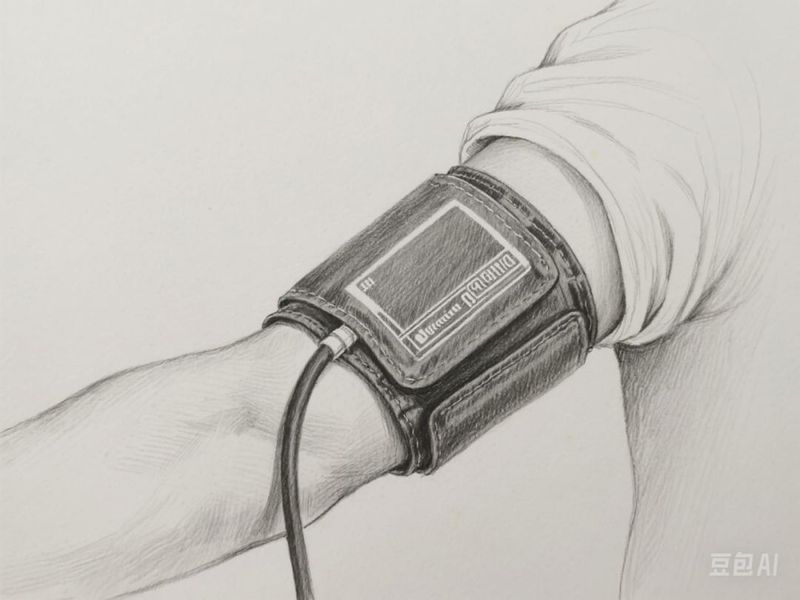
Image generated by ai
Kotkov heard this voice, later called kotkov. Kotkov found another one. When the blood flow of the artery is fully restored, the blood vessels are fully drummed and the sound disappears, and the height of the mercury column is recorded at this time as low pressure, i. E. As a relief pressure。
This finding by kotkov resolved two problems simultaneously, accuracy and the measurement of the relief pressure. Modern mercury sphygmomanometers, still his method. Kotkov's discovery in harbin officially pushed the door of modern heart medicine. He then married a nurse here, gave birth to a boy and became a doctor。
Scientific discoveries are driven by human curiosity and the accumulation of scientific common sense. It is recommended that the national geography of the book, the great encyclopedia of everything, include human science, animals, rock minerals, weather, ecology, the universe and space exploration, among other things. The greatest features of the book are solidness, accurate pictures, easy to read and clear scientific principles. You can learn about science in 20 minutes, and you can inspire interest in science。