Well, i'm just a market man who brings you up to date every day
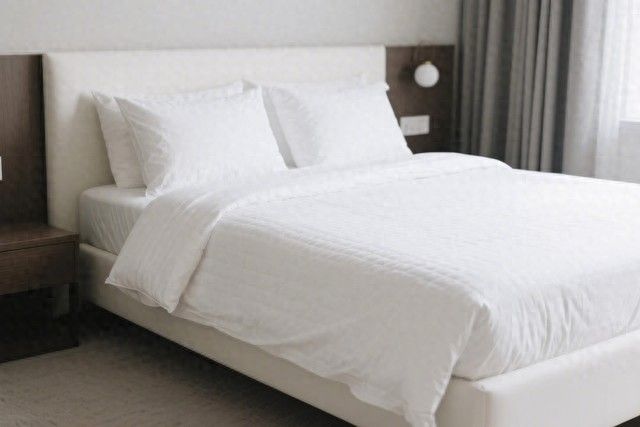
A lot of people get a visual feeling when they go out to the hotel. Whether it is a hotel chain or a high-end hotel, the sheets that are laid on the bed are covered and will always be a bright white. Feel it flat and square and look clean。
Many thought that the hotel sheets were so white that the washing plant was careful and the detergent worked well and the stains were all washed out。
But if you ask those who have been working in the laundry industry for many years, they will tell you that the hotel sheets look white and that the core secret is not simply “cleaning up dirty things”。
White is only a visual result, and behind it is a set of industry rules that include fabric selection, standardized industrial washing processes, end-of-life replacement mechanisms for weeding and visual design. It is difficult to wash the bright whites of hotels, even with the best laundry fluid and bleach。
Today, we set aside web-based debrisification rumours, combined with national cleaning standards for public textiles, decoupling the bottom logic of white hotel bed sheets with big white words, distinguishing between formal washing and non-compliance, sharing the home-based practice of washing sheets, and the small skills of staying in hotels to identify weed hygiene。
One, a lot of people got it wrong: white, it doesn't mean the stains are washed
We wash our clothes at home, and the idea is simple: the clothes are dirty, the laundry is painted, the laundry is washed, the stains are removed, the clothes are restored to their original color. A lot of people agree that hotels are the same logic。
Hotel lawn logic, not exactly the same。
The white sheets, which are washed dozens of times, are slowly yellow and gray. The oil in the sweat, the horns of the skin falling, the minerals in the water, were deposited in a little bit of the cotton fibre cracks, accumulated over the years, and the base colour sank. Even without obvious stains, the whole body is no longer bright。
The hotel weed approach is divided into two layers. On the first level, it is true that visible contamination such as food stains, body fluids and dust is to be washed away, which is a basic hygiene requirement. The second layer is the key to keeping the sheets “vision bright”: to control fibre aging, to prevent mineral deposition, to use optical bleaching, and to eliminate the old grass directly at the time of regular washing。
In other words, household use is to clean old sheets as much as possible; the hotel is to maintain a continuous “high white state” of grass。
The national textile cleaning quality requirements for public textiles gb/t 35744-2017 contain clear indicators that, after cleaning of white public fabric, the natural light whiteness value is greater than 70, and that if this value is not reached, it is substandard grass and hotels cannot continue to be used in guest rooms。
This standard determines that the scrubber is not simply decontaminating, but that the whole process remains white。
Ii. Secretariat i: the selection of materials from the source, the hotel weed, is born to be more visible
The hotel does not simply purchase white sheets for ordinary household use, and the fabric is designed for “repeated washing to keep light” at the plant's production stage。
On the market, home-based pure cotton sheets are mostly used in ordinary cotton, some with a softener and printing aid. Most of the hotel weeds are made of high-flush cotton or high-quality cotton-cleaning rags. The cloth itself is not additionally dyed and is pre bleached at the time of plant production, with a high base white。
There is also a key point for fabric: high density and improved fibres. The common bed linen fibre is so thin that it is used several times, the feathers rise, the light reflects, and the naked eye looks ash. Hotel weed textile is more compact, surface flat, reflecting evenly and visually white。
At the same time, the hotel procures all the pure white weeds in a uniform fashion, and there is no problem with color. If the sheet is partially yellow and broken, the whole batch does not need to be phased out, only the scrap will be replaced separately and the other grass will not be affected。
If the hotel uses colour sheets, high-temperature washing, bleaching several times, it fades, has hair and is unable to integrate. Only white is able to withstand high-temperature industrial washing, bleaching and disinfection without the problem of color loss。
There are also operational facilities. Full uniform white, with no sorting of colours after the dirty weeds have been collected, is thrown directly into the industrial washing machine in large quantities, significantly reducing separation and management costs. When the guest room is cleaned, any hair, stains and stains can be detected, facilitating timely replacement。
Iii. Secret ii: industrial wash-water lines and home washing machines are not a single one. Yes
Many thought that a washing plant was a high-capacity washing machine with more bleach. In practice, formal weed washing is a standard 10-step process that cannot be repeated in a domestic washing machine。
The complete process is divided into pre-screening, pre-cleaning, pre-cleaning, bleaching and dehydrating, drying and ironing。
1. Pre-elimination, pre-treatment of persistent stains
Recovered dirty weeds are examined first by workers, such as red wine, coffee, blood stains, etc., and pre-treatment is done in advance with specially designed stains. After the stains are broken, then the machine washes。
Home laundry, mostly after the stains have dried up, is directly impregnated, and many colours are locked in cotton fibres and are difficult to completely remove。
2. Soft water + high-temperature major washing to reduce yellow root causes
The home tap water contains ions, i. E. Water. Every time you wash your clothes, the minerals are attached to the cotton fibers, which accumulates over the years, and the sheets turn yellow. Formal washing plants, all using soft water, significantly reduce mineral deposition and slow down weed to yellow from source。
During the main baptism phase, water temperature is controlled at 60 to 70 degrees celsius, with composite detergents for the exclusive use of the industry, which contain enzyme formulations designed to decompose human grease and protein stains. This temperature and formula are difficult to achieve in a domestic washing machine。
Three, bleaching oxygen, chlorine drift, not a sip of bleach
Regular plants give priority to the use of oxygen drift, temperature and oxidation, striped ecstasy and less damage to cotton fibres; chlorine drift will only be used in small quantities if there is a severe stain. Online rumours that “84 bleaching is widely used in all hotels” are not accurate, that excessive chlorine drift quickly corrosives cotton fibres, thinning and breaking sheets, reducing life expectancy and increasing the cost of hotel purchases, and that regular hotels do not do so。
4. The most vulnerable to neglect: the sum of acids, preventing subsequent yellowing
This step is the key to the long-term brightness of hotel weed, and the vast majority of families do not do so。
After washing, detergents are mostly alkaline. If the alkaline remains in the cotton fibre, the sheets will soon be yellow after dry ironing and heating. The last run of the scrub will add chinese acid, shifting the ph of the weed to a neutral range close to the human skin, middle and residual alkaline, locking white in order to prevent a slow return to yellow after washing。
Five, high-temperature drying + big machine ironing, visual highlight
After drying up, the large ironing machine crushes the grass at high temperatures, so that the fabric is smooth and smooth. The flat fabric, the reflections are even, and the nakedness is even. The sheets, which are also of the same white degree, appear to be dim when the family washes out, drys out the natural wind dry, the fabric is wrinkled and the light is mixed。
Iv. Secret iii: direct phase-out through life, not hard-headed
This is a key point that many ordinary people are completely unaware of. Hotel weeds are not to be thrown away until a hole is broken, and it has a fixed washing lifetime。
Industry-wide standards, with pure cotton weed washing approximately 180 times, have to be phased out; cotton-cleaning weeds are more resistant to washing up to 300 times。
It is estimated that the hotel bedsheets are normally rotated for one and a half to three years, and the hotel will be replaced directly as long as the white level falls and the overall ash does not reach the national standard。
In general, the hotel reserves three sets of grass rotations: one in the guest room, one in the cleaners and one in the grass. Recycles, old batch of whites do not meet the standards, and you change the shelf directly。
Family sheets are often used for five or six years, even if they are slowly yellow, and continue to be used as long as they are not broken. Years and years of old fibres and stain deposits naturally do not reach the bright whiteness of hotels。
A lot of people wonder if it would be very expensive for a hotel to change grass so often. In fact, for the hotel chains, weeding is a consumable product, with early replacement, which ensures room perception and reduces poor ratings。
There are also a number of small and medium-sized hotels that use the weed lease model, which does not buy their own sheets, rents from the company and is cleaned and periodically replaced by the lessor. In the event of a failure to meet the standards of whiteness, the leasing company will change it directly and the hotel will not be required to bear the cost of the purchase or loss。
V. Distinguishing between formal washing and non-compliance, and avoiding bias by online rumours
There are a number of short videos available online, rendering washing plants use pyrochlor, a large amount of industrial bleach, forcing bed sheets to be white and residual chemicals to hurt the skin. We want to make an objective distinction between the two situations。
Large, compliant washing plants, strictly in accordance with the gb/t 35744 standard, control chemicals are delivered at doses, repeatedly drift, neutral, and detergent residues and microbiological indicators are tested. Washed grasses, the total number of bacterium drops, and the herb population meet the standards。
Some low-cost small workshops, in order to reduce the price quoted, may be irregular in the use of high alkalin and excess chlorine drift. Such an approach allows for short-term bleaching of grass, but rapidly corrosive cotton fibres, thinning of sheets, excesses of chemical residues and unfriendly to skin sensitive populations. Such non-compliance workshops are also targeted by market regulators。
Also, fluorescent whites, which are often heard, are not added significantly to the formal weed washing process. The principle of fluorescent whiter is not to remove stains, but to be attached to the fibre surface, absorb ultraviolet light, send blue light, offset yellow and make it more visually white. Some low-cost plants have their own fluorescent white content, but there are severe restrictions on the transportable fluorescent substances of category b, which are in direct contact with the skin according to the national textile safety marker, and the use of infant and child products is prohibited。
A simple sentence: white for regular hotels, based on standardized processes; white for small workshops, forced on super-standard chemicals, is completely different。
Six: how do you know if the grass has just been replaced? Indicators
A lot of people are concerned that the white sheets don't change at all. They're simple. White is just visual confusion. Several simple methods of identification are shared here, without professional tools。
First, look at the crease. Housekeeping is replaced with new weeds, which are ironed with neat and continuous crushes. If the sheets are just paved and there is no complete ironing of the crease, pay more attention。
Second, look carefully at the edges and the position of the pillows. These places are the most easy to hide hair and skin, and white fabric, though white, is not easy to clear。
Third, keep an eye on the scent. Qualified weeds are washed dry at high temperatures and smell of clean fabric, without the smell of moist and snotty chemical. If you smell heavy bleach, the rate is probably inadequate and chemical residues are high。
Fourth, look at the local color difference. Large areas of snow are white, but bed feet, frequent friction positions are slightly ash indicating that weeds are nearing their useful life。
And remember, visual white is not the same as healthy. White can only represent perception, and real hygiene depends on high temperature washing and disinfection processes. Even if weeds do not appear yellow and if high temperatures are not regulated, there is still a health hazard。
Vii. Practical dry goods: how to wash white sheets out of the house near the hotel white
The problem of yellow hairy sheets could be improved without the purchase of expensive industrial detergents, the use of household washing machines and the adaptation of washing patterns。
Regular soft water pre-treatment. In hard-watered areas of the home, laundry can add soft water agents, reduce mineral deposition and prevent bed sheets from washing yellow。
2. Stained selection bleaching. Day-to-day maintenance, priority being given to aerobic drift (over sodium carbonate), hot water impregnated, warm and bright, and no harm to cotton fibres; no frequent use of 84 chlorine drift, which can destroy cotton fibres and thinner sheets。
3. Do not use excessive clothing softeners. The softener forms a membrane on the fibre surface, the oily sludge is more easily accumulated and the long-term use of bed sheets makes it easier to ash. Hotels are baptized with little softener。
After washing, dry as hot as possible or in full sun. When the drying is completed, the ironing is folded in time to reduce the dark visual effects of wrinkles。
5. White sheets shall not be used for long years. For two to three years, after repeated scrubbing, fibres are ageing and it is difficult to baptize and change them directly, as is the case with hotel logic。
There are still a few faults to avoid. Many people prefer hot water to soak white sheets, which are too hot, and the protein stains in the sweat can be fixed and locked into fibres, which is more difficult to wash; white sheets do not mix with dark clothes, which are easily coloured; and sheets do not wait for the stains to be washed long enough, and fresh stains are easier to treat。
Viii. At the end
Looking at the whole logic, it is clear that the hotel sheets look white and do not simply wash all the stains with a strong detergent。
It is the visual effect of a set of operating systems combined with the selection of fabrics, the cleaning, neutralization and locking of soft-water high-temperature industries, and periodic waste-for-new. White itself, and the carefully chosen colour of the hotel industry, allows for both mass disinfection and colour to be used to reassure the occupants at first sight。
White is just a visual signal, and you can't just say that it's so white that you can't take care of yourself. We do not have to look at white sheets to completely put down our guard, nor do we have to be frightened by web-based rumors that all hotel weeds are forced to bleach with a large amount of chemical agents。
Formal hotels and compliance washing plants, with national standards for high-temperature cleaning and sanitation, rely on over-standard chemicals for visual whiteness at the expense of grass safety。
To understand the logic behind this, hotels can be used to make rational judgements about hygiene, clean white beds at home, and use these ideas to prolong the use of clean sheets。
Topical discussion
Do you usually wash white sheets at home, the more yellow you get? When you're at the hotel, will you check the sheets? Welcome to the comment section。
Acclaimed the city's vagaries, and continued to share the small knowledge of the industry that is hidden in life and to understand the path behind daily life。