In may of this year, two of my new books, revisit the grey zone:Dissemination of researchThe second edition (beijing university press, 2026) and the second edition (yunnan people's press, 2026) were published simultaneously, representing my recent dissemination research on chinaLocalizationTwo things to think about。

Communication as a discipline emerged in the united states in the mid-20s. In the 1930s, scholars such as dewey and parker came to china to teach and introduce communication research from the chicago academy to china, which was not yet an independent discipline. Communication has entered china as a subject, following the 1978 reform and opening up. As a result of the previous limited interaction between the national and western socio-science communities, communication science has been introduced mainly by journalistic scholars, who come from humanities and are relatively unfamiliar with social science logic. In addition to the fact that china was at the stage of modernization and that western modernization theory was being taken into account, these backgrounds placed the early recipients of communications in china faced double cognitive limitations in understanding the western context of the dissemination theory and how it was constructed and applied。
From the late 1990s to the beginning of the twenty-first century, the academic community began to reflect on this issue, which was the background for the first edition of revisiting the grey zone. The book looks at the history of communication in past textbooks from the perspective of academic history: the history of the united states communications “keyman” schram, which portrays political scientists laswell, sociologists razasfield, psychologist levin and hofland as four pioneers, has diluted the impact of the radio and television industry, opinion polls and marketing on the creation of communication disciplines. The significance of revisiting this history is to explore the various factors influencing the formation of knowledge, to present the complexity of the discipline and to draw the attention of researchers to the social and environmental differences in knowledge production. This position is still a hidden clue in the first edition; it becomes clearer and more conscious in the second edition, 10 years later。
In practical terms, the book begins with a narrative structure in academic history and attempts to reflect on progressive narratives of disciplines using the concept of “grey zone”. The “grey zone” refers to events or figures that are difficult to fit simply into a black-and-white narrative framework. They are like barriers in smooth narratives, fractures in successive narratives or extensions in fractured narratives. In the historical narratives of traditional disciplines, they are either ignored or slashed to fit into a “reasonable” order. What these studies are about to do is re-emerge these elements of disharmony, presenting contradictions and disharmony in historical narratives。
Similarly, a similar situation exists in the historical writings of china's dissemination research, which hinders our understanding of the conceptual context and path of chinese dissemination. Communication is usually introduced after 1978, with less attention paid to the 20th to 50th century: the doctoral thesis of the sociologists of 1925 already covered the topic of “state image” and international communication; liang siu, director of the department of journalism at yanjing university, offered a course on “putative propaganda” (an allegation of “public relations” at that time) at the university in 1934, and published it in 1936; one of the pioneers of the chinese history of psychology had a high sense of propaganda in 1941. These historys show that china's communication research was produced in response to china's practice needs before it was called " communicator " , which was home-grown and indigenous from the outset。
“communication research” has a long history than “communications”. The history of communication disciplines, constructed by schram and others, narrows communication science into a instrumental discipline, excluding more socially and humanely concerned traditions such as communication and media philosophy, communication and social historical structures, media history, political and economic criticalness and cultural research. This has made it easier for many researchers to ignore the fact that communication is a problem area or a “crossroad” between disciplines in an increasingly interdisciplinary and institutionalized environment. In an era where technology continues to break borders, it is feared that, if it remains confined to narrow disciplinary boundaries, there is a departure from the original spirit of openness in disseminating research。
A revisit of the history of the dissemination of research can also help us to correct some of the misconceptions about the localization of communication. As early as 1982, at the first western communications colloquium, the approach to “critical absorption, autonomous creation” was proposed. Since then, “localization” has been the subject of frequent references by researchers, but it is not uncommon to be able to articulate its specific criteria or to cite recognized success stories. This makes “localization” somewhat abstract. In china's traditional thinking, both the confucian and the taoist have put forward the idea of “narrowing people”, stressing that instead of talking or looking outside, it would be better to return to the context of everyday practice and historical experience. Historically, chinese culture has not simply reproduced foreign ideas, but has been transformed into reality. The “innovation diffusion theory” in communication also finds that new ideas, practices and products are going through a process of “reinventing” in a new culture. Communication is no exception, and its localization is not deliberately driven, but is naturally occurring in practice. The study revisiting the grey zone found that china's practical rationality and home-grown communication practices serve the characteristics of social governance and respond to real needs, and naturally shape communication science with chinese characteristics。
Since localization is a natural process, the discussion should not focus on “whether or not it has been indigenousized”, but rather ask, “what kind of localization do we want?” in the current discussion of standards for the localization of communication science, standards are either too high or vague and insufficiently operational. This has often led to a lack of real dialogue。
To discover the real problem of being covered up, a different angle could be used to compare journalism in the sister disciplines of communication. Journalism was also a product, first introduced into china by western missionaries, but rarely heard of the “localization of journalism” initiative, which seemed to have been completed early on. In recent years, however, demands such as media integration, systemic changes in mainstream media have shown that news theory and practice have not fully kept pace with technological and social changes. By contrast, public communication and emotional governance at all levels of government in china have matured through research in communication science; communication practices in the areas of digital media, platforms and artificial intelligence have been constantly explored in practice, creating digital media theory and experience with indigenous characteristics. After almost 50 years of introducing china (if more than 100 years have passed since the beginning of the twentieth century), there are more than 1,000 academic sites throughout the country, and a large number of practical skills have been developed to disseminate the practice. From this point of view, it is difficult to say in general terms that communication science as a whole is detached from china's actual and insufficient domestication。
This mismatch between reality and judgement is partly the result of the disciplinary anxiety generated by the multiple political, economic and technological challenges of journalism. In order to alleviate this anxiety, communication science has been shaped to create others and to assume responsibility for the whole discipline and reality. As a result, when there are difficulties in the development of disciplines, some tend to attribute the problem to the fact that communication is a discipline and a source of disagreement. The root cause of these problems is not so much inadequate domestication as a failure to build on china's real experience, but rather a direct application of theories based on other cultural contexts. Such problems are not unique to communication science, but also to other social sciences. Even in terms of adaptation to the digital media environment, the problems faced by communication science may not be the most prominent。
So the localization of journalism is not just a matter of alleviating current anxiety, but of confronting the real problems. The first task is to establish the subject matter of china's research, not blindly follow its own conclusions, build on china's local experience, compare and learn from china's experience on a global scale, draw up theories appropriate to china's actual situation, and actively engage in dialogue with different cultural regions of the world, including the west, to promote communication and understanding among them on the basis of commonality and differences, and to achieve mutual understanding among civilizations。
Similarly, china's localization of communication science is not a single model, but should be understood as a plural concept. The final chapter of revisiting the gray zone summarizes four different indigenous study paths. These paths are both competitive and mutually inspiring and cooperative. The dissemination theory, which is unique to china, ultimately needs to emerge in a continuous dialogue with experience, while respecting academic development patterns. Only the communication theory thus developed would be a chinese-owned knowledge system that was adapted to china's contemporary practice and consolidated the common human experience。
The localization of dissemination research, in addition to focusing on the construction of theoretical systems, should also focus on how theory can be understood by the wider public and thus be closely integrated with practice. The dissemination of theory, like other social science theories, is derived from the generalization and abstraction of practical experience, and ultimately requires ingenuity and continuous refinement and development in the test of practice. A profession that is targeted at disseminating information is not ideal in terms of the dissemination of its own image, owing to the lack of academic outreach and the lack of breastfeeding. With the impact of digital and artificial intelligence technologies, there has been a degree of disconnect between theoretical systems that were based on traditional mass communication. It is therefore important to break through the system and content of the original dissemination theory, to integrate the latest research findings from home and abroad with those of china, and to transmit them to the general public in an easy-to-understand manner, and to promote a second media enlightenment。
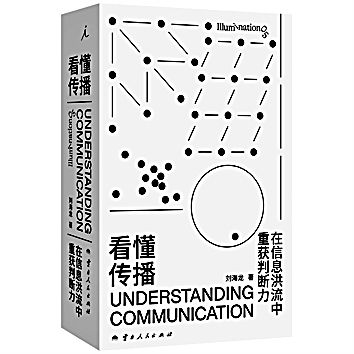
One such attempt was my recent publication, understanding communication, which had the privilege of being elected to the “big book” of june 2026 in the daily light. It has changed the way theoretical teaching materials have been written in the past, reaching out to the general public outside of the profession, taking into account problems and confusion in everyday life, and leading readers to reflect on the phenomenon of transmission that is not normally transmitted. The book incorporates a wide range of cutting-edge results in the fields of media research, digital platforms and artificial intelligence, ranging from algorithmal advice, information cocoon rooms, traffic-to-top, cyber-redging cards, internet rumours and false information, and geo (optimal generation engine), aimed at helping the general public understand how the medium works, avoiding being held hostage by the rhythm of information flood and digital platforms, and regaining control over themselves。
Today's communication research, in addition to the need to address cultural differences, is more important in terms of the impact of the technological dimension. The latest artificial intelligence challenges the primordial nature of humankind, blurring the distinction between the original communicators, media and content. Communication is no longer limited to people, nor is the media merely a means of transmitting messages and symbols, but an infrastructure for organizing social order. This is an era of challenges and opportunities: on the one hand, many theories based on traditional mass communication are failing and research is facing greater uncertainty; on the other, china is richNew mediaAnd in practiceTheoretical innovationA great deal of attention and material was provided. The profound changes in technology have given china an opportunity to disseminate research along with its global counterparts. In the face of the reality of uncertainty, it is necessary to adhere to academic norms and to be realistic, and to disseminate knowledge of the naturality of natural water。
The daily light (16 july 2026)