


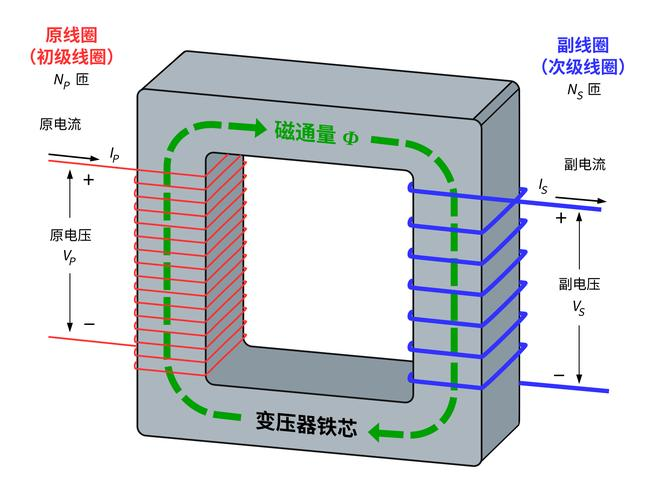
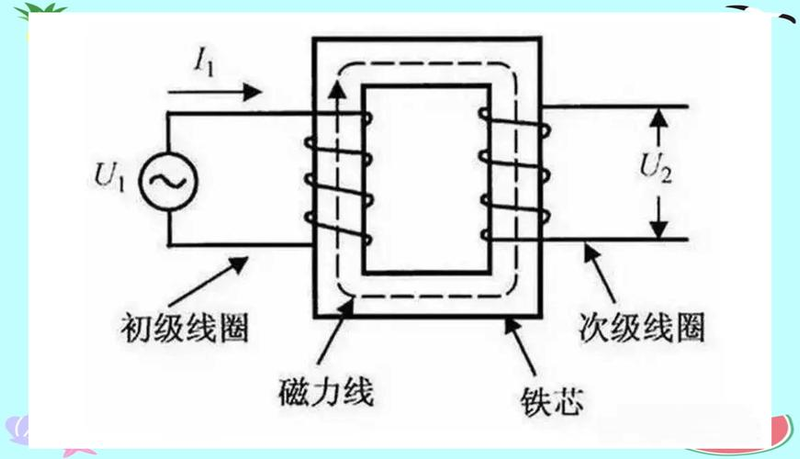
The transformer is a transformer of the exchange voltage, currents and resistors, and when there is a current of communication in the primary ring, the iron core (or magnetic core) produces the communication magnetic communication that gives a sense of voltage (or current) in the secondary circle. The transformer consists of an iron core (or magnetic core) and a coil with two or more circuits, with the power-relaying circuit called primary and the rest called secondary。
I. The rationale for the transformer:
In both cases, the value of magnetic fluxes remains the same, but the number of magnetic fluxes that intersect with the wires varies, which is the principle of interactivity. A transformer is a device that uses electromagnetic interaction, transforms voltage, currents and resists。
Classification
Classification by cooling: dry (self-cooled) transformers, oil immersion (self-cooled) transformers, fluoride (evaporation cooling) transformers。
Classified by damp: open transformers, encapsulated transformers, sealed transformers。
Categorized by iron core or coil structure: core transformer (plugged steel core, type c iron core, iron oxygen core), shell transformer (plugged iron core, type c iron core, iron oxygen core), ring transformer, metal transformer。
Categorized by the number of electrical phases: single phase transformers, three phase transformers, multiphase transformers。
Classification by purpose: power transformers, voltage transformers, audio transformers, medium frequency transformers, high frequency transformers, pulse transformers。
Iii. Characterization parameters for power transformers
Working frequency
Depletion of the transformer's iron core is highly correlated with frequency and should therefore be designed and used according to the frequency used, which is referred to as the working frequency。
Rating power
Under the specified frequency and voltage, the transformer is capable of working for a long period, not exceeding the output power of the specified temperature rise。
Rating voltage
A voltage allowed on the transformer's wire shall not be greater than the specified value。
Voltage ratio
The ratio between primary and secondary voltage of transformers, the difference between the charge ratio and the charge ratio。
Empty current
At the secondary opening of transformers, there is still some electrical current at the primary level, which is referred to as airborne currents. Aerial currents consist of magnetic currents (producing magnetic fluxes) and iron-depleted currents (induced by the depletion of iron cores). For 50 hz power transformers, airborne currents are essentially equivalent to magnetic currents。
Airborne wear and tear
The power loss was measured at the primary level during the secondary opening of the transformer. The main losses are from the steel core, followed by losses (copper losses) caused by airborne electric currents on the copper barrier in the primary coil, which are small。
Efficiency
Is the percentage of the ratio of subpower p2 to primary power p1. The greater the rated power of the transformer, the more efficient it is。
Insulation
This means insulation between the transformer's coil and between the coil and the iron core. The high and low insulation resistance is associated with the performance, temperature and humidity of the insulation material used。
Iv. Audio transformer and high frequency transformer characteristics parameters
Frequency response
Is the properties of sub-output voltage of transformers that vary with the frequency of work。
Channel
If the transformer has an output voltage of u0 at an intermediate frequency, the frequency range of the output voltage (the input voltage remains unchanged) down to 0. 707 u0 is known as the frequency band b of the transformer。
Primary, secondary resistance ratio
The primary and secondary access of transformers is appropriate to resist ro and ri, matching the primary and secondary resistance of transformers, while the margin of ro and ri is called the primary and secondary resistance ratio. In the case of resistance to matching, transformers work in optimal conditions and are most efficiently transmitted。
V. Technical parameters for low frequency transformers
There are technical requirements for different types of transformers, which can be expressed in terms of corresponding technical parameters. For example, the main technical parameters for power transformers are: rated power, rated voltage and ratio of voltage, rated frequency, working temperature level, temperature rise, voltage adjustment rate, insulation and tide-proof performance. The main technical parameters for a general low frequency transformer are transformer ratio, frequency properties, non-linear distortion, magnetic shield and electrostatic shield, efficiency, etc。
Pressure ratio:
The two groups of transformers had n1 and n2, respectively, n1 were primary and n2 were secondary. An exchange voltage is added to the primary coil, which creates a sensory motor at both ends of the secondary coil. When n2>n1, the sensor is higher than the primary voltage, which is called the pressurizer: when n2
N of formula called voltage ratio (ring ratio). When n, n1>n2, v1>v2, the transformer is the pressure-relief transformer. On the other hand, the pressure transformer。
Efficiency of transformers:
In rated power, the ratio of output and input power of the transformer is called the efficiency of the transformer, i. E
P1 for input power, p2 for output power。
When the transformer's output power p2 equals the input power p1, the efficiency is 100% and the transformer will not cause any loss. But in fact, there is no such transformer. The transformer always causes losses in the transmission of electrical power, mainly in copper and iron. Copper damage is the loss caused by the electrical resistance of transformers. When currents resist heat through wires, part of the electricity is converted to thermal energy and consumed. Since the coil is generally entangled by insulated copper wire, it is called copper damage。
Iron damage to transformers includes two aspects. One is magnetic decompression, whereby the direction and size of the magnetic line of the transformer's silicon steel piece, when the current is exchanged through the transformer, causes the internal molecules of the silicon steel to friction with each other and release thermal energy, thereby depleting part of the electrical power, which is the magnetic decomposition. The other is vortex wear and tear when the transformer works. A magnetic line runs through the core, which produces an induction current on a plane vertically with the magnetic line, which is referred to as a vortex because it forms a contours of closed circuits. The presence of vortex heats the steel core and consumes energy, which is called vortex depletion。
The efficiency of transformers is closely related to the power grade of transformers, and usually the greater the power, the smaller the ratio of loss to output power and the more efficient. Conversely, the less power, the less efficiency。



