


The row is the form of a square array of data, with vertical lines on both sides, and a two-step row is equal to the ad minus bc. A 3-step row can be calculated using the sarrus method by copying the first and second columns of the matrix to the right, calculating the multiplier sum of three digits of the positive diagonal line and subtracting the sum of three digits of the opposition angle. Four steps and above are more complex in a high-level row, which is often spread by row or column - selects a row or column with multiple zero elements, calculates the algebraic residual of each element (the element removes the row and column after the column multiplied by the i+j subside) and multiplys the element with the corresponding algebra rems; it also converts the matrix into a top or lower triangle, where the array equals the multiplier of the elements of the diagonal line, changes the rows by rows by row, multiply by k by row and multiply by row by row by row and by row by row。
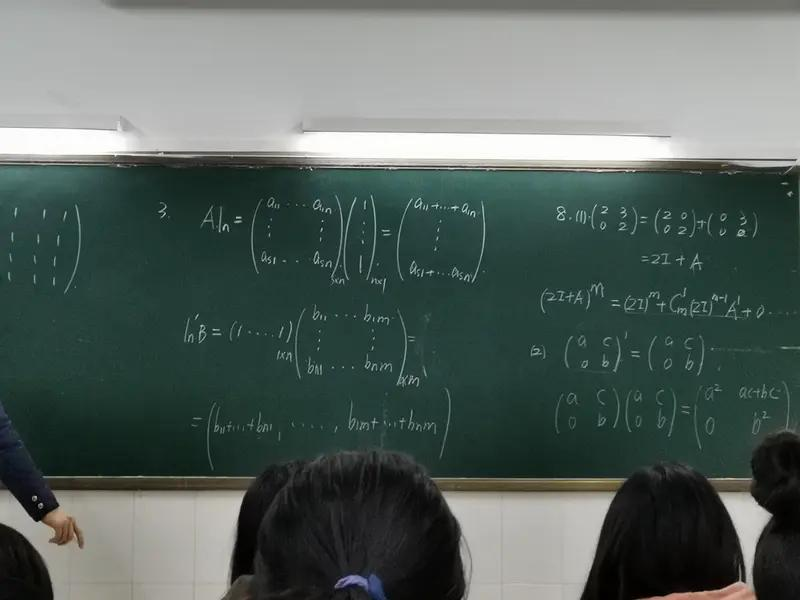
The matrix is a rectangular array that ranks the data into rows and columns, such as a matrix of rows nm, each of which is represented by aij. The matrix addition requires that both array rows and columns be identical and that the corresponding elements be added to the addition, such as 1+5=6,2+6=8. The number of arrays is multiplied by each element of a multiplication matrix, such as a three-plication matrix, and each element is multiplied by three。
The number of columns in the first matrix must be equal to the number of rows in the second matrix. Multiply with the multiplication of row i of the first matrix and column j of the second matrix, which is the multiplication of the corresponding elements of column j of line i of the results matrix, such as 1x5+2x7=19, 1x6+2x8=22. The matrix multiplication does not satisfy the exchange, and the a- times b and b-by-a results differ。
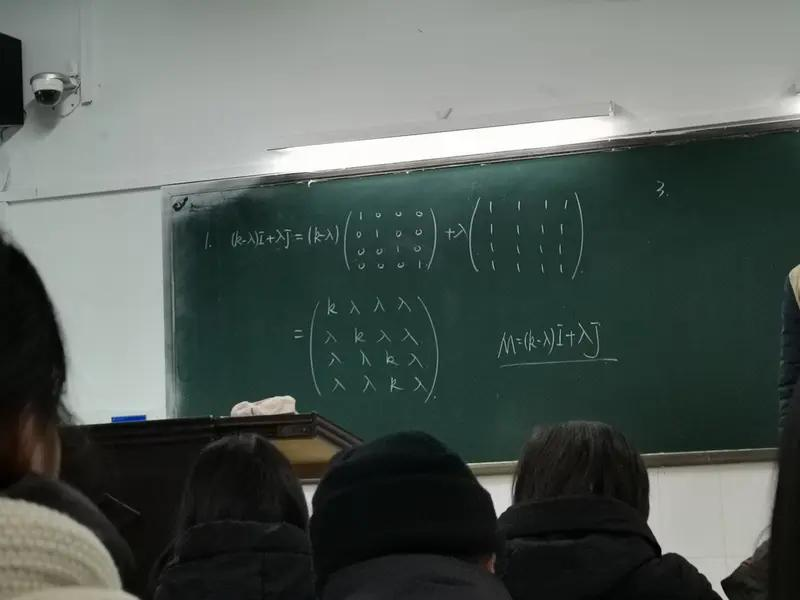
The matrix is rotated by rows, and the original matrix is converted by rows. The unit matrix is the square array, with the main diagonal elements being 1 and the rest zero, for example, two of the two steps of the main diagonal matrix and zero of the other position. The reverse matrix is the unit matrix of two square arrays, such as the reverse of a times a equals a, and the result is the unit matrix。
The difference between a column and a matrix is clear: a column is a number, calculated according to specific rules; the array is only a table of numbers and does not have an operational meaning. Only the square array has a column, and the multiplication of the matrix is done between the arrays, and the one is calculated as the value it represents。



