


The fraction multiplication principle extrapolates。
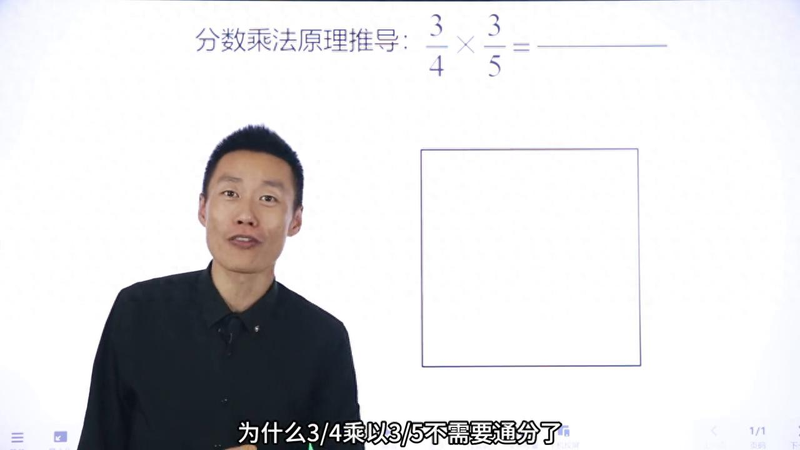
1. The rationale for the fraction multiplier extrapolates: why is 3/4 times 3/5 not required? Why should we multiply the molecule by the molecule and multiply the denominator by the denominator
2. How does it mean to start with a square, 3/4? Split the square into an average of four, 1234, and this four is the denominator in 3/4。
3. What is the expression of molecule 3? Three out of four, three out of three. This three means three of the molecules in three quarters. 3/4 this area is not found, is the shadow。
What do you mean, three-quarter times three-fifths? Isn't 3/5 out of 3/4, or 3 out of 5 out of the shadows, so it is necessary to divide the shadows again, on average, into five parts, and this time across. There is no need to look at the blanks here, because 3/5 of the shadows are 3/5 of them, 1 of them, 2 of them, 3 of them, 4 of them, 5 of the 5 are the denominator of the 3/5
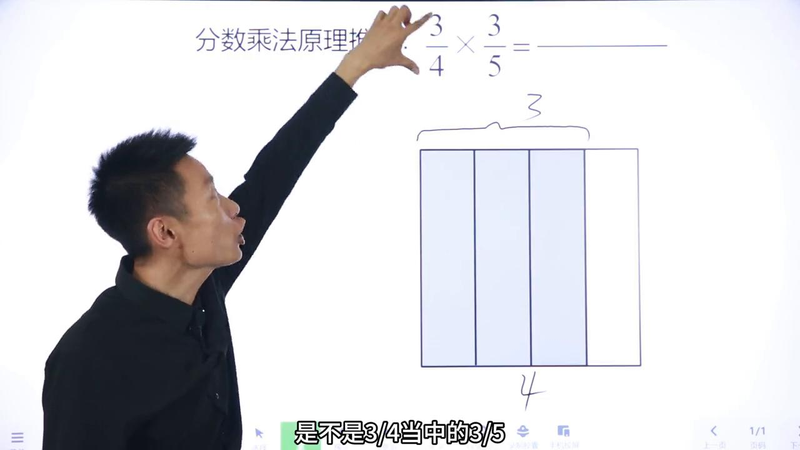
5. What does the next three mean? One, two, three, here, this three means three out of five molecules。
6. Where is the three-quarters multiplied by three-fifths? Is this the area? In red, is it always the average? So all the little rectangulars in this graphic are identical
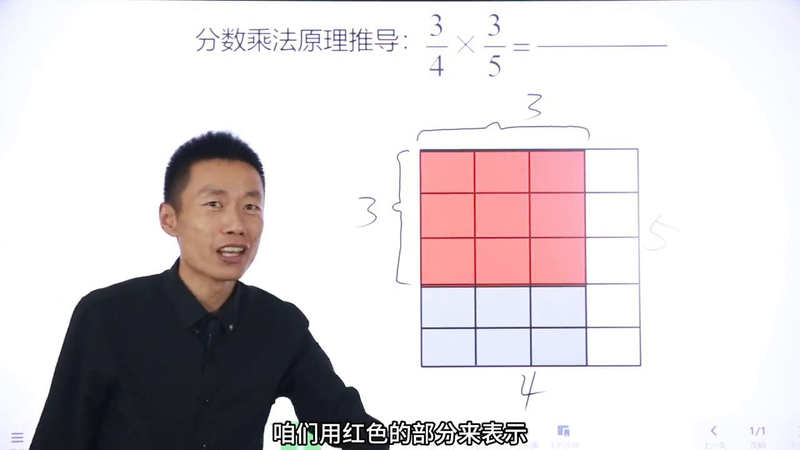
7. What about the molecules? Look how many little rectangles there are in the red section. Three across, three up, three up, three up, nine up, three up. This 3 is the 3 in 3/5 and this 3 is the 3 in 3/5 so the molecule is multiplied by the molecule。
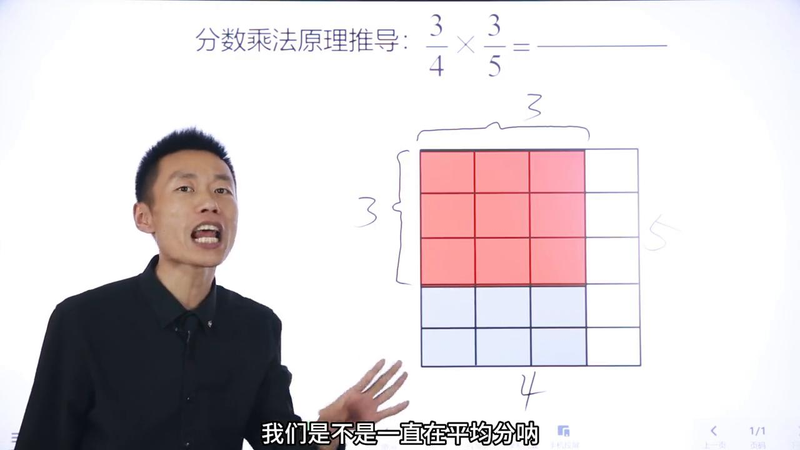
What about the denominator? It depends on how many of these little rectangulars there are in the entire graphic, obviously 4*5. How did you get here? The denominator 4 in 3/4 multiplied by the denominator 5 in 3/5, so the denominator multiplied by the denominator。
What was the final answer? 9/20. That's the principle of the multiplication of fractions, which you understand。



