In modern buildings, the central air-conditioning room system is essential and is responsible for creating a comfortable environment for the entire building. However, as the complexity of the equipment increases and the operational time increases, ensuring its efficient and stable operation becomes more challenging. Property management and equipment maintenance staff have to face the challenge of how to maintain science and handle failures in a timely manner. Users often face problems of unstable room systems, abnormal energy consumption and frequent failure of equipment, which not only undermine the effects of air conditioning, but may also lead to high maintenance costs. This paper will explore best practices in the current industry and provide you with key maintenance strategies and trouble diagnostic techniques for the central air-conditioning unit system, with a view to helping you to ensure efficient and stable operation of the room system, extending the life of the equipment and optimizing energy efficiency。
Definition of the central air-conditioning room system and the importance of its critical maintenance
The central air-conditioning room system, an integrated group of equipment covering cold water units, cooling towers, recycle pumps, wind hoses and associated control equipment, is the central hub for the management of cold and heat sources in buildings. According to the china maintenance code for building air conditioning equipment, equipment failure rates could be reduced by about 30 per cent through regular maintenance. The “critical maintenance” here is not just routine cleaning, lubrication and validation, but also includes fine-tuning of system parameters and preventive comprehensive testing。
An effective maintenance programme ensures that the room system remains in an efficient state of operation and avoids premature wear and tear resulting from overloading of equipment. For example, real-time monitoring of cooling water temperature and pressure differentials can rapidly detect problems such as piping congestion or the abnormal operation of pumps, thus preventing a systematic overall decline. The scientific and systematic nature of the maintenance work is particularly important because of the effects of the maintenance of the machinery system, which is directly related to the energy consumption of buildings and the comfort of living conditions. Today, more and more buildings are opting for specialized maintenance services and more precise maintenance measures combined with smart surveillance techniques to improve system reliability and energy efficiency。
Ii. Key maintenance programme for the central air-conditioning room system
2. 1 detailed programmes and strategies
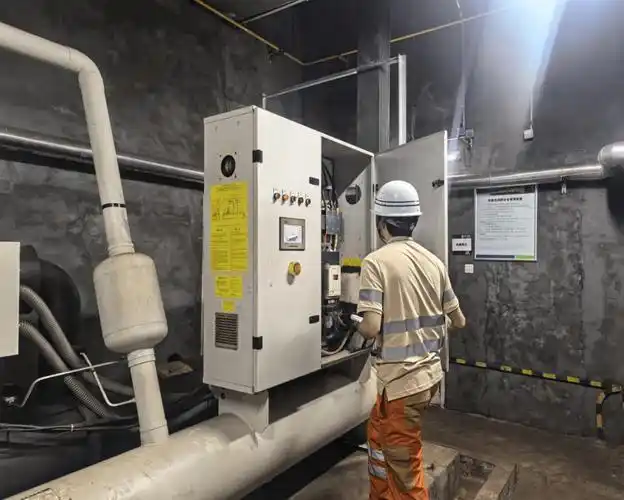
Key maintenance programmes cover the core elements of equipment inspection, cleaning maintenance, lubrication maintenance, parameter adjustment and failure warning. Inspection is the primary safeguard and involves thorough examination of chillers, chillers, valves and electric control cabinets. For example, in the practical application of a commercial complex, the average time between malfunctions of equipment (mtbf) was significantly increased through monthly inspections to 20 per cent。
The purpose of cleaning maintenance is to prevent dissipation or mechanical wear and tear caused by dust and impurities on equipment. In particular, condensers wings and wind blades, which require regular professional cleaning. Lubrication maintenance is intended to reduce friction between mechanical components, thereby extending the useful life of electric generators and bearings. Parameter adjustment is another important element of the critical maintenance programme. Depending on seasons and load changes, the temperature of frozen water, the volume of cooling towers sprayed and key parameters such as wind engine speeds need to be adjusted in a timely manner. This fine-tuning of parameters not only helps to improve the efficiency of the system but also reduces energy consumption, which is expected to save about 15 per cent of energy。
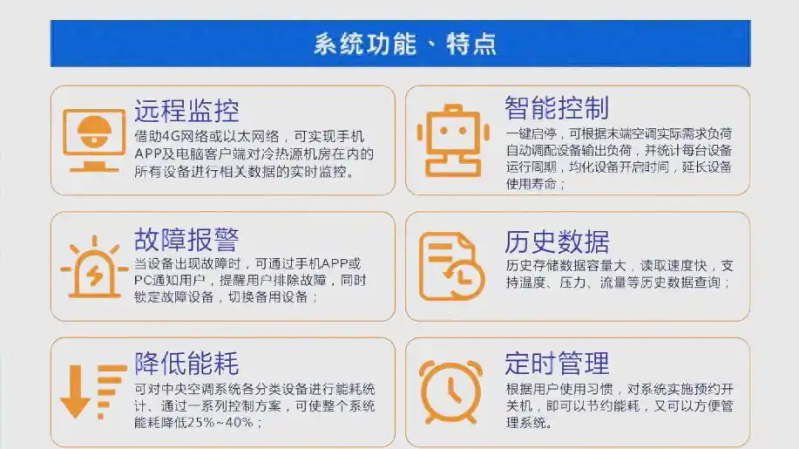
In addition, a rapid response to real-time monitoring of the state of equipment and unusual alarms can be achieved by combining smart surveillance early warning systems, thereby reducing the occurrence of sudden malfunctions. Through remote data collection and analysis, managers are able to develop maintenance plans more scientifically and significantly improve the management of the system as a whole。
2. 2 examples of application and benefits
Following the implementation of a key maintenance programme in a large writing building, the transport team successfully reduced the average equipment failure response time from the original six hours to less than two hours through monthly inspections, regular cleaning and the management of a smart monitoring platform, resulting in a 12 per cent increase in the overall operating efficiency of the system. In addition, energy consumption in the rooms was also reduced by 8 per cent after maintenance, a notable result that not only resulted in savings in operating costs, but also further optimized the working environment. The case demonstrates not only the integration of professional teams with advanced technology management tools in the implementation of maintenance programmes, but also highlights the critical role of data analysis platforms in equipment management. Through this platform, managers are able to grasp accurately the trends in the operation of the equipment and its health, thereby achieving effective prevention of potential hazards。
Iii. Common malfunctions in central air-conditioning rooms and screening
Type of failure and solution
The central air-conditioning unit is operating on a daily basis and may experience multiple malfunctions, including freezing water temperature anomalies, insufficient circulation, refrigerant leaks, electric overheating and control system alerts. In order to respond effectively to these failures, systematic screening is particularly important。
In the face of the temperature anomaly of frozen water, we need to first check whether the refrigerant pressure of the chiller group is stable and see if there is any frost in the evaporation unit. The failure of the cooling tower water pump or the blockage of the pipe are also common causes of poor cooling, and preliminary problems can be judged by measuring flows and pressures. Inadequate circulation of recycled water may be associated with pumping failure, electrical problems or inadequate valve regulation. During the check-up, we can test the operation of the pump and use infrared temperature guns to detect temperature differences in the pipes, thereby quickly locating the faulty components. For refrigerant leakage, the industry usually uses electronic refrigerant detection devices for detection. Professionals can determine the specific location of the leakage by sniffing gas or monitoring changes in pressure. The problem of overheating can be caused by damage to bearings or overloading, and we can conduct a comprehensive analysis in conjunction with temperature sensor data and operation logs to identify the root causes of the problem. When the control system alerts, we need to view simultaneously the alert records of the centralized surveillance system and the state of the on-site equipment in order to target possible problems such as sensor failure and loose wires. Through these routing techniques, we can respond more efficiently to common malfunctions in the central air-conditioning room and ensure the stable operation of the system。
Iv. Examples of practical applications for the maintenance of central air-conditioning room systems
Following the implementation of a critical maintenance programme in a large writing building, the operational teams successfully reduced the average equipment failure response time from the original six hours to less than two hours through monthly inspections, regular cleaning and management of the intelligent monitoring platform, resulting in an increase of 12 per cent in the overall operating efficiency of the system. In addition, energy consumption in the rooms was also reduced by 8 per cent after maintenance, a notable result that not only resulted in savings in operating costs, but also further optimized the working environment。
V. Key points for maintenance and failure of the central air-conditioning system
In order to ensure the stable operation of the central air-conditioning unit system, a well-developed maintenance plan must be established. This includes regular inspections, cleaning, lubrication and parameter calibration, thus providing full maintenance of the system. At the same time, with intelligent surveillance systems and sensors, we can monitor the operational status of the equipment in real time, achieve early detection and early disposal targets, further increase the speed of failure diagnosis and reduce the time required for failure recovery. In addition, training maintenance staff in professional skills and security awareness is an essential component to ensure that they are able to perform maintenance tasks in a regulated and efficient manner. Depending on seasonal and load conditions, we should also continuously optimize systems design and maintenance strategies and dynamically adjust the operating parameters of the equipment to different use needs. Finally, the establishment of equipment to maintain archives and malfunctioning curricula vitae, as well as the achievement of scientific management through a data-driven approach, will provide strong support for the long-term stable operation of the room system。