On february 22, china news agency beijing (journalist 阮煜) continued to pollute parts of northern china. Monitoring showed that at 1000 hours on 22 october, air quality indices of 500 or more in several cities, such as ginchuan, xuzhou and transport city, showed an explosion schedule。
On 20 february, the southern and central monk border areas of mongolia were affected by wind and sand and dust weather in large parts of the northern region of china, resulting in short-term and heavy contamination of inhalable particulate matter (pm10). China's national joint centre for atmospheric pollution control and closures is closely following the impact of this sand and dust weather and is interpreting air quality conditions and trends。
As at 1800 hours on 21 february, the concentration of pm10 in 55 cities at and above the northern region of china had reached short-term severity or severe pollution levels, with peak concentrations of more than 3,000 ug/m3 of pm10 hours in the uchi and bayanhur regions of mongolia。
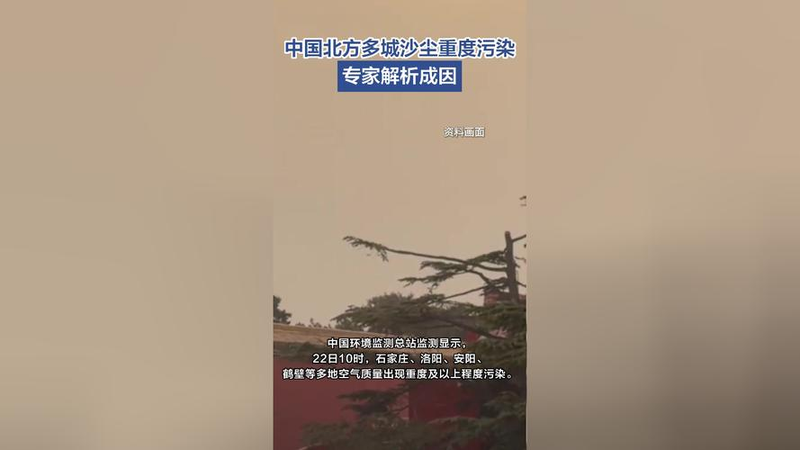
At 1000 hours on 22 october, the china general environmental monitoring station (cems) observed that the air quality of the various sites, such as ishiya, luoyang, anyang and crane walls, was contaminated by heavy and above。
An analysis of the current sand and dust weather causes suggests that the first is that the recent sand-source rainfall is significantly low. Monitoring data show that precipitation in the southern and middle monk border regions of mongolia is more than 50 per cent lower than the annual average, and surfaces are dry and loose, providing sufficient raw materials for dust and sand weather. The second is that the cold air is more intense. Meteorological fact-finding data show that siberian cold, high-pressure superstitioned cyclones were added to the mongolian cyclone, with large winds above class 8 in the northern part of china and local winds ranging from 11 to 12 in the central western part of the country and north-west of the mountains. While the wind rolls up dust, it is transmitted in a south-easterly direction, forming a wide range of sandy weather。

Experts indicated that, on 22 days, the northern part of china could suffer from short-term and severe contamination from sand and dust weather and transmission. The effect of the current round of sand and dust weather on eastern central china is expected to be largely over by the night of 22 december. (concluded)