The proposal of the central committee of the communist party for the formulation of the fifteenth five-year plan for the economic and social development of the country (hereinafter referred to as the " recommendation " ), which was considered by the general assembly at its twenty-fourth plenary session, clearly sets out the major deployments such as the “improvement of the general war” and “accelerating the development of the scientific and technological personnel of education as one” and “accelerating the building of the national strategic talent capacity”, which provide fundamental follow-up to the integrated efforts of the new era. At the beginning of this year, the central office of the ccp issued regulations on the accountability of the party (group) for the conduct of combat operations in general (hereinafter referred to as " the regulations " ), which provide institutional guarantees for the consolidation of responsibility and the promotion of the implementation of the policy of general action. As a strategic rallying point for extra-party intellectuals, the university's ranks of extra-party representatives are both a key asset behind the implementation of the science-learning strategy and a key force in consolidating the party's foundations of governance. The “fifty-five” period was a crucial stage in the overall construction of a modern socialist state, and it was of great relevance to strengthen the composition of the ranks of outsiders of higher education institutions and to translate the strengths of higher education talent into the dynamics of national development。
Strategic location and time values
During the “fifty-five” period, the theme of high-quality development and a strong national strategy gave new mandates to the ranks of outsiders of higher education. The regulation makes it clear that the responsibility of the party committee (group) for the conduct of the general war must be centred around the centre and the service sector. As both academic leaders in various fields and as important political actors, the extracurricular representatives of higher education institutions are directly responsible for the effectiveness of their team-building efforts and for the successful achievement of the objectives of the “fifty five”。
Service innovation drives development. The recommendation makes an important deployment for the development of strategic scientists, science and technology leaders, etc. The extracurricular representatives of higher education institutions are in line with this strategy: they are both prominent representatives of high-level talent, are at the forefront of teaching and learning science, are struggling in critical areas, and are the cornerstones of all kinds of talent development, providing a source of energy for the development of national strategic talent through teaching and teaching and scientific heritage. Strengthening this workforce by building multi-platform platforms and optimizing service security, and fully stimulating its innovation and creativity, can provide solid human capacity to break through “crawling” technologies and achieve technological self-reliance。
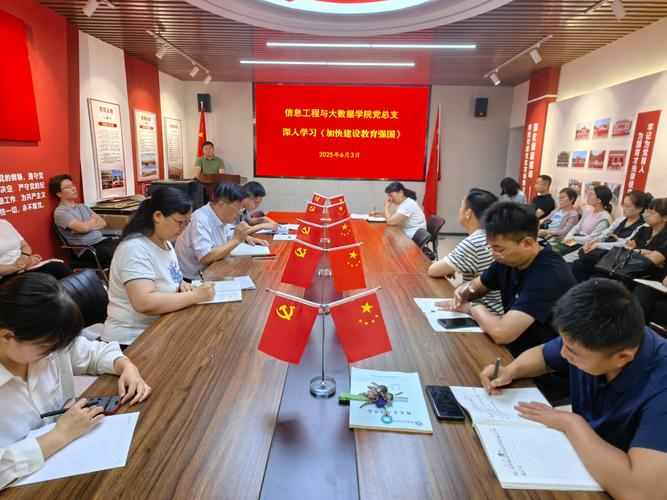
Strategic initiatives to consolidate the patriotic unity front. The current ideological landscape is a complex one, with higher education as a strategic position for ideological activity and rapid diffusion of information technology applications and as a frontier for the convergence of ideas. The strengthening of the ranks of those who are outside the college community, with their professional authority and social influence, has helped to strengthen intellectual leadership, strengthen the “four identities” and build broad consensus, not only to build a solid intellectual line and create a stable environment for the implementation of the “155” programme, but also to underpin and develop the patriotic reunification front of the new era。
The promotion of modernization of tertiary governance is an important underpinning. Modernizing tertiary governance is an inherent requirement for quality education development, and extra-party representation is an important force in the democratic management and oversight of tertiary institutions. The regulation makes it clear that the high school committee should play an important role in the operational and day-to-day work of integrating the integrated war into its role and supporting outsiders to build their own business. To strengthen the capacity of representatives from outside the higher education institutions, and to strengthen the mechanisms for the participation of outsiders in political and political processes, so as to enable them to pool their capacities effectively, optimize their decision-making, promote the modernization of higher education institutions, and provide solid institutional guarantees for the implementation of the mission of building a strong educational, technological and talent base, with a view to improving the overall effectiveness of the national innovation system。
Shortboards of practical bottlenecks and gaps
In recent years, local universities have been following up on the deployment of ccp's decision-making on the battle for unity, and the establishment of a cadre of extra-party representatives has yielded positive results and solid groundings. However, there are some outstanding problems that are not commensurate with the demands of the new era, mainly as a result of the lack of linkages between the three key elements of “culture-use-security” and the lack of implementation of the primary responsibilities of some of the college committees, which have somewhat constrained the overall effectiveness of the team。
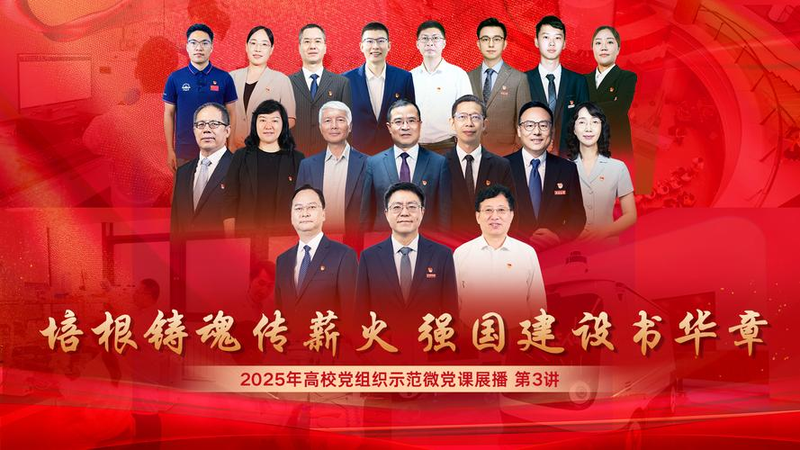
One is the lack of precision of the development system, which is out of step with the need for strategic talent. Building “homogenization” of content, most of the training is still dominated by political theoretical learning, lack of thematic courses matching national strategic needs during the “155” period, and inadequate interpretation of policy in the focus areas. Cultivation paths are “uniformized”, over-reliance on centralized forms of instruction, lack of a combination of “practical exercise + job experience” and the “single-by-show” phenomenon of some outside al-shabaab. Under the existing evaluation mechanism, the formation of the ladder is “tectonic”。
Secondly, the mechanism is not sufficiently dynamic and effective. Some higher education institutions are staffed by extra-party cadres with relatively limited voice in major decision-making, such as the construction of disciplines and the allocation of resources. There is a lack of effective institutional vehicle and platform for government decision-making and deep participation in social governance. Evaluation incentives are vague, the appraisal system remains focused on academic results, and the contribution of political representation, social services and so forth is not included in the evaluation, which has somewhat affected the motivation of outsiders to perform their duties。
Practical path to efficiency enhancement
The 15th five-year plan for the strengthening of the extra-university representation has to be guided by the recommendation and strictly implement the requirements of the regulation. The three main objectives of “political leadership, empowerment and functioning” are to create a working system of “precision, scientific use and robust security” and to promote the resonance of the extra-university representation with the development of the times。
Build a target-oriented training system that is based on a dual political and professional foundation. To strengthen the political leadership of “founding the soul”, incorporating into the core of the training the spirit of the recommendation, the doctrine of general warfare policy and, in particular, the key ideas of the secretary-general of xi jinping for working on the integrated front of the new age party, organizing extra-party representatives to teach at the patriotic educational base, with a focus on planning projects, to deepen their political identity and vocation. (c) strict implementation of the requirement of the regulation that members of the leadership team “lead to participate in the important activities of the unified front” and the establishment of a mechanism for regularizing contacts between members of the team and outside party representatives. (c) optimizing the “enabling” of capacity-building, developing differentiated development programmes for different groups of people, proposing strategic scientists to participate in major national events, selecting young cadres for institutional management, local government training, and promoting co-establishment of training bases in schools. The development of a “storage capacity” for the formation of the ladder teams will include excellent teachers from outside al-shabaab in the system-building programme and will increase the level of inputs to effectively break the faults of the ladder teams。
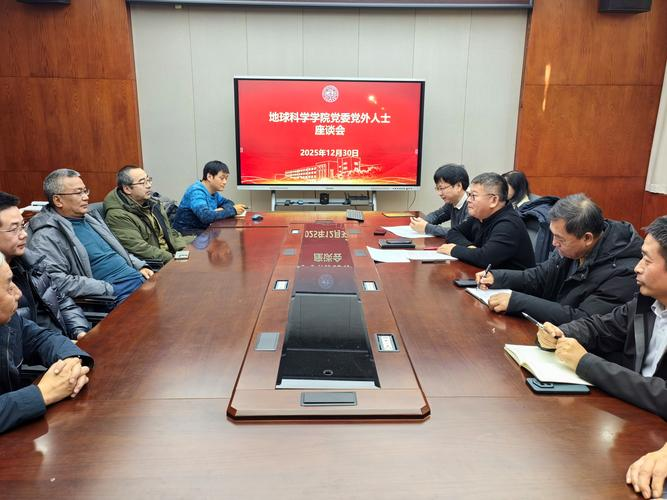
Improving mechanisms for the use of science to fully unleash the dynamism of human innovation. Broadening the access to posts and matching them. In the course of the change of leadership and the restructuring of the faculties of higher education, it is important to make bold use of particularly good representatives from outside the party and to actively recommend good people to all levels of the congress and the political consultative council to further broaden their political participation. Building platforms to promote performance contributions. Promotion of the establishment of an “out-of-school think tank” to conduct forward-looking research around the priority areas of the “fifty-five” programme; initiative to take over the local government's “show-and-show” mechanism, involving outside experts in productive research and collaborative efforts to translate academic advantages into development effectiveness. (c) to strengthen the scientific and democratic nature of decision-making through sound consultation and feedback mechanisms and by fully listening to the advice of outside party representatives before major decision-making in schools。
Strengthen the system's safeguards mechanism and work together in a coordinated manner. In keeping with its primary responsibility, the higher school committee, in particular, effectively discharges its primary and primary responsibilities, as specified in the provisions, by including the establishment of an extra-party representation force in its inspection, inspection and leadership teams. The psc hears at least one general battle report per year and shares it with the implementation of the general construction requirements of the new age party, the promotion of operational complicity, deployment and advancement. (c) to strengthen the mechanisms for working together in order to create a working pattern under the unified leadership of the party council, under the leadership of the general war department, and under the responsibility of the relevant departments and the institutional organizations. Optimizing resource security, increasing funding for the integrated operations process, resolving problems such as cumbersome reimbursement processes and difficulties in processing, and promoting the establishment of “out-of-party representative service centres” to address practical difficulties in an integrated and coordinated manner. (c) to promote the development of an integrated digital strategy, the establishment of an information management system for outsiders, and the establishment of an online regularized communication platform to enhance the intellectual and efficient performance of the work。
Create a good working environment and foster a common foundation of solidarity. (b) strengthen its advocacy and advocacy efforts through the school media, thematic reports, etc., in order to publicize the best practices of prominent outsiders and create an atmosphere of respect and support for outsiders. Deepening the bonds of friendship and implementation of the system of condolence visits for major festivals, the leadership of the pnc has taken the lead in reaching out to extra-party representatives in order to achieve political trust, work support, life concern and a growing political consensus and emotional identity. (c) to prevent and mitigate risks, conduct in-depth screening of risks in the area of the unified front for higher education, and maintain political security and harmonious stability on campus。
(by zhejiang industrial university, zhejiang socialist institute and chen tianjin industrial university)