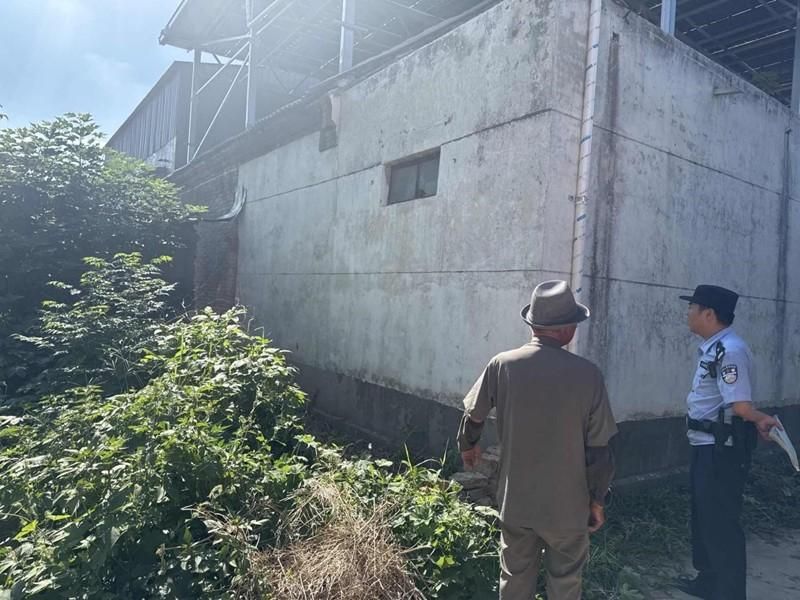
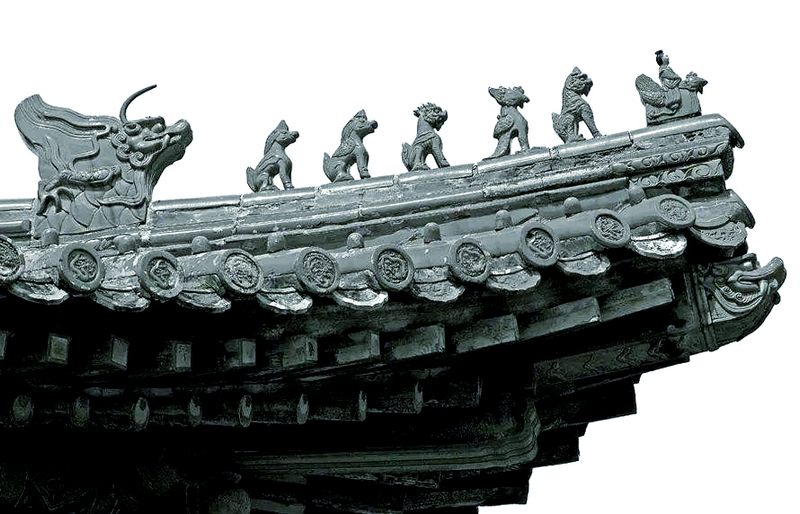
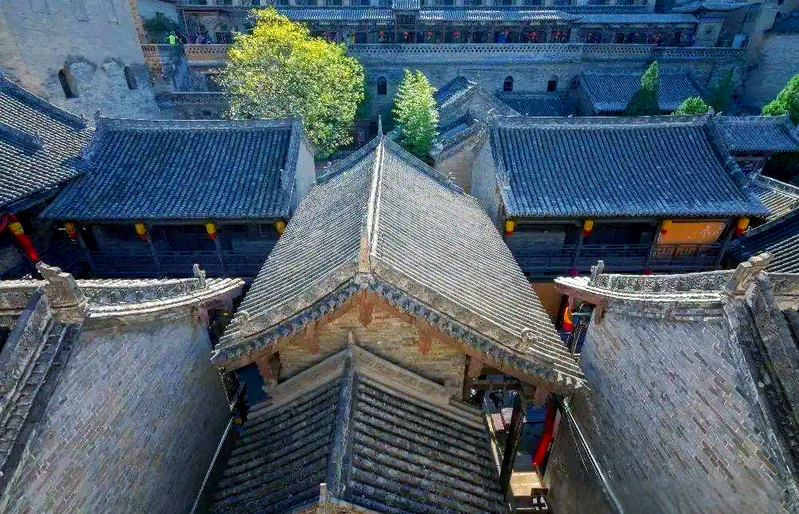
The structure of ancient chinese buildings is characterized by a variety of materials, such as wood, stone, brick and tile, in which the tile is easily replaced and the stone displays good strength and durability. However, bricks are often confronted with problems such as saturation, looseness and flashing of drums, while wood components are often damaged by decay, worms, cracks, crooks, etc. In order to address these challenges, this paper will explore several common technologies for the consolidation of brick blocks and wood components。
First of all, let's look at the strengthening of the body。
For walls with severe alkaline erosion, soothing, empty drums, crooked or marked cracks, removal may be a necessary option if it is not possible to repair them by scratching, digging, picking, etc. In the process of dismantling, prototypes, raw materials, processes and practices should be followed to the extent possible in order to ensure consistency between the new walls and the original buildings in terms of appearance, colour and scale. For critical areas of stress, measures such as new materials, new technologies, or additional loops can be used to strengthen without compromising the overall appearance。
(2) slurry reinforcement
When there are serious problems with walls, such as cracking, looseness or empty drums, and when demolition takes a long time and may have adverse effects on historical wind patterns, the use of slurry technology for strengthening may be considered. During the slurry process, low pressure should be used to ensure its effect. Commonly used slurry materials include cement, cement and fine sand and white ash blends, and structural glue such as epoxy resin。
For the reinforcement of the empty drum wall, it is necessary to drill a slash in the form of a plum at a distance of 600 mm. Before emulsing, high pressure gases should be used to remove dust and impurities from brick stitches and to wet the walls to increase the integration of the mag and bricks. For the reinforcement of the cracks in the wall, a relatively thin amount of microinflated slurry is usually injected after cleaning the gap, allowing natural penetration. At the same time, the slurry spilling out of the wall should be washed in time to keep it clean. The surface repair and grinding of the wall is performed after the plasma reaches a certain strength。
If the break-up of the wall is caused by ground-based problems, the foundation base should be addressed before strengthening the wall。
(3) strengthening of the wall column technique
When there are problems of stability or lack of strength in the wall, the concrete pillar method can be used for reinforced treatment. This method usually applies to the reinforcement of the inside of the wall and does not damage the historical appearance of the wall. In the absence of bites from the front, back or internal walls, a combination of plating and the addition of an additional wall column is recommended。
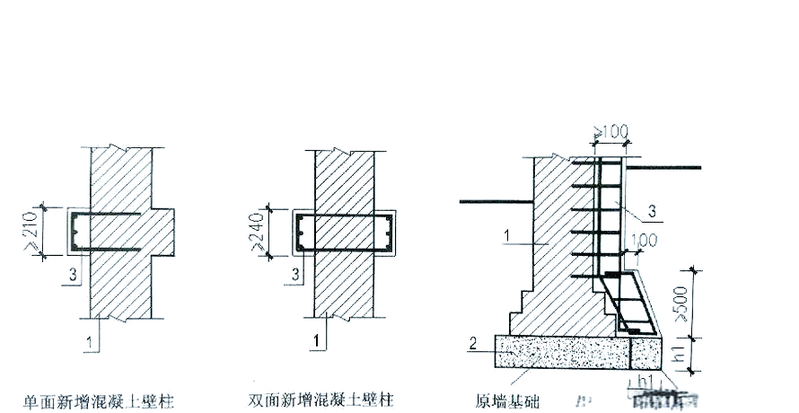
Figure 1 example of concrete walling method for reinforced brick walls
When brick walls face challenges of stability or strength, concrete-based pillar techniques become an effective means of strengthening. This method is skilfully reinforced on the inside side of the wall, thus enhancing the overall stability of the wall without undermining its historical appearance. This reinforcement strategy, combined with the addition of an escapade, is particularly recommended in cases where there is no bite from the front, back or inside walls。
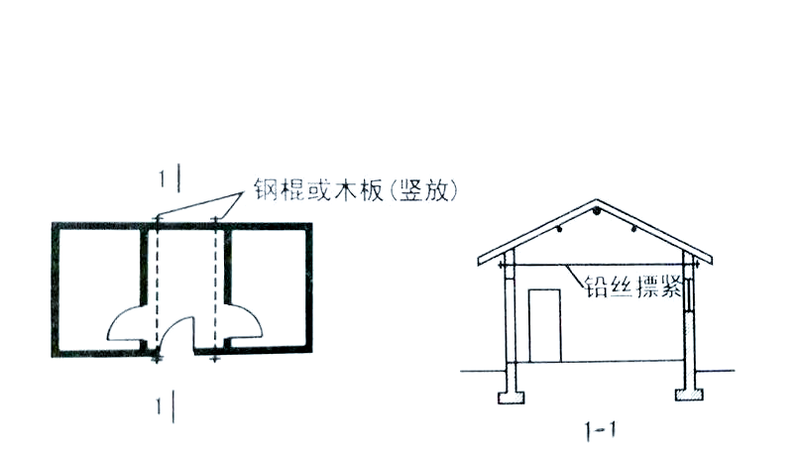
Figure 2
For internal walls or for ash-painted walls, steel-coated cement slurry may be used. The operation was to remove dust from both sides of the wall to be reinforced and to clean it, followed by the injection of sand or fine concrete for reinforcement (see figure 3). This method is effective in increasing the carrying capacity of the brick wall, its resistance to side movement and its longness。
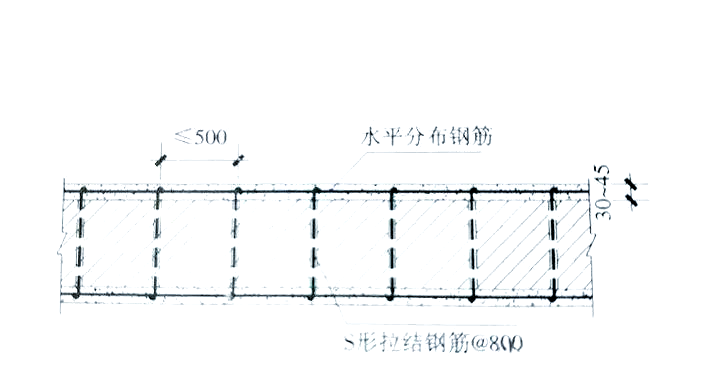
Figure 3
And then we're going to look at the reinforcement of wood structures. Among them, dialling is a common method。
This approach allows for the repositioning of tilted, reversed or unpaved components, without debundled wood structures, and for strengthening as a whole (see figure 4). In the course of implementation, it is usual to unload the undiscoverable balconies, untie the wood and the cartons, and iron, if any. Adjustments need to be phased according to actual circumstances, and each adjustment should not be too large. In the event of an anomaly during the dialing process, the construction should be stopped immediately, the cause identified and the failure cleared before proceeding. At the same time, the overall integrity of the architecture also requires simultaneous repair of the damaged components and the return of the disabling components。
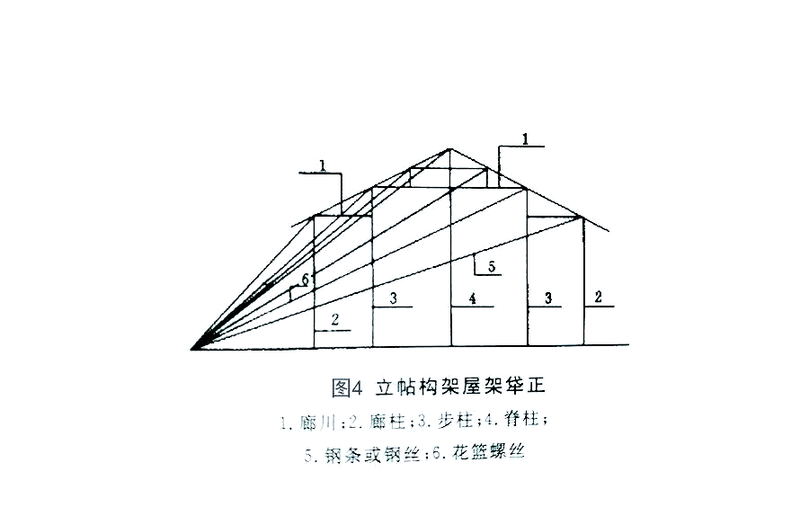
(2) outsourcing steel reinforcement
In the case of extraction of parts of the larger log structure, the node of the subordination can be strengthened by outsourcing flat steel (see figure 5). The flat steel is usually made in typography. It is no longer sufficient for broken or worn-out components, especially those with a suture width of more than 30 mm, to be sequestered or trimmed with water-resistant glue and wood bars, and then to add two to three flat steel or wires to the damaged paragraphs to enhance their robustness (see figure 6). For decayed or fractured components of beams, which are difficult to replace, they can be reinforced by interlocking or flat steel。
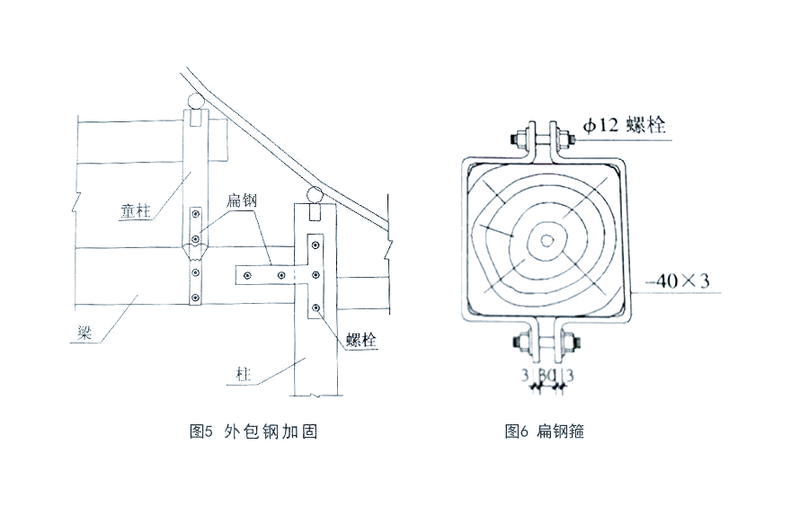
(iii) methods for harvesting and docking beams
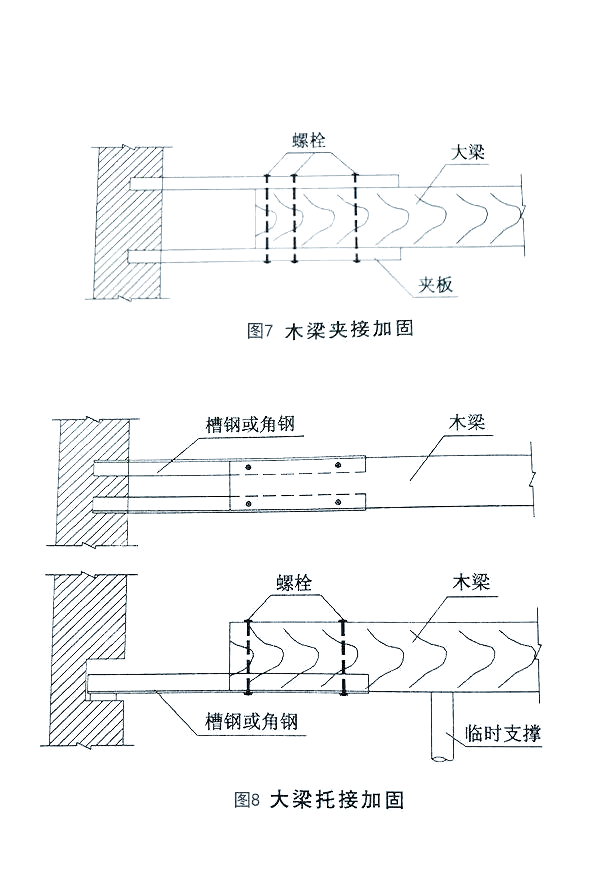
At the support end, beams are often damaged by decay or morbidity. When upper and lower beams are damaged at a depth of more than one third and less than three-fifths above beams, we can calculate and strengthen them using a patchwork (see figure 7). Neither the cross-section nor the mass of the wood selected should be below the original beam, while ensuring that the planks are straight, woodless and marrow-free and are made from gas-dry. If it is difficult to tie up the construction, we can choose to strengthen it by holding it together (see figure 8)。
(4) stabilization
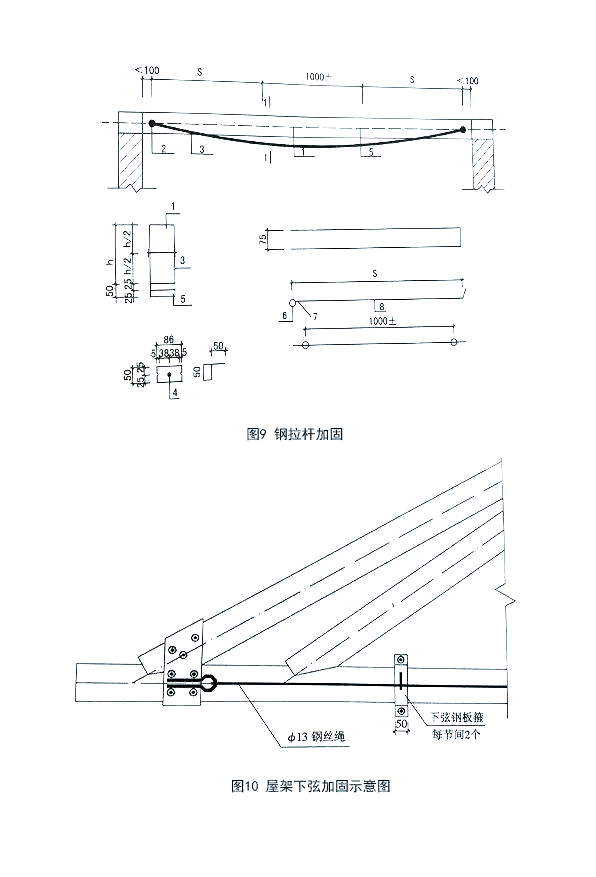
When the rigidity or carrying capacity of the beryllium components is not sufficient to support the structure, such as signs of break-ups or a lack of pull strength under the roof, we can increase its stability by strengthening the pole (see figure 10). Prior to consolidation, it is necessary to ensure the material integrity of the wood components without traces of decay or morbidity. At the same time, in the application of reinforcement poles, care should be taken to control appropriately the pull imposed to ensure that the reinforcement effect is safe and effective。
(5) stabilization of pillars
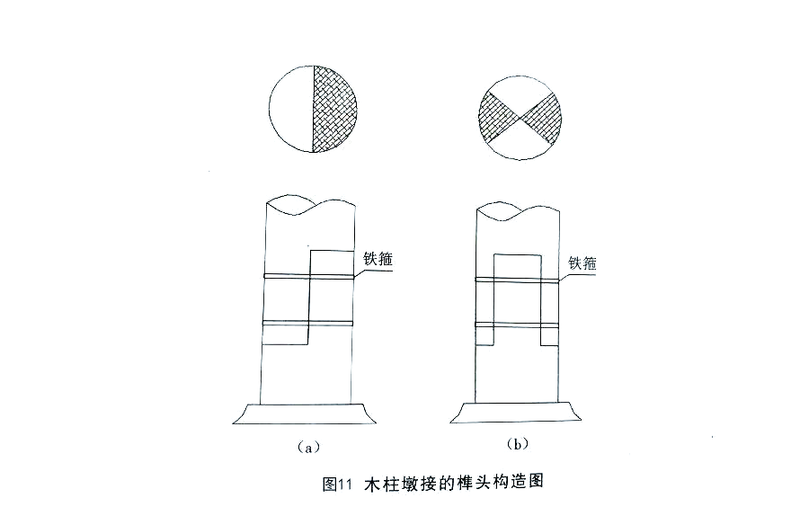
When half or more of the surfaces around the foot of the pole are decayed and not more than one fifth deep than the length of the column, we recommend a mosaic-based reinforcement. Concrete steps include removing the decayed parts, preparing the packagings according to the depth, length and radians of the clogged columns, and placing them closely on the outer edges of the pillars, ensuring that they remain flat and rounded to the outer limits of the columns. After that, the wraps were firmly entangled with iron。
In the event of a serious deterioration of the trough but not exceeding a quarter of the height of the column, a docking method may be chosen for reinforcement. There are a number of options for docking, such as wood docking, reinforced concrete docking and stone docking. In wood cisterns, the first step is to remove the decayed parts of the sluice and then select the appropriate sluice styles, such as “pumping” or “stamping”。
(6) replacement of columns and supporting pillars
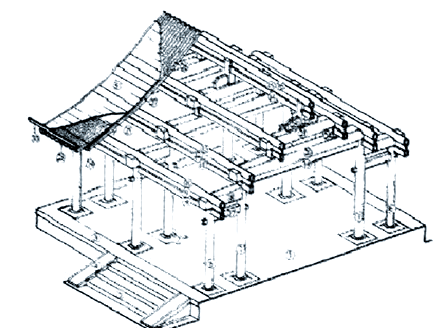
“switching columns” or “stealing beams for pillars” is a technique commonly used in the restoration of ancient buildings. It refers to the creation of conditions for the replacement of the new pillar by temporarily swirling the beams through the use of tools such as jacks or poles, without destroying, to the extent possible, the structures and structures of the original building. Such an operation would need to be carried out with caution and to ensure that conditions were appropriate for implementation. It is worth noting that not all columns can perform such switching operations, and usually only those that are less plugged into other components and have relatively simple constructions, such as lumbers, old lumbers, etc。
(7) application of chemical reinforcement techniques
New chemical slurry hardening techniques can be used to treat ancient building components with severe decay or infestation of more than one third. This technology can achieve effective reinforcement without replacing the entire building block, much less having to undertake large-scale repairs。
(8) enhanced advantages of carbon fibre sheet (cfrp) and structural glue
Carbon fibre sheeting has been widely applied in the area of reinforced steel concrete structures because of its light, high, plastic, corrosive and durable characteristics. Carbon fibre sheeting is the preferred material for irregular cross-section reinforcement of traditional wood components. Its light properties leave the reinforced wood components untouched after the painting, with almost no additional weight, and perfectly replaces the iron tungsten in the traditional reinforcement. Moreover, carbon fibres are more intense and very easy to construct, without the need for corrosive treatment, to effectively protect wood from corrosion。
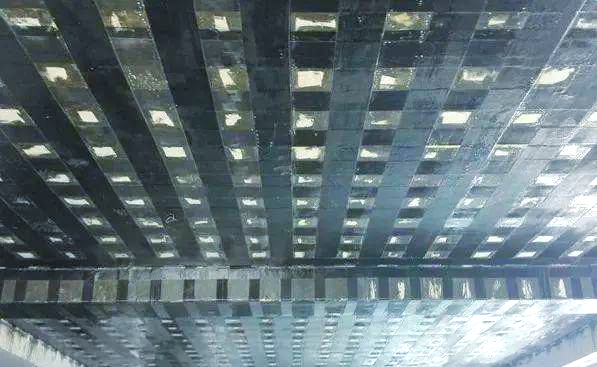
(8) enhanced advantages of carbon fibre sheeting and structural glue
The carbon fibre sheet, because of its excellent physical properties, is highly coloured in the area of reinforced concrete structures. The carbon fibre sheet is the preferred material for the irregular cross-sectioning of traditional wood components by virtue of its lightness, strength and durability. Its reinforced wood components, with little impact on their appearance and no additional weight, are perfect alternatives to the traditional iron-strength reinforcement. In addition, the construction of carbon fibre sheets is extremely easy and does not require corrosive treatment to effectively protect wood from corrosion。
(9) replacement of new components
For wood components that are severely decayed, infested, burned or fractured, new components should be considered for replacement if they cannot be restored through patching. The original component should also be decisively replaced when it is not carrying enough capacity, or when it is scratched beyond the norm limit, and it cannot be strengthened by repair。
The value of cultural objects lies in their unique existence, and it is their enduring preservation that enables us to grasp the treasures of history, art and science. Specialized reinforcement measures to prolong the lives of older buildings that have been damaged or destroyed have undoubtedly been a top priority in their renovation work. The ancient buildings not only carry the deep traditional culture of our country, but also bear witness to the change of history. The preservation of these ancient buildings is therefore of immeasurable relevance to us。