The projectile clean-up enhancements are a cold treatment process in which numerous small circles of mediums called steelballs are struck on the surface of the parts by the operation of an electricly driven projectile. Each steelball impacts on the metal parts, hitting the surface like a mini-stick, creating small crush marks or dents. To form a dimple, the surface layer of the metal is bound to stretch. Under the surface, compressed crystals attempt to restore the surface to its original shape, thus creating a hemispheric with a high degree of compression, with numerous dented overlaps forming a uniform residual pressure layer, further increasing the demonstration of hardness and fatigue strength of the works and allowing a significant extension of their useful life。
The newly found casting surface is not neat and leaves a portion of the prick and clay sand that requires later sanding, rustproofing, etc. Some of the substrates also have air holes, which leave a safety risk for the use of the product, so that the casting needs to be treated with a surface wound so that the projectile machine can adequately meet the above needs。
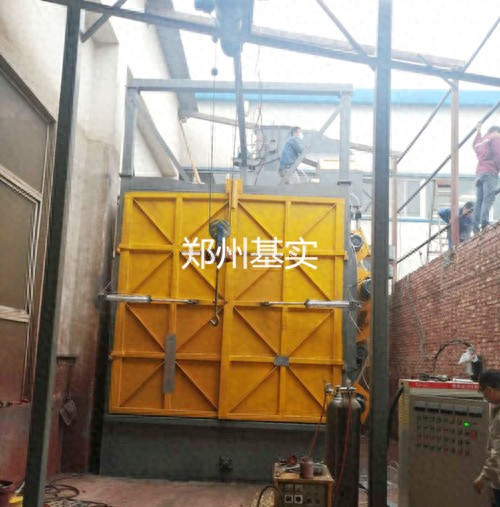
A hook-to-tape machine
So what's the idea of a projector doing no surface damage? The casting is transported to the projectile chamber by hanging, track or ramp, and the work is rotated and rolled continuously in the chamber. The projectile clean-up room is surrounded by a well-structured projectile, which can accelerate the discharge of metal bullets. Through intensive metal-ball strikes, sand can be effectively cleared and polished, while remnant castings can be screened and gas holes exposed in advance to avoid security risks at a later stage. This is the principle of surface-free detection using a projectile machine。
Many steel, parts and components have been exposed to humid air continuously during their placement, resulting in a series of chemical reactions, increasing the accumulation of a layer of oxidized skin and rust on their surfaces and having a negative impact on the aesthetic and deep-processed treatment used, especially when projectiles are used for the purpose of defiling。
When the projectile machine works, the parts that will need to be processed by the delivery system are transported to the projectile clean-up room, the steel balls (balls) are thrown into the surface of the projectile at a speed of 80 m/s by means of a high-speed rotation of the projectile wheel, and the projectile (balls) is struck and scraped continuously and in all its dimensions in order to remove rust, skin oxide and stain from the surface of the projectile for the purpose of rust removal and rustproofing。