At its 20th plenary session, the party stated that it was taking advantage of the historic opportunities of the new technological revolution and industrial transformation to bring together the powerful, the powerful and the talented in order to improve the overall effectiveness of the national innovation system, enhance its capacity for innovation in a comprehensive manner, take advantage of the high levels of technological development and generate new qualitative productivity. Building on the high-end, intelligent and green development needs of sioux state manufacturing, the sioux state institute of engineering has used innovative entrepreneurship education as a diversion for applied talent development reforms, promoting specialization, integration in maternity and education and integration in races. The school has reformed the classroom format with a “project centre” curriculum, through continuous training on the “1+x+1” practical platform, linking industrial scenes and results hatched at the modern industry college and the national university of advanced sciences science and technology park, and through the integration of resources and quality assurance at the innovation and entrepreneurship institute to build a comprehensive two-pronged education system。
Driving educational and pedagogical reforms, innovative talent development ecology
Schools have always placed innovative entrepreneurship education at the “front end” of talent development. In the context of the core objective of “development of first-class applied education and development of first-class applied talent”, the promotion of innovative entrepreneurship education from the “additional options” of talent development to the core element clearly requires that all students receive systematic innovation education and entrepreneurship training to achieve full dual education coverage。
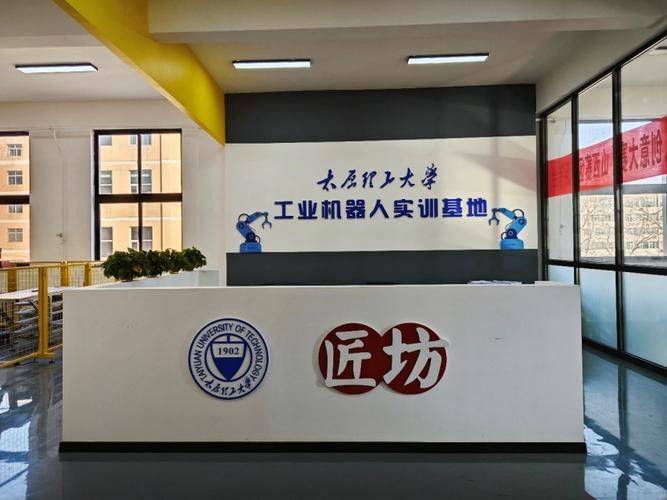
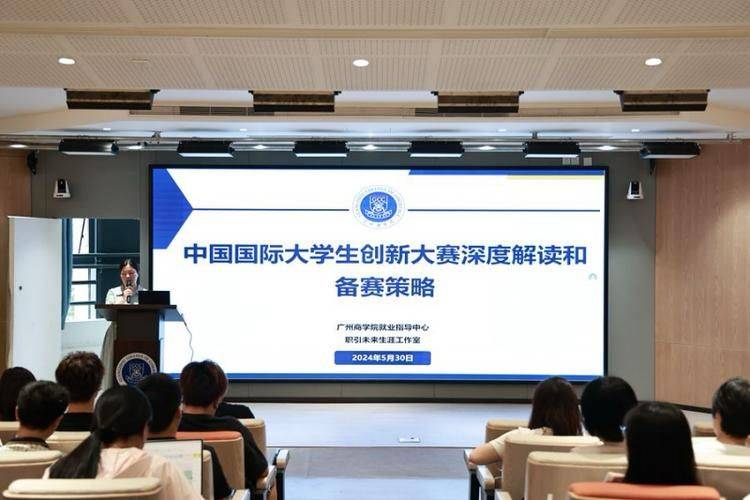
Schools have advanced the reform of the “project centre” dual curriculum model by selecting practical engineering cases, technological transformations and innovative entrepreneurship projects, organically embedding into the core professional curriculum, and building a progressive project system from interest initiation, basic training, integrated practice to top-point projects. Classroom teaching is no longer limited to the traditional model of “knowledge, practice” but is organized around the whole process of “problems situation—assignment of tasks—programming—programming—programmatic validation—programmatic reporting” and guides students in their ability to analyse problems, design programmes and sharpen practical results in real or simulation scenarios. The dual curriculum is no longer at the level of “conceptualization”, but is geared to the targeting of applied talent development, and the scientific design of teaching objectives, content systems and evaluation methods are key guides in addressing complex engineering practices. At the same time, schools have introduced multi-class integration project-type teaching, which organizes group collaboration, division of labour and stage-shows to guide students to develop independent analytical judgement in interactive learning. Under the curriculum, innovative hands-on training “to join an innovative community, complete a two-in-one subject and participate in a competition for disciplines” is promoted, from classrooms to laboratories, innovation societies and competition sites, and the development of an integrated “learning-research-research” approach。
Over the past five years, schools have completed 161 courses of professional innovation, 2 double-initiative courses have been identified as the first-class undergraduate courses at the national level, and the results of the educational reform have been awarded a total of 8 national and provincial prizes for the results of the teaching and learning process; the cumulative funding of 2,423 projects for the training of university students in innovation and entrepreneurship has been awarded to more than 9,500 students; and the award of 10 national prizes, 9 silver prizes and 6 copper prizes in such events as the china international university innovation cup. The participation rate of students in provincial and higher educational competitions rose from 49 per cent to 71 per cent. A shift from a “minority of activists” to a “most students' normal practice” has been achieved through a dual approach。
Deepening the integration of maternity education and building the foundations of talent development
Applied talent development lies not only in what to learn, but also in what to learn and what to learn around. The schools, which are confined to the industrial layout of suzhou and the long triangle, have built one national, four provincial and five school-level modern industrial colleges, which cover the fields of elevators, photovoltaics, textile garments, artificial intelligence, medical biotechnology, intelligent manufacturing, and intelligent networked cars. The institute of modern industry actively promotes the deep involvement of enterprises in key aspects of talent development programme development, curriculum development, hands-on training, and the direct integration of industry standards, key technologies, typical crafts and business models into the entire teaching process, so that the content of teaching is resonated with industry needs. In terms of platform-building, schools have set up a practical training system for innovative entrepreneurship under the “1+x+1” structure, i. E., one provincial university student centre for innovative entrepreneurship practical education and a number of modern industrial college engineering practice bases, ensuring at least one professional innovation association per profession. Schools have now established 83 open and shared provincial and school-level innovative entrepreneurial practical education platforms with a total area of nearly 30,000 square metres to provide students with full-cycle support from basic training to integrated practice. In the area of productive research and development, schools have been co-versed in the national university science and technology park, which has built four national spaces, one national science and technology business incubator, one provincial science and technology business incubator, and one provincial science and technology business accelerator, to work with local business incubators to achieve double education and translation of results. Through projects incubation, business internships, joint attacks, etc., schools involve students throughout the operation of the project, with a deep understanding of “how technology becomes a product and how creativity becomes a business”. In terms of talent flows, schools have adhered to the “souzhou, long service triangle” and graduates have mostly entered key industries such as smart manufacturing, biomedicine, new energy sources, textile and garments in the region, many of them in cooperative enterprises with schools to establish modern industrial institutes。
Promotion of institutional innovation and development mechanisms
In addition to the ministry of education's new engineering research and practice project, the production cooperation programme and the priority project for higher education reform in jiangsu province, the school has continued to deepen its dual education research programme, with a cumulative total of 98 teaching and learning studies at the provincial level and above. Based on the results of the research, schools have produced more than 20 supporting documents, such as the programme for the implementation of the reform of education for innovative entrepreneurship, which integrates dual-generation education into the talent development programme, curriculum development, academic evaluation and professional evaluation, and institutionalize the setting of objectives, standard norms and process management。

As the deputy director of the national union of higher education quality assurance institutions, schools have also integrated the quality of education into the core indicators of professional development performance evaluation and into the system of teaching and learning evaluation in the faculties. With regard to scientific analytical skills, critical thinking skills and the conceptualization of new products, schools have identified innovative capacity development goals and graduation requirements, improved the formative evaluation of the achievement of the goals and promoted the gradual internalization of the educational quality requirement into the conscious pursuit of teachers. In recent years, schools have been guided by landmark achievements such as the national prize for educational results (integration), which has resulted in the systematic refinement of the “project centre” curriculum model, the “5d-driven” dual education mechanism and the creation of a dual education system with a regional character, which has resulted in replicable and replicable experiences。
(by mr. Kang jianming, president of the suzhou institute of technology, and vice-president of the institute of innovation and entrepreneurship, zhou quanxi state institute of technology)
Chinese journal of education, 2026, 21/01, 03rd edition