1. Training in fire escape and first aid,1 training in fire escape and first aid, main content,2 training in fire escape and first aid,1 life escape and first aid,1 fire escape and first aid,1 flue gas hazard toxicity of flue gas: a person may faint by one or two minutes in smoke, 4 or 5 minutes in danger of death. Stay calm, six, fire escape and first aid training
2. In the event of a finding of injury or suffocation, call the emergency telephone 120 and make it clear that: 1; a detailed address 2; the fire area; the substance on fire; the size of the fire; the name and telephone number of the person calling the alarm; send a person to the gate to receive the fire truck and to maintain the road from the road to the fire, to alert the police promptly, 7, the fire escape and first aid training, and, in the event of a fire, do not panic or, in the event of a low fire, quickly use the improvised fire-fighting equipment available to it and take effective measures to control and extinguish the source of the fire. Oil-containing liquids may never be extinguished directly by water using dry powder fire extinguishers or sand; if the fire is smaller, it may be covered with wet cotton, clothing, etc., which suffocates the fire. The gas tank shall be covered with wet cotton, clothing, etc. During fire and the valve shall be closed. When an electrical or circuit is on fire, the power must be cut and the fire extinguished with dry powder or gas
3. Fire can be extinguished directly in case of electrical or electrical explosions. Fire escape and first aid training,3 general principles of fire rescue, intoxication prevention, asphyxiation prevention. Listen to the command, don't panic. 9. Training in fire escape and first aid, 1, life escape rehearsals, risk management (forecasts, double work) the structure of the building in which they work, study or reside and the route of escape must be completed and, if necessary, emergency escape rehearsals may be organized to familiarize the population with fire-fighting facilities within the building and the method of rescue. 2. Knowledge of the environment, cover-up exits (in the event of safety and security, it is imperative to keep one for yourself)
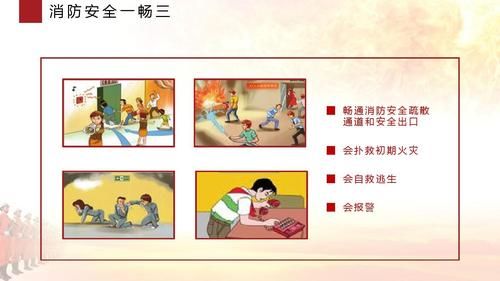
When you are in a strange environment, such as in hotels, shopping malls, entertainment places and for your own safety, care must be taken to evacuate passages, safe exits and stairs so that you can escape the scene as soon as possible. 3. The most important escape routes at the time of the fire are the stairs, the passageways, the safe exits, etc., which should be guaranteed unimpeded access, and should not be stacked or locked to allow safe and rapid passage in emergencies. 4. When a fire occurs, when a fire is found to be small and does not pose a major threat to people, when there are enough fire-fighting equipment around it, such as fire extinguishers, fire bolts, etc., to contain it and put it out; do not panic and panic, causing a major disaster. Four, fire escape 13, 10, fire escape and first aid
In the event of a fire, fire, smoke and fire, first and foremost, you must calm yourself, quickly determine dangerous and safe locations, decide on ways to escape and evacuate dangerous areas as soon as possible. Do not wander blindly with the flow of people and the crowds of one another. When evacuating, be careful to run towards the bright spot or in the open outside, to run below the floor as far as possible and, if the passage has been blocked by fireworks, to leave in the direction of fireworks and to escape outside the house through the balcony, the air window, the roof, etc. In the fire, human life is paramount. In danger, they should be evacuated as soon as possible and should not waste their valuable escape time on clothing or on finding or removing valuables because of shyness or care for valuable items. Those who have fled are not allowed to return. 7. Summary protection
6. Nasal shampoo (many protective devices are in hand and are always better than bare-handed) when fleeing through smoke-filled routes to prevent fumes poisoning and suffocation. In order to prevent smoke from strangling the fire, towels and masks could be used to disengage. The flue gas is lighter to the upper part of the air, and the extraction close to the ground is the best way to avoid inhalation and leaching of the gas. Through the pyrotechnic closure zone, protective gear such as gas masks, helmets and flame retardation suits should be worn, in the absence of which cold water can be poured on the head, on the body or with wet towels, wet cotton, wet blankets, etc., and then washed out. 11. Fire escape and first aid training,8 good access, no access to elevators (which are extremely dangerous when they are in flight) and buildings designed in accordance with standard standards, all have more than two escape stairs, corridors or safe exits. In case of fire, access to the relatively safe stairs is selected as appropriate. Except for the building
7. Outside the stairs, it is also possible to climb the building balcony, windowsills, roofs, etc., to the surrounding safe locations and slide out of the building structure, such as landing pipes, thunderlines, etc. In high-rise buildings, the elevator's power supply system can be cut off at any time during a fire or distorted by heat-acting elevators, while the smoke directly threatens the lives of those trapped because the escalator wells run straight through the floors, so that no ordinary elevators are allowed to escape. 9. Slow escape, slid ropes save themselves (with bold and careful ropes around them). High-altitude slow-downs or lifelines are generally installed in high-rise, multi-storey public buildings through which people can safely leave dangerous floors. In the absence of these specialized facilities and where safe passages are blocked and rescue personnel are not able to arrive in time, you can quickly use the ropes around you or the simple, home-made lifelines such as sheets, curtains, clothing, etc., and wet water from the window or balcony

8. The rope slips slowly to the lower floor or to the ground. 10. If the door is hot with a hand, the flames and smoke will rise when the door is opened. The escape route was cut off and there was no rescue for a short time. This can be done by creating places of refuge and by placing them on the ground. First, the doors and windows of the fire should be closed, the doors and windows of the back fire should be opened, the door stitches should be clogged with wet towels or the humid cotton should be drenched with water, the door and windows should be blindfolded, and then the water should be used to pour through the room to prevent the pyrotechnics from leaking into the house until relief personnel arrive. 12. Fire escape and first aid training,11 slow-floating, seeking assistance (whose full exposure is needed to save themselves effectively) in the daytime, you can shake your clothes out the window, or throw something light-eyed; you can use your flashlight at night
9. The cylinders keep flashing through the window or knocking on something, sending an effective distress signal in time to draw the attention of the rescuers. Since firefighters enter the room by groping along the walls, efforts should be made to roll to the side of the wall or to the door when they are suffocated with smoke, so that firefighters can search for and rescue themselves; moreover, to get to the side of the wall would prevent the structure of the house from falling and crushing themselves. 12, the fire has reached its limits, and do not run away (even though there is a plume, fire can burn away). If people in the fire field find fire on them, they must not run away or beat with their hands, because when running or beating, they create wind, accelerate oxygen replenishment, and fuel fire. When there is a fire on the body of clothing, efforts should be made to remove the clothes or roll them in the field to put out the flames; it is more efficient to be able to jump into the water in time or to get people to pour water into the body and spray the fire. 13, jumps, lives are lost, people in fire and smoke tend to experience extreme terror and near collapse
The fear of panic is highly likely to lead to reckless and harmful behaviour such as jumping out of the building. It should be noted that only when firefighters are prepared to save the aura pads and command the jumps, or when the floors are not high (generally below 4 floors), or when they burn, do the jumps. Even if there is no retreat, and if life has not been seriously threatened, the firemen must wait for help. Jump-out techniques, where possible, should be in the middle of a life-saving aerobic pad or in the direction of a pool, a soft rain cap, grassland, etc.; where possible, should be used to reduce impact by carrying as much loose items as possible, such as cotton, couch cushions, or by opening a large umbrella (heavy cotton to the ground, couch cushions, etc.). If you jump off a building with your bare hands, you must remove a window or balcony so that the body will naturally fall down, so as to minimize the vertical distance, and before you land, you must bend your hands to your head in a lump to reduce the harm. Jumping from a building may cause some bodily harm
11. Prudence and prudence. 13, fire escape and first aid training, 14, fire escape and first aid training, and why scramble in case of fire? Since most of the smoke is concentrated in the upper space at the time of the fire, the body should be as close as possible to the ground during flight. 15, fire escape and first aid, 16, fire escape and first aid, 17, fire escape and first aid, 18, fire escape and first aid, 19, fire escape and first aid, 20, fire escape and first aid, 21, fire escape and first aid, 22, fire escape and first aid, 23, fire escape and first aid, 24, fire escape and first aid, 25, fire escape and first aid, 26, fire escape and first aid, 27, fire escape and first aid, 28, fire escape and first aid
12 training in first aid, 1 and identification of evacuation guides. The unit should identify a certain number of evacuation guides, be skilled in evacuation procedures and escape methods, be familiar with its own evacuation routes and safe exits, and be responsible for the correct direction of the safe evacuation of those present at each floor, evacuation routes and safe exits in case of fire. At the same time, the unit should educate all staff in basic evacuation skills. 2. Emergency evacuation, 29, fire escape and first aid training, fire safety duty, manager, employee “four skills”, 1, skilled command of the unit, job evacuation escape route, skilled command of procedures to guide evacuation personnel, skilled command of escape facility usage, 4, skilled fire recovery skills, 30, fire escape and first aid training, 2 and proper organization of evacuations, with units taking the right approach to organizing evacuations. In the event of a fire, evacuation from the nearest security exit and evacuation stairs should be directed to the extent possible。
The evacuees provide assistance to the elderly, the sick and the sick, while alerting their clients to their emotions and to the right way to escape. The evacuation should be completed by checking for missing persons and organizing rescues in a timely manner when persons are identified. In short, through capacity-building in the organization of evacuation escapes, units should identify a certain number of evacuation guides, staff familiar with evacuation routes, safety exits, evacuation procedures, escape skills and, in the event of a fire, “capable of escaping the fire and leading to evacuation”. 32 training in fire escape and first aid, iii, emergency care, three-pronged effects of carbon monoxide poisoning on the organism, co + hb cohb 240 times the relative and strength of o2 + hb cohb co + hb 1/3600 cohb to prevent o2hb from defusing, low oxygen haemorrhagic and tissue aerobic,
14-33, training in fire escape and first aid, acute poisoning, 34, training in fire escape and first aid, rescue measures, prompt release of patients from the poisoning environment, immediate opening of doors and windows, circulation of air, fresh air for patients, decompression of clothes and belts, heating, flatting of patients, one side of their head and keeping their breathing channels open. The patient should rest in peace and avoid increased heart, lung and oxygen consumption after the activity. 35. Fire escape and first aid training, rescue measures, self-respiration, and adequate oxygen inhalation. Low-flow oxygen is given to a low-flow inhaler by a mild intoxicator, with an oxygen flow of 8-10 l/min (no more than 24h in time to avoid oxygen poisoning). Rapid oxygen delivery is the most effective way to remedy oxygen deficiency,36 training in fire escape and first aid, rescue measures, and patients suffering from demented poisoning must be removed from the intoxication environment as soon as possible, and their breathing, pulse and blood pressure should be examined for the shortest possible time and treated as a matter of urgency. 37. Fire escape and first aid training, life-saving interventions, and respiratory heart stoppages should be provided immediately to the site for cpr resuscitation and during trans-shipment, the outside heart pressure and artificial respiration should be maintained. 5cm, 38, training on fire escape and first aid, rescue measures, and further treatment in hospital as soon as the condition is stabilized. 39, fire escape and first aid training,