Scars are a problem for many people, but you know what? Scars are not inescapable but require scientifically effective scarring。
This paper will provide a detailed description of the type of scar and the common way in which scars are repaired and their advantages and disadvantages, and will give you an idea of which scarring methods are more specious。
I. Why do you have scars
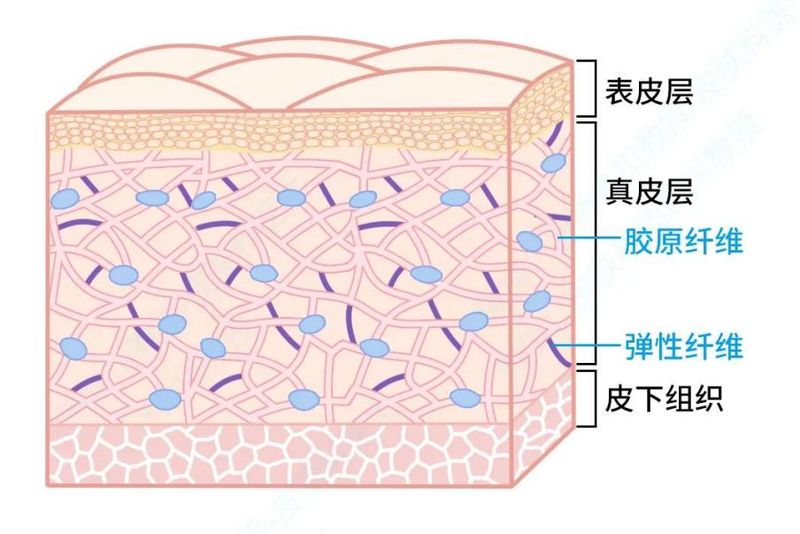
Our skin, from surface to deep, can be divided into skins, three layers of skin and subcutaneous tissue, with different degrees of damage to the skin and different responses to repair. If the injury is shallow, only the surface is injured, the skin is not scarred, at most colored; if the injury is deep, the skin is bruised and the fibrous tissue is significantly increased during skin repair, it leaves a scar。
Are there any differences between “scarbs” and “stamps”
There is a certain difference, but we often ignore it. The scarring refers to the body's normal reaction, resulting in a scarred tissue. Scars are often the result of traumas, or of injuries, which are not treated well, resulting in visible scars. So with the scars, we need active treatment to get back to his normal state。
There are different kinds of wounds at different depths, and the way they heal is different。
Iii. Common scar types and their causes
Clinical scarring can be divided into amplified scars and dimpled scars. The increase in the number of scarring is due to the presence of osmosis (minority), which is caused by trauma, surgery and infection. On the surface is the growth of skin tissue, which is more rigid in texture, dark red and purple red, often with the feeling of itching and pain. It is usually possible to use scarred drugs or partially inject sugar cortex hormones. And there's a big difference between a scar with a bruise and a common scar。
For dimpled scars, it is usually caused by infections, such as viral infections, poxes, scabies, etc. The therapeutic effects can be achieved through skin grinding or lasers。
Seeing the scar friends here, if you're not sure what the scar type is, you can go to a good local dermatologist to see if you can determine the price of treatment and the time to recover
By organizational and clinical characteristics:
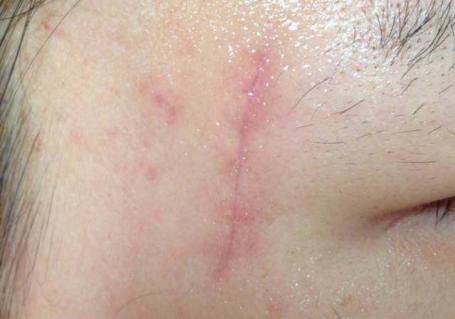
1. Subsurface scarring
Most commonly caused by bruises, injuries or scratches by small animals, local flatness and softness. Such scars do not require special treatment and may disappear after repeated skin metabolisms。
2. Incremental scarring
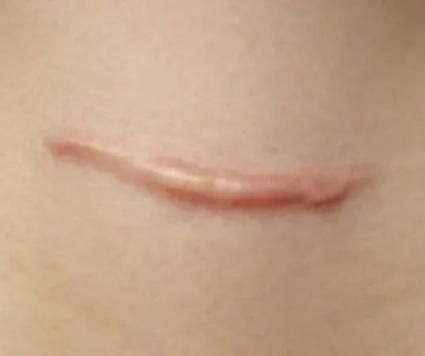
It is one of the most common types of scarring in clinical practice. Damages to the real cortex, caused by surgery, burns, bites, skin diseases, are usually higher than the skin surface and do not level themselves over time. After the damage to the actual cortex, the wounds were repaired with excessive adhesive proteins, which caused the tissues of the actual cortex to deteriorate, accentuate and create an amplified scar。
Once such scars are formed, it is difficult to completely remove them. Such scars are so itchy that they can easily be scratched that they lead to crushing, infection, but not so much that they do not go beyond the original wounds and that, as time passes, they shrink, level out, do not tickle, even if they require early laser or surgical treatment. Through treatment, it can be diluted and the sooner the scar occurs, the better。
If you have a similar scar, you can go to the dermatological hospital to see if you can dilute it。
3. Declining scarring
It generally refers to severe damage to skin tissue and fat levels, which can easily result in atrophy. Most are found after haemorrhoid infections, deep burns and trauma, severe trauma or radiation treatment. This type of scarring is thinner in clinical terms, is dimpled or flat, skin wrinkled or coloured abnormally, looks like a thin, flater skin, but local blood circulation is poor and white. Skin contraction due to loss of skin gelatin fibres or contraction of subcutaneous fibres. Skin is inelastic and fragile, often unable to withstand external force irritation, easily fractured, susceptible to infection and even more difficult to heal, and thus increasing the risk of cancer change in the long run。
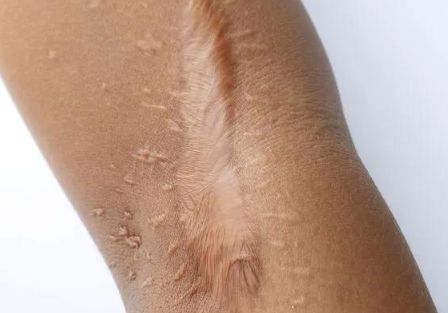
4. Pumps
In asia, the annual incidence rate is about 0. 15 per cent, which is good for accents, chests, shoulders, vaginas, etc. Such bruises may be caused by squeezing, ear piercing, mosquito bites, etc., in the form of swellings that are higher than normal skin surfaces, beyond the original damage range, and sustained growth, and are hard in the form of itching or pain. Because the damaged skin, in the process of healing, continues to be in a state of “super-work” as a result of the synthesis and metabolic function of the adhesive protein, which tends to lead to excessive growth of the gelatine fibres and to the formation of oscillations. As a result, osteoporosis is also defined as a conjunctive tissue tumor on the skin. This means that if they are repeatedly irritated and infected, they are prone to cancer。
Treatment generally includes surgical hysterectomy and medical treatment, injection of needles and lasers. It is recommended that a reasonable combination of treatment be sought from experienced doctors to minimize the likelihood of relapse。
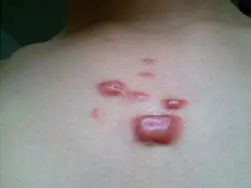
5. Carcinoma
It is made up of malformations of epilepsy, most often in the form of unstable epilepsy ... Especially when the epileptic ulcer results in a prolonged ulcer. Early symptoms are often cancer-chatted, repeatedly scratched, which results in an ulcer, with abundant and stench and easily bleeding. The broad forms of epilepsy cancer ulcer are both “impregnated” and “precipital flower”. The vast majority of pathological tissues are carcinomas, and tissue pathological examinations are the basis for the diagnosis and classification of bruising cancer. The transfer of epilepsy cancer takes place mainly in local infestation and is characterized by slow transfer and low malignantity。
If you have scars and these are the same, you need to pay high attention and recommend early medical examination, rather than blindly following the wind for scarring operations, preferably through the professional judgement of a regular doctor, to find a scientific method for scarring。
Iv. Common scarring patterns and strengths and weaknesses

Medical intervention in scarring:
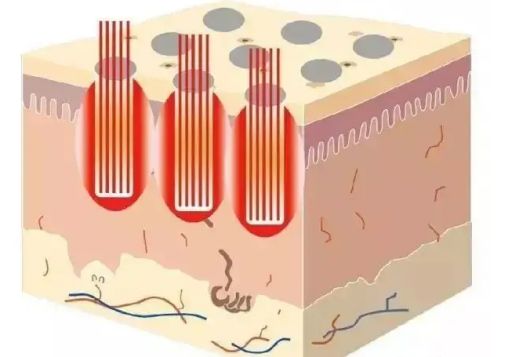
Laser scarring: the use of laser technology to destroy and repair scar tissue, reduce scarring and skin colour differences, alter the mass of scarring, etc., promotes the regeneration of gelatin proteins to the effect of scarring. The advantage is that it is simple to operate, has a short course of treatment, has more direct effects and applies to all types of scars. The disadvantage is that there may be side effects, such as pain, edema, chromosomal stagnosis, and the effects vary according to the individual。
Drug treatment: silicone-type drugs are used more frequently in external drugs and in more forms, mostly during scarring and reduction periods. There is also drug injection within the scar, which has the advantage of levelling and softening the scar tissue, significantly reducing symptoms and improving appearance. The disadvantage, however, is that the injection is marked by pain, does not reduce the size of the scar and has adverse effects。
Chemical stripping: scar tissues are removed and regenerated using chemical substances, e. G., fruit acids, water glycol acids, etc., to the effect of scarring. The advantage is that prices are relatively low and apply to shallow scars. The disadvantage is that the treatment may cause irritation and allergies during the course of treatment and the treatment is less effective。
Silicon tape: the application of silicon glue to the scarring area promotes the repair and regeneration of the scarring by maintaining the wet environment and pressure. The advantage is that it is simple and applicable to all types of scars. The disadvantage is that it takes a long time to paste and that the effects of treatment vary according to the individual。
Surgery: if scars grow beyond a certain limit, seriously affecting their appearance, or if they affect functional activity, such as osteoporosis, scar constrictions, etc., and begin to affect daily life, surgical treatment is required. For larger, dimpled or condensed scars, the scar tissue can be removed completely by surgical removal and then sutures can be repaired for the purpose of reducing scar tension, flaccid skin, abating symptoms and improving appearance. The advantage is that the therapeutic effect is clear and applies to all types of scars. The disadvantage is that surgery is more traumatic and requires longer recovery。
Radiotherapy: radiotherapy is available for relatively serious biogenic scars and creeps, which have the advantage of being quick, but the disadvantage is that physical damage is high and the treatment is incomplete, which can result in tissue loss and color loss。
Here, i would like to remind you that both large and small scars deserve attention and cannot be repaired or ignored。
Since it is difficult to remove a scar once it is produced, it is difficult to achieve complete absence of traces, regardless of the method used, if it is deeper and longer。
Nor should it be easy to believe that the so-called “scarce-free” products on the market, not all of which can be repaired with a scar-paint, and whether the scar-paint is useful on a case-by-case basis. For old scarring, the use of scar cream is less effective. It would be preferable to find a science-appropriate way of scarring after a professional judgement by a regular doctor。
To that end, i've selected professional dermatologists and hospitals in cities who are good at treating scars, beauty scars, etc., and if you have problems with this, you can consult through the bottom self-help search system
Self-care scarring:
Care for wounds: keep the wounds clean, avoid infection and periodically replace dressing。
The use of scar care products: choose the products suitable for their own scar care, such as scar cream, scar paste, etc., and use them as described。
Avoid stimuli: avoid stimuli such as sunlight, friction and pull to prevent scarring from increasing or widening。
Good habits: maintaining healthy habits, balanced diets, adequate sleep, moderate exercise, etc. Helps to promote scar repair。
Different scarring methods have advantages and disadvantages, and the choice of a suitable approach requires consideration of the type, size, individual differences and economic capacity of the scar. The choice of appropriate methods according to individual circumstances, with attention to post-operative care and avoidance of stimulation, can help to improve treatment outcomes。