The long-cycle operation of the module is designed to guide students around the central issues or themes of a unit, using the knowledge acquired to solve problems and accomplish tasks over a longer period of time, with features of a thematic, contextual, practical and structural nature. Primary language teachers design long-cycle modules, which are based on curriculum standards, follow disciplined learning patterns, respect student cognitive characteristics, emphasize unit integrity, and systematically plan operational content and practical activities。
I. Nutrient orientation, design module long-cycle operational objectives
1. Design module operational objectives based on course standards
Teachers should design the operational objectives of the modules in a comprehensive, logical, clear and actionable manner, based on the full development of curriculum standards, analysis of the content and learning of the modules。
For example, in the fifth module of the next edition of the next edition of the generic language, the human theme of this module is “speech in words, a thousand worlds and a thousand others”, the elements of which are “learning the basic method of depicting a person”, and the elements of which are “preliminary application of the basic method of depicting a person's identity, giving concrete expression to one's identity” and reciprocal reflections of reading and writing. Linked students already have experience, and fifth graders have learned to “write character in the context of specific cases”, on the basis of which this module should lead students to learn more about the selection of typical cases and to make the person's image richer by depicting his or her deformities, language, movement, etc. In line with the module's teaching objectives, the long cycle of the module is driven by the task of “class-class callers”, with the following operational objectives: to expand the reading of works such as “the pantheon of folks”, “the episode of jollin”, to accumulate and combe typical phrases and basic methods of character writing; to select the appropriate ways to present to others the classic image of a person in a literary work of his own liking or class classmates; to select typical examples, to express character characteristics through careful depiction of the person's theorem, language, movement, etc.; to capture reactions of the person around the typical example, and to profile the character。
The long cycle of the module, which runs from reading to speaking, promoting and writing, from the accumulation of basic methods to selection of materials to the application of a variety of characteristics, allows students to fully undergo the learning process of accumulation, understanding, appreciation, application and creation and achieves the progression of learning。
2. Focus on critical capabilities, design of informed and task-oriented
Classroom teaching and practice are mutually reinforcing and complementary. The module's long-cycle exercise is an extracurricular exercise of classroom value recognition, designed to focus on outreach, cross-cutting and integrated applications. It is only through practice and awareness that students can internalize into core literacy. Therefore, long-cycle modules should focus on key competencies, design well-informed and heavy tasks, guide students to explore and practice, allow students to experience the process of identifying problems, solving problems, building knowledge and applying knowledge, and continuously promote their understanding, mastery of methods, capacity development and habits。
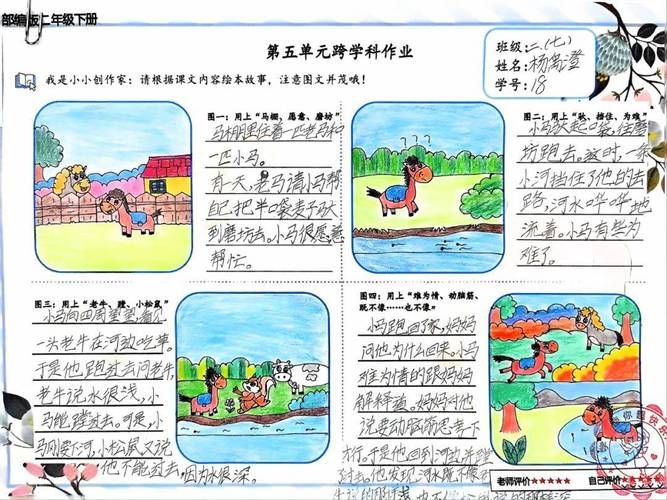
For example, in the seventh module of the next volume of the fourth year of the language, which is guided by roman roland's famous phrase, “no great person without great character, no great artist, no great actor”, students are gradually learning about “great” in the module, without any class or occupation. With this theme in mind, the module presents the spiritual pursuit and high moral character of the person in various ways. In addition, the module features “spoken communication” — self-presentation, “practical” — my “self-portrait” — as a clever echo of unit reading. In line with the focus of the module, we have designed a long-cycle exercise on the theme “i design for myself”, which has four sub-tasks: to watch the video material “i move the top ten people of china” for almost two years, to produce “person portraits”; to think about and plan for one's future career, to visit a stranger associated with one's future career; to write a paper entitled “i design for myself”; and to talk freely about my career ideals with teachers, classmates and parents。
Four sub-tasks, knowledge and weight, students' choice of material, their choice of subject, from abstraction to understanding to creativity, their ability to understand, communicate and communicate with strangers, their ability to express themselves in writing and orally, and their professional senses, while completing their work. As the content of the work is derived from the life of the student, the student learns in the course of his or her work to use it and fully experiences the sense of achievement of learning。
Ii. Thematic director, structure-setting, structure-sequarters-sequarters
In the course of teaching, we focus on the theme of larger modules, guided by the learning objectives of the modules, on the complementarity and relevance of different types of operations in the subject matter of the modules, and on the design of structured operational elements that are relevant to the characteristics of the disciplines, their context and their relevance, according to the student's learning base and level of cognitive development. At the same time, through the creation of real life situations, the integration of learning content, circumstances and methods, and the design of practical activities with logical gradients in the field of study, students are guided in their efforts to internalize their learning into their abilities and upbringing。
1. Overall perspective, design of consistent thematic mandates
The design of long-cycle modules should adhere to the principle of “learning as the main focus of unit operations, life-based”, relate to the real lives of students, create meaningful realities, design consistent thematic tasks and allow students to internalize, apply and build their own knowledge in real experience, real exploration, real practice。
For example, the human-language theme for the third module of the next edition of the third year of the language series is “deep traditional culture, the roots of the chinese”, the elements of which are “to understand how the text of the course is written clearly around a meaning; to gather information on traditional festivals, to exchange customs and customs of the festivals and to write a story”. This theme was the subject of the book " three verses of ancient poetry " , " the invention of paper " , " the bridge of zhao state " , and " a painting in the middle and outside " . In order to implement and consolidate the module's teaching objectives, lu minfang, a primary teacher at kim doo-chang primary school in hangzhou, designed a long project to enter the “traditional festival of china”, which follows the idea of searching for zaihun and designing five interrelated study blocks. The first is to look for the footprint of traditional culture. Students are free to form study teams, go into street interviews and learn about the 100-year-old stores in their home areas. Some of the students interviewed the qui yuan palace and learned not only about the history of the qui yuan palace but also about the decoration of its lobby and the meaning of the association hanging on the pillars of the gate. Some of the students visited hu qingyu hall, from the origins of hu qingyu hall to today's development, from its pharmacological formula to the “good value” of the “torture” hanging in the store, not only learned about their long history, but also learned from the norms of being human. The findings of the student survey provide an entry point for learning in the classroom, further enriching the learning resources of the module with a larger, integrated learning perspective. The second is “do what you do” to produce traditional cultural works of interest. Following the study of the creation of paper, a painting in the name of the middle and the outside, the students attempted to recover the production of paper, with all students drawing a clear map of the river. Three are “one-to-one” and focus on the classic passages in several of the modules, where the group collaborates to explore differences and similarities in writing, leading students to the expression “total points”, either in the form of “some” or “some” or in the form of a series of “some” short sentences, to express the characteristics of the thing and to prepare for the “writing one” of the next plate. The fourth is to “write one”, which provides a narrative for traditional cultural works. Students use the “one-to-one” section of the board to choose the appropriate sentence and to use the language for their traditional cultural works. The fifth is an “exhibit” to showcase the results of the exercise. Students have placed their traditional cultural works in the corresponding subject areas, such as the 100-year-old shop in the street, the naughty mud dog, the exaggerated creative mask, the 12-student paper clippings, etc. At the demonstration, students came to the stage to talk about the personal defusing of traditional cultural exhibits, and other small partners were given a “race-to-seat” guess。
The long operation of the “traditional culture of china” module, ranging from the initial perception of “trace for” to the practical experience of “do for one”, then the paragraph combing of “trip for one” and then the migration of “writing for one”, and finally the sharing of “exhaust for one”, with the high alignment of the operational objectives of the five sections with the learning objectives of the unit, has been well implemented and reinforced. It consolidates the core elements of the teaching of this module and enriches the learning experience of students, using continuity, progressive and contextual long work as a vehicle for them to flourish, sowing the seeds of a good traditional chinese culture from an early age and fostering national cultural confidence。
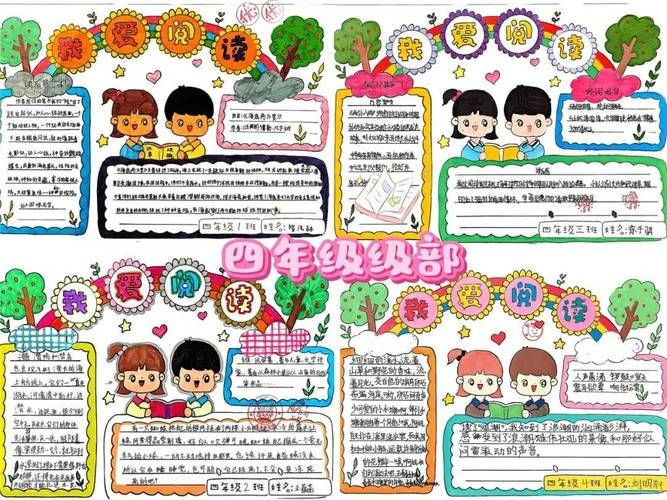
At noon, i learned song-hyun
2. Enriching choices to promote student personality development through differentiated work content
There are differences in the cognitive, emotional, attitudinal and other development of students. The long-cycle work design of the unit should be sensitive to the individual needs of the student, enrich the type of work, enhance selectivity and guide students to improve discipline in hearing and writing practices。
How can work be designed at different levels of difficulty based on students ' learning base? How can work be designed in different ways based on students ' learning styles and interests? The key is for teachers to be fully aware of each student's learning base, learning difficulties, learning style, learning emotions, etc. At the same time, long-cycle modules are designed to conform to the characteristics of the discipline and to the background of the student's current life. Design should focus on presentation, dynamically grasping the learning excitement of students, linking work to life, and focusing on the taste and flexibility of work。
For example, the second module of the next edition of the fifth grade of the language of primary school, under the theme “going closer to chinese classics”, allows students “to learn to read classics by using the basic methods of guessing in their context, using information, combining visual and video work, etc., in order to grasp the main content of the texts; to focus on the main figures and the outstanding features, to grasp the character of the person and to express their understanding and understanding of the classics of the unit in a variety of ways, such as performing a textbook play and writing a post-reading sense”; and to enhance their ability to read and understand them。
In order to translate the unit's teaching objectives into the students' operational objectives, teachers cannot mechanize the presentation in the teaching materials, but instead offer individualized advice to different students in the form of differentiated work, helping them to understand and strive to achieve learning goals that belong to themselves. The link between life and student emotions and language is to be found on the basis of a comprehensive analysis and combing of the subject matter of the module and its objectives. Based on this concept of design, we have targeted the school library's “four flying man shows”, inviting students to participate in the production of windy person review cards and performance video recording of classic stories of windy person, teaching teachers to address students' levels of learning and differences in personality, multi-dimensional design of differentials, enhancement of students' reading interest, and stimulation of internal drive for self-reading。
There are three levels of work, and students can choose one of the three abc jobs suitable for their own. A. Read your favorite chapter of the water trail and write down your favorite characters and reasons. Watching a movie, writing an award for someone you like, and producing a good card. B. Selecting one of their favorites in four titles, using mind maps and combing key person relationships. Choose the person you like and the story, make the card and give “justifications” from both the event and the evaluation of the person. (c) to try to read the original script, choose a brilliant storyline, apostasy, and an analysis of the relationship and character of the person. Designing task orders based on scripts, selecting the scene of the event and setting, designing external sound and background music, working with peers to split role performances, and recording videos。
The module has a long cycle of operations, including text-critical information screening, language profiling, character evaluation and role-playing. Different levels of working blocks can both meet the needs of students at different levels of learning basics and competencies and motivate students to challenge. At the same time, the process can be done in a variety of ways, either autonomously or in partnership with peers; it can be done in the form of words, cards or performance videos. Differentiated work provides different students with the potential for language and mindset development and enables students to effectively achieve modular learning goals。
Iii. Process enabling resources and tool support for students
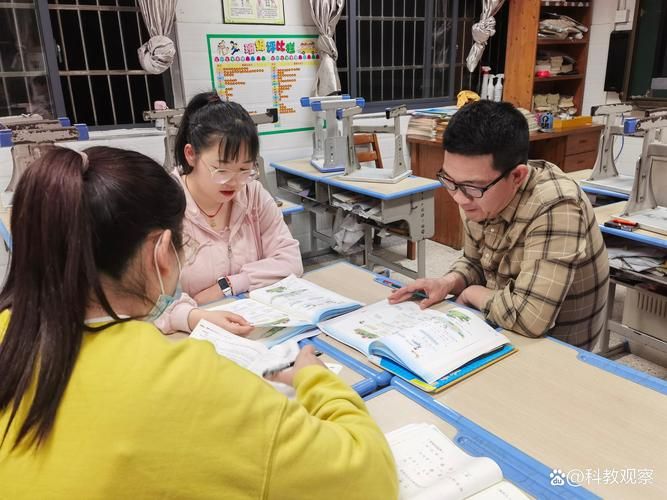
In order to keep students interested in long-cycle work and to keep them engaged in it on a continuous basis, teachers should provide them with resources and tools to support them in the implementation of long-cycle work, taking into account the differences between students and the different tasks of the situation. Teachers can provide operational tools for students to locate, access and process resources, as well as conceptual, procedural and strategic support for students。
In the case of the above-mentioned “four famous personalities exhibition”, the students' lack of sensitivity to the “four famous personalities show” and in order to support the student's task of clarifying his/her job, pre-service teachers can organize students to watch video material such as the “four distinguished personalities exhibition” and make presentations and comments on the person's comments, as well as providing web addresses, bibliographies, etc. Of video resources related to the four monuments, reducing the blindness of the student's search for resources, helping him/her to get real feelings, broaden his/her operational thinking and enhance understanding and expression. In the course of their work, teachers can provide students with procedural and strategic support, using the script design card as a scaffold, to enable students to follow the headline - the leading figures and storylines - specialized lenses — drawing voice — modules and processes, such as background music, are designed item by item, while operational tips are sent to students in the form of micro-curriculars, who, guided by visualized operational steps, understand both “what to do” and “how to do”。
Iv. Outcomes of the physicalization of multi-stereotyped operational demonstration platforms
Long-cycle work is a very creative learning activity, an important vehicle for teacher-student exchanges, home-school communication and the mutualization and resonance of thinking and emotion. Long-cycle modules can take many forms, ranging from a research report to a programme design, to a speech video, a research manual, to a growth archive bag, even a play, and so on, and the results can be in a non-constrained form. Teachers are expected to create a multi-stereotyped presentation platform for students, where students can present their reports in a manner they like。
Teachers can provide evaluation criteria and forms and set up an online and offline communication platform. On-line, you can display video classes, graphic jobs. Underline, the schools' “informal learning spaces” are used to showcase paper-based, production-type jobs, and to edit the results into a book that allows them to become part of the learning process, allowing each student to experience the joy of success. Some schools, for example, have established long-cycle operational parks where students can assess the results of their work together, make suggestions for improvement and continuously refine and optimize their results. To stimulate motivation and initiative in learning through the sharing of outstanding works, conflicting views, self-assessment and mutual evaluation, to regulate the learning process and to achieve operational excellence。
In general, the implementation of the 2022 edition of the standards for language courses in compulsory education is an important aspect of the exercise. We need to improve the match between the unit's teaching objectives and the unit's long-cycle operation, design jobs that can improve the student core, enrich the type and gradient of the unit's long-cycle work, create a resource base, support students'selective learning, provide individualized diagnostics of each student's learning, and conduct scientific assessments of group learning, thereby achieving continuous improvement。
Wang zheng, president of the upper city school of education, hangzhou city, zhejiang province
People's education no. 13-14 of 2023, originally entitled " effective design and implementation of long cycle operations of language units in primary schools "