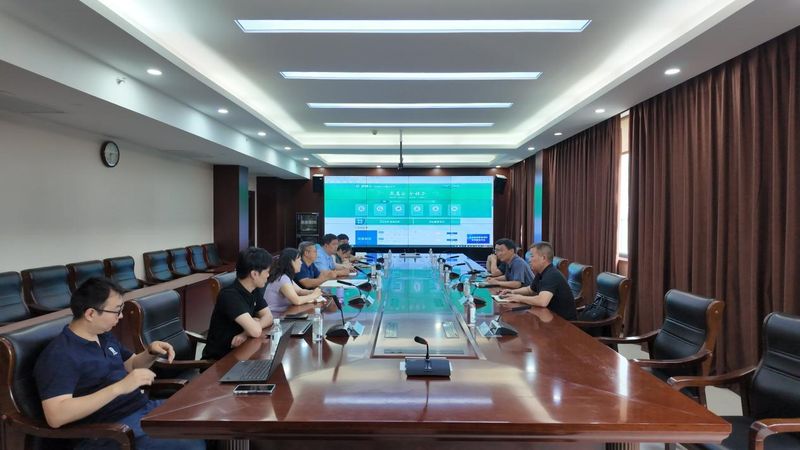
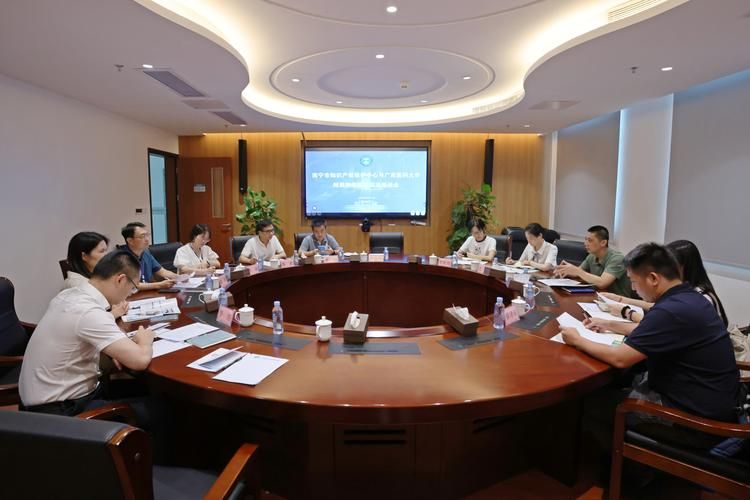
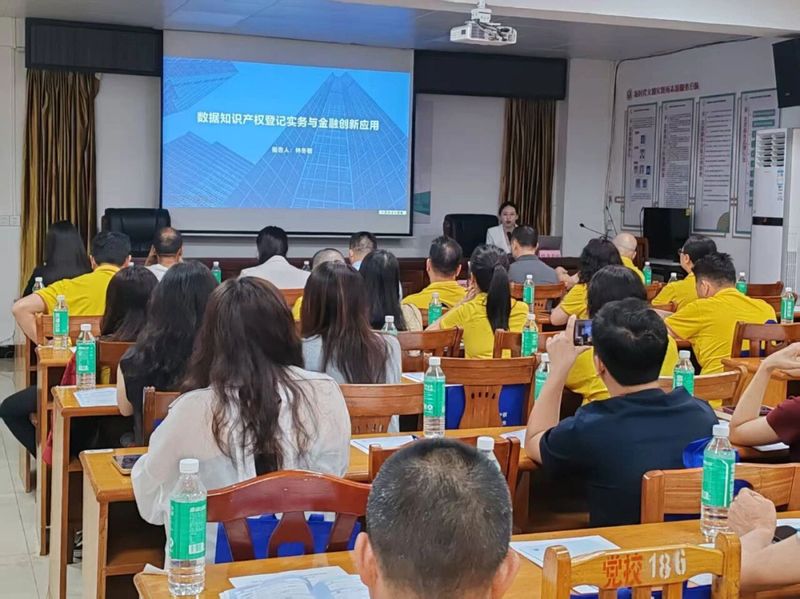
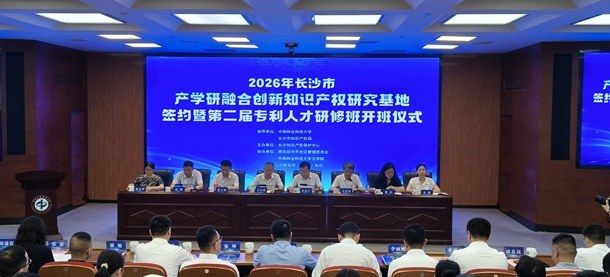
In recent days, the first intellectual property credit academic forum, co-sponsored by the beijing credit society, the beijing intellectual property law research society, the beijing intellectual property research society and the hunan law institute of intellectual property law, was held at haidian university college, china. Expert scholars from a wide range of fields, including intellectual property policy development, judicial practice, academic research, business practices and intellectual property journals, gathered to conduct in-depth discussions on the theme “science, technology, innovation and intellectual property credit”. The meeting took the form of an online combination of over 500 participants。
At the opening session, the leaders and experts agreed that intellectual property credit was supportive of science, technology and innovation and china-style modernization, and that the construction of intellectual property credit systems was a tool to address the root causes of bad faith in intellectual property. At the same time, an analysis of a range of rules and regimes in the field of intellectual property from a credit perspective is considered to be an important development in intellectual property academic research, which is important for the development of our intellectual property system and, indeed, for the reformulation of the underlying logic of our legal system and the improvement of the legal system。
In the main report section, the consultant at the world intellectual property organization (wipo) china office, lu guoxiang, the world intellectual property organization (wipo) arbitrator chen jinchuan, the president of the beijing internet court general chamber, zhang liangyong, and the professor of economics law at the chinese university of political science and law, liu yi, explored in depth the unique role of credit philosophy and credit mechanisms in intellectual property governance, from the perspective of the impact of the principle of good faith on international protection of intellectual property rights, the preservation of business credibility in the determination of similarity of commodities, credit governance for copyright protection, credit mechanisms and the development of high-quality intellectual property rights。
In addition, prof. Sho dong-mei, professor of the university of the capital, professor of the university of pedagogical sciences, professor of the university of political science and law of the east china, director of the hendor law firm in beijing, and professor of the university of industry of the north, professor of deng chang, gave lectures on the use of credit governance tools in the field of intellectual property rights, the establishment of systems for the restoration of scientific and technological credit, the credit perspective in commercial secrecy recognition, the governance of the criminal risks of intellectual property, and the regulation of credit for malicious patent applications. They present innovative perspectives on credit philosophy in the development of high-quality intellectual property rights from multiple perspectives, both theoretically and substantively。
Topical presentations were organized by experts on “the governance of intellectual property credit in the digital age”. Professor nguyen deshin, permanent vice-president of the beijing credit society, prof. Ho zhonghonghong, university of china, prof. Dong hui chong, president yang xianfang, director-general of video copyright rights at the daily journal of the rule of law, tani wen, director-general of the department of video copyright at tense, hong dynasty law of beijing, and joahongtao researcher of the chinese university of science and technology, respectively, provided their views on indicators and models for intellectual property credit evaluation, credit governance of artificially intelligent content-producing content labelling systems, governance of bad faith in competition in the field of ai model development, the copyright credit evaluation system under the obligation of transparency in algorithms, copyright protection for video in the digital economy, intellectual property protection for creative enterprises with a credit perspective, and consensus on values in the ethical governance of synthetic biology。
The experts also worked on the topic “legal regulation of good faith in the field of intellectual property rights”. The university of foreign economics and trade, professor kuo-ching, vice-president of the national council on intellectual property rights, wei guo guo, deputy director of the trademark legal subcommittee of the beijing city bar association, zhang deqiang, managing partner of the shanghai city bar association, chen zhong, counselor of the beijing state law office, director of the beijing credit society scientific and credit commission, inbo, professor of the chinese university of political science and law, and colin xia, professor of the university of nantung, have been discussing the legal implications of the traceability of data on artificial intelligence training, the legal regulation of patent integrity, legal characterization of billing, rules for the protection of trademark registration under the principles of honest credit, the regulation of scientific integrity in generating artificial intelligence, and the system of credit discipline in the field of intellectual property。
In order to encourage the participation of young scholars, the conference created an ad hoc “know your letter” youth forum, divided into two and a half sessions. In the first half of the session, seven young scholars from the kunlun digital science and technology group (kms), the sanctuary group, the huanan teacher training university, shenzhen university, the university of shenzhen and hunan teacher training university reported on the construction of intellectual property credit systems, the use of credit mechanisms in the protection of intellectual property rights on electrical platforms, the abuse of intellectual property rights, the use of confidence-based incentives in the field of intellectual property rights, the crisis of trust in human interaction with society's “personality-system” and its governance, credit governance in the abuse of trademark rights, and the logical re-engineering of ethical science and technology。
The second half of the “knowledge” youth forum, which was attended by eight young scholars from the university of san francisco, the central university of finance and economics, the university of china, the university of south china, the dalian school of finance and economics and wuhan university, reported on the results of the study on credit regulation of intellectual property rights, the governance of copyrights, credit protection of trademark rights, credit regulation of irregular patent applications, credit regulation mechanisms for open licensing of patents, the improvement of blacklist systems in the field of intellectual property rights, synergies between punitive compensation and sanctions mechanisms for intellectual property protection, and evaluation of the creditworthiness of block chain technologies。
At the closing session of the forum, in his concluding remarks, the beijing credential society of china gave high recognition to the innovative thinking of the use of credit mechanisms by participating experts in areas such as copyright, patents, trademarks and trade secrets, in particular the many proposals of high practical value made by young scholars for the construction of intellectual property credit systems. He believes that the construction of china's intellectual property credit system will help to strengthen trust and cooperation among scientists, to establish a solid institutional basis for the original innovation of chinese scientists, and to protect the public interest of society while stimulating innovation among scientists。
The organizers of the forum organized a partial literature index on intellectual property credit research and 34 academic papers presented by the forum. The forum provided a high-level and high-level platform for academic exchanges on intellectual property credit research, promoted “political, productive, academic, research, research” in depth communication and a convergence of ideas, inspired new thinking on intellectual property governance from a credit perspective and would have a positive impact on intellectual property theoretical innovation, policy improvement and practical development. The organizers of the forum indicated that the forum would be held on an ongoing basis。