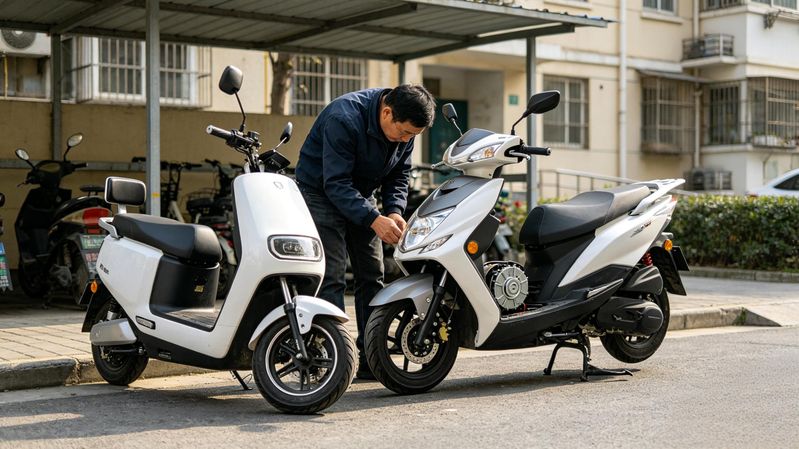
As the owner of the car that deals with electric cars every day, the thing that hurts most when we pick the car and change the battery is the power machine and the battery. It's small, it's hard to climb the slopes, it's long, it's expensive, it's easy to hurt batteries and it's shorter。
Today, in conjunction with industry measurements, an electric power and lead-acid battery gold mix, whether new or old, can be compared directly to the best combination, and newcomers can avoid 90% of the pits
One, five core gold pairs, straight through
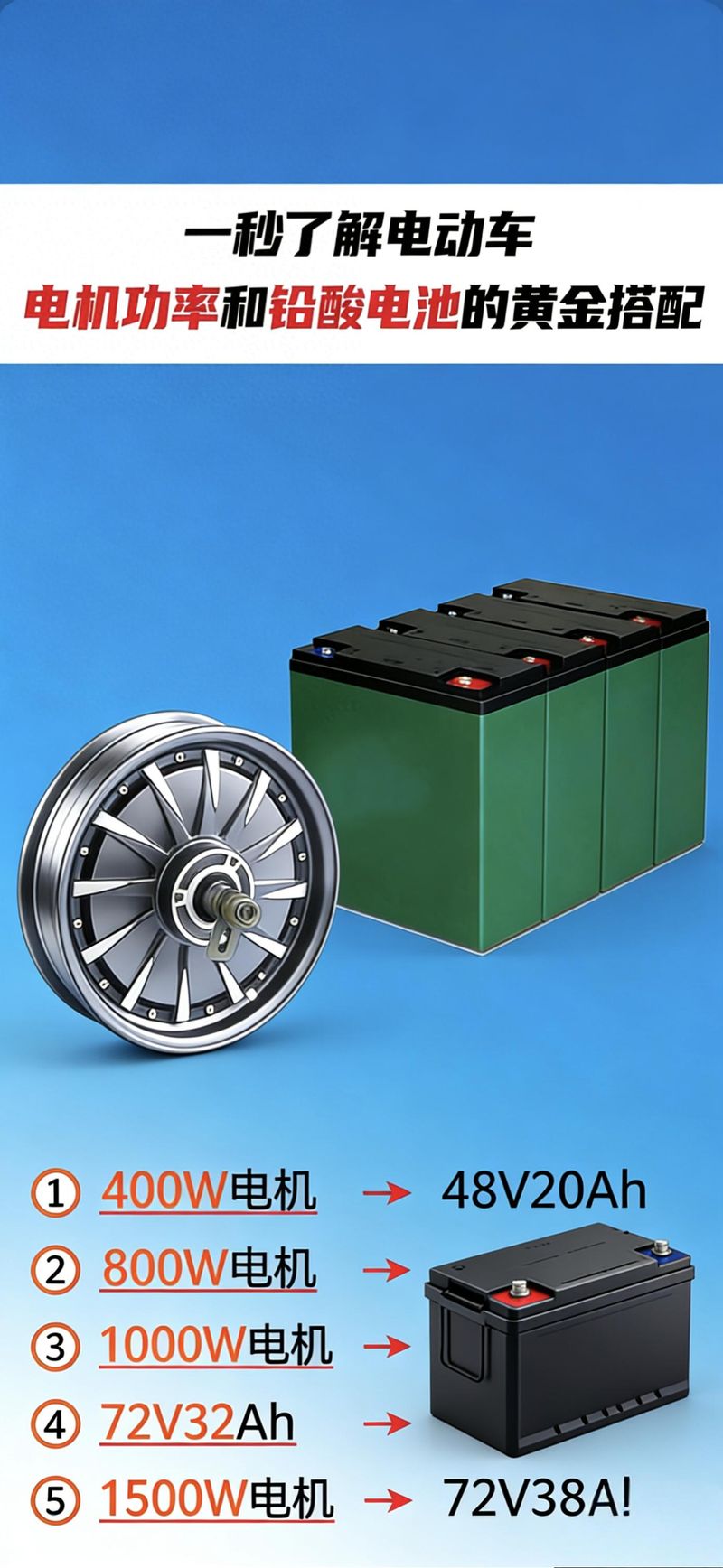
Electropower, matching lead-acid battery specifications, core advantages, applicable scenarios
400w 48v20ah new national standard compliance, no driver's license, steady flight, daily shopping, delivery of children, short-distance travel, and smooth roads
800w 60v20ah momentum, speed and economy, medium cost
1000w 72v20ah high power entry, speedy and strong mounting, frequent slopes, speed demand, short-range hf
1200w 72v32ah balance between power and continuity, suitable for most household needs
1500w 72v38ah high-performance configuration, re-carrying, durable delivery, mountain riding, high-frequency long-distance travel, heavy demand
Ii. Why must this match? The core principle is clear
Many of the proposed batteries only look at voltage, neglecting the key role of ** capacity (ah)**, but actually match the power with the battery, with two points at the core:
1. The voltage must be completely consistent
This is the bottom line! 400w power can only be fitted with 48v batteries, 800w for 60v, 1000w for 72v and above. If the voltage does not match, light power is insufficient, the power is acoustic, heavy is burned directly to the electric controller, and can not be repaired at great cost。
2. Resuscitation and battery life
The greater the battery capacity (ah), the longer it lasts and the greater the discharge flow, the smaller the loss to the battery。
- for example, 1,000 w electric power units with 72 v20ah batteries, 20ah capacity is suitable for base maintenance and short-range transport
- 1,500w large power power generators, with a 20ah small capacity battery, with discharge currents well beyond the battery's range, not only reducing water by half, but also overloading the battery over a long period of six months, which is typical of the “malala bus”。
Iii. Guide to hole avoidance: do not make these three mistakes
Rejection of “large power + small batteries”
This is the most common type of pit-pumping practice. For example, 1200 w electric power sets with 48v20ah, 60v20ah batteries, which appear to be cost-effective, have actually been cut in half, have had a severe fever and have reduced their circulation life from 2 to 3 years to less than one year。
2. Do not blindly pursue power
400 w+48v20ah is fully adequate if it is only a short daily walk, and there is no need to push up to 1000 w+72v. Large power generators consume faster power and charge more frequently, increasing vehicle costs over the long term。
3. Preference for graphite lead acid batteries
Normal lead-acid batteries have approximately 300 circulation lifetimes, while graphite lead-acid batteries can reach more than 500 and are more resistant to heat and decay. In particular, the graphite batteries of 72v38ah, suitable for 1,500 w power, continue 20 km longer than the normal lead-acid batteries at full value。
Iv. Selection of vehicles by scene, precision and non-plugging
- pure starter/older/mother: 400 w+48v20ah, secure, simple, without a driver's license, taking children and buying food
- daily commuting (10-20 km): 800 w+60 v20ah or 1,000 w+72v20ah with sufficient power, sufficient continuity to cover commuting at moderate cost
- outgoing/run long distances/land areas: direct to 1200 w + 72 v32 ah or 1500 w + 72 v38 ah, with no pressure to climb the slopes and can continue beyond 100 km and reduce the number of recharges
- high performance: 1,500 w+72 v38ah combinations, three block speeds, low-speed power savings, high-speed speeds, suitable for users who like robust power。
Final summary
The selection of electric motor vehicles and batteries does not fix complex parameters, bearing in mind ** the core principles of “voltage matching, capacity-to-power”** and simply compares directly with the gold matching table above。
The newbies are not randomly selected by the merchants, and the old car owners change batteries and don't choose small capacity cheaply. The right mix allows electric cars to run away, to power, and to extend the life of batteries, making real savings and savings。
Do you usually ride electric cars mainly for commuters or for walkers? Would you like me to recommend a more precise configuration based on your travel miles and roads