Our space breeds create direct economic benefits of over $100 billion
Space seeds bear fruit (large data observation)
Journalists
Daily people's journal (1204/04/07th edition)
When the seeding is completed before the festival, the leader of the village of sugawa county, jiangxi province, will come to the waterfield to see the growth of "space lotus": "you see, now the leaves are growing, the harvest is being managed in the later stages."
"it's not the same with a lot of land that's been in space. Queen's head opened the chat box, "a thousand pounds of acre and $6,000 of gross revenue is a real rich lot."
What wang's first-born son called “lean in space” is the result of space breeding, spaceline 36, which now has an area of over 20 million acres, representing more than 80 per cent of the country's whiteline cultivation。

“space breeding, also known as space breeding, allows seeds to enter space with a return spacecraft and induce genetic variation of seeds using special environments such as cosmic rays, microgravity and high vacuums. When seeds return to the ground, they are selected for the development of high-quality, productive and resistant new varieties of plants. Presentation by liu xiang, chief scientist, national space generation engineering, secretary, crop science institute, chinese academy of agricultural sciences。
In august 1987, for the first time, our ninth satellite, which returned, carried seeds such as rice and peppers, opened a space journey of seed from our crops. It is described that more than 3,000 experiments have been carried out in space breeding, with more than 260 approved varieties of staple foods, hundreds of new varieties of vegetables, fruit, grass and flowers, an increase of more than 2 billion kilograms of food annually and the creation of direct economic benefits of more than $100 billion。
A large number of new varieties of space breeding have entered the market, the table, and daily life
“the 13 new varieties, representing the fruits of space breeding, are highly productive, high-quality, pre-cooked, disease-resistant, and so forth.” the director of the chinese international vegetables technology fair, ma zhong zheng, presented the results。
In the early years, 47 grams of wheat-rich seed no. 1 from pindu city, shandong province, 20 grams of ravioli seed, 21 grams of watermelon seed from the village of cming, 10 grams of cherries seeded into space along with our ship no. 7 with its manned ship, returned to the ground, enriched the genetic resources of breeding and provided adequate technical reference and support for the development of new varieties with higher yields, greater resistance and better quality。
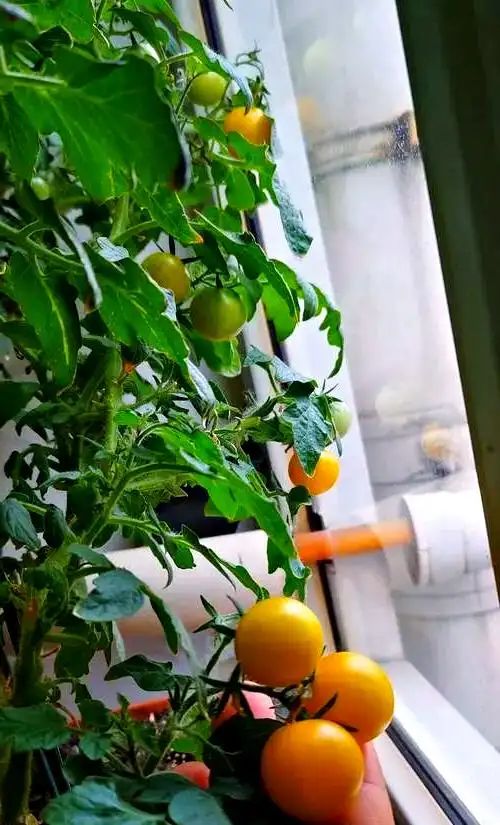
“the tomatoes in space are now five generations old, and this summer the citizens will be able to taste them.” these tomatoes are deep and relatively big. The secretary of the party's branch, wu injie, of the village of mingzhou, town of pindu, said that this year, five acres of space tomatoes were planted in the village, long, large, high-yielding and very sweet, “it contains 4 to 6 times more tomatoes than ordinary tomatoes, according to expert tests”
The cranberry, originally from north america, is now a specialty of the heilong river. In order to develop new cranberry varieties with autonomous intellectual property rights, the cranberry seeds from heilongjiang province, which were found in distant towns, were twice taken on board a canoe. The size of the fist, the size of the strawberries... The seeds of space have sprung out, dressed as beautiful people's tables and enriched people's taste buds。
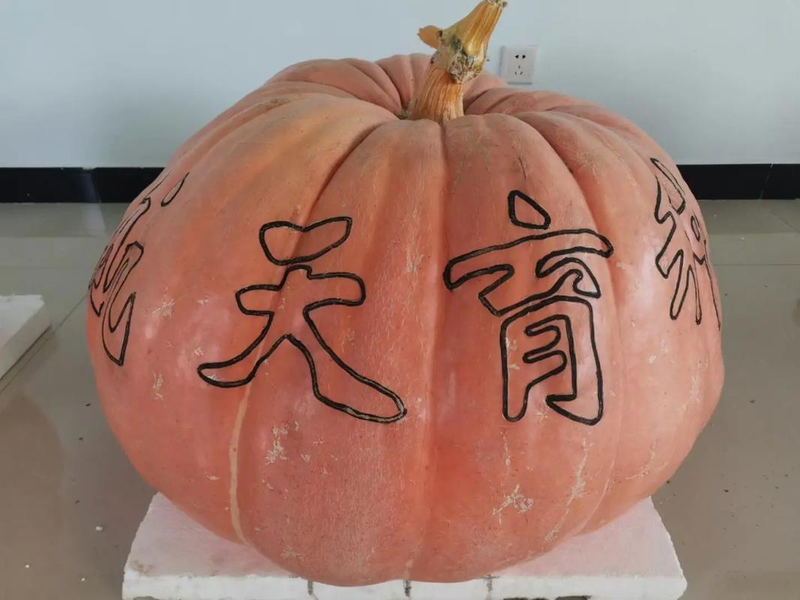
“from food crops, vegetables and fruits to flowers and pastures, a large number of new varieties of space breeding have entered the market, at tables and into everyday life.” we have developed and applied a series of new varieties using spacecraft carrying plant seeds, bacterial species, test tube seedlings, etc., from the main food oil crops of wheat, rice, maize, soybeans, oil, groundnuts and cotton, as well as horticultural crops such as tomatoes, peppers and cucumbers, among others, and on a scale of extension in the fields of pasture, wood and flowers。
After space travel, there's still a long way from becoming a real space seed
Not all seeds change in the sky. Some seeds travel in space for a week, the longest for 27 days in space, and the probability of change may be only a thousand or even a few. “at the end of the day, it is the process of creating, choosing, and then using, mutation, whether it be in space breeding or in other breeding methods. Growing specialists cultivate space seeds not only for production, but also for quality improvement and nutritional improvement.” liu xiang。
Seed screening is the first step in space breeding. “each gramload resource of a spacecraft is valuable and the seeds from heaven are carefully selected.” liu xiang said that space breeding material was rich in seeds such as major crops, cash crops, seeds from different local species and rare species, and microbiological bacteria. In recent years, a batch of “seeds of hope” have been launched on a canoe, driven by the national alliance for nucleus cultivation and the alliance for innovation in the space cultivation industry, and have been set up to quantify the amount of space breeding in the month following the zenit spacecraft。
“travel in space” is the second step, after which there is still a long way to go to become a true seed of space. It was suggested that it would take at least 8 to 10 years to develop more mature varieties. In the long selection process, output, resistance, quality, market value, etc. Are all cleared. Any link that goes wrong could lead to a failure. “a great number of products have been phased out in the course of the experiment, and only those left behind are known as space seeds through the validation (or validation) of the varieties of specialized institutions, which is very small。
Today, more than 2 million acres of wheat are cultivated in and around the haulenberg region of the autonomous district of neutron mongolia. “space breeding is only a mutagenic method, and the method of selection upon return to the ground is not much different from conventional breeding.” upon the return of the seeds, yang guangwei, a technical staff member of the huronbel farmer reclamation of the rabuda forest, inc., conducted a first test on the ground and then selected a single plant with a good variation for second-generation cultivation, then replanted the good mutagenic offspring for third-generation cultivation and, through multigenerational breeding, eventually secured a stable new species。
On 8 march, the north wild potato industry group signed a cooperation agreement for a three-year pilot project in space biology with the space biology group's guangme space generation research and development centre. In the course of the experiment, the north wild potato industry will offer potato chips (three varieties) and seed potatoes (three combinations) to carry out the tests. “the cultivation of potatoes is key to the healthy development of the potato industry. At present, space breeding has become an important means of creating new seed resources.” the relevant head of the north wild potato group said:。
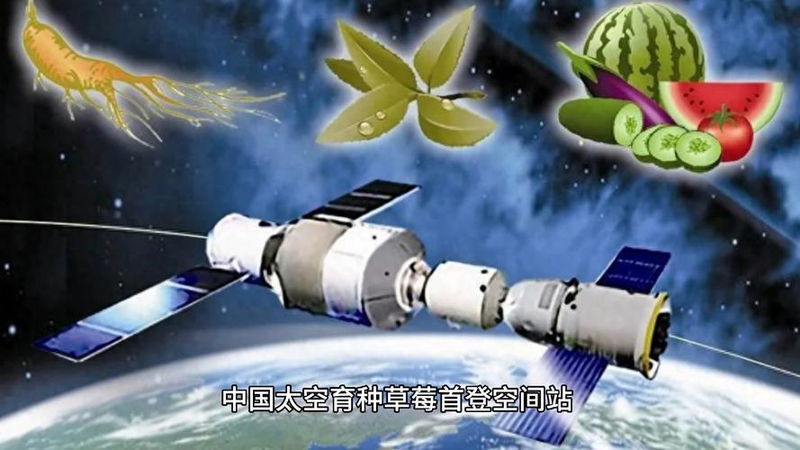
The chinese space station was officially established to construct a new space breeding system based on the station
In the lobby of the crop science institute of the chinese academy of agricultural sciences, a wide variety of space seeds were placed in a row of transparent jars labelled with varieties. The crop science institute of the chinese academy of agricultural sciences has been conducting research in space breeding for 30 years since 1994。
“luwon 502” is the crop science institute of the chinese academy of agricultural sciences and the institute of atomic energy agricultural applications of the shandong academy of agricultural sciences, which are responsible for high-yielding and high-quality varieties of wheat, and is the largest cumulative crop species in the country's space breeding. “`lu’s 502’ solution to the problem of the invertable wheat-like varieties has become a national dominant species, with 100 million acres in total.” liu xiang says。
Rice, wheat, cotton, vegetables ... Using aerial breeding techniques, a range of new, high-yield, high-quality crop varieties have been developed. The national review super-paddy type ii flight 1, which achieved high-yielding and high-quality synergetic improvements, created and maintained a world record of regenerative rice monolithic monolithics; 802 high-yield, high-quality wheat wheat varieties certified in 2021 through hebei province, with a high degree of salinity and a high combination of disease resistance and adaptability; 106 high-yield, high-quality wheat varieties certified in 2022 through xinjiang uighur autonomous region, with a high resistance to white powder, leaf rust and strip rust, and high dietary fibre content。
One of the keys to space breeding is the space carrying of seed materials. In 2006, the national cooperative space generation group was formed to launch a space breeding project to launch the first breeding satellite, practice 8. It is planned that in 2024, a reusable satellite project will be launched in conjunction with the china institute of space technology to launch a second dedicated space breeding satellite. At the same time, good progress has been made in space mutagen studies currently being conducted using ground high-energy accelerators to simulate cosmic particles。
“it is worth mentioning that we now have our own space station, which opened up the space breeding of the space station age.” liu xiang said that breeding specialists could develop a truly space mutagenic breed through the development of space-radiation biological exterior exposure equipment and technology, the construction of a new space-breeding system based on the space station, which, on the one hand, could be designed and analysed in depth, and, on the other hand, the development of critical space breeding techniques and major genetic mutagenic excavations and integration with sexual properties, with a view to developing new varieties of diversity. This will be combined with the promotion of major projects, such as the agricultural renewal initiative, to harness the advantages of space breeding in the creation of new varieties and to conduct coordinated campaigns。