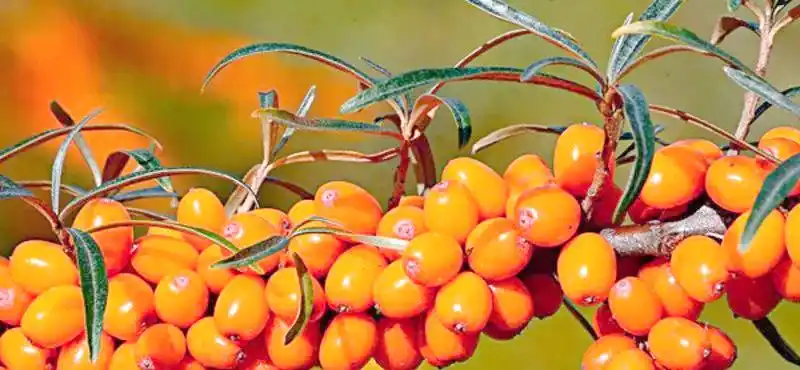
Sand thorns, a tenacious plant that grows in the valleys of alpine ditches, are covered with thorns, yet they have amazing life。
01 sandbow cultivation
Timing of planting
Sand thorn cultivation is suitable for both spring and autumn. In the spring, planting time usually falls between april and early may, while in the autumn, the best planting time is between mid-october and early november, when trees fall but the soil is not frozen. It is worth noting that the fall-planted trees that took root more rapidly in the second year of the spring, which came at a time of drought, have returned to normal growth, thus increasing their resilience to drought. Thus, in terms of the effects of cultivation, it is better to grow sand thorns in the autumn than in the spring。
Cultivation density and cave preparation
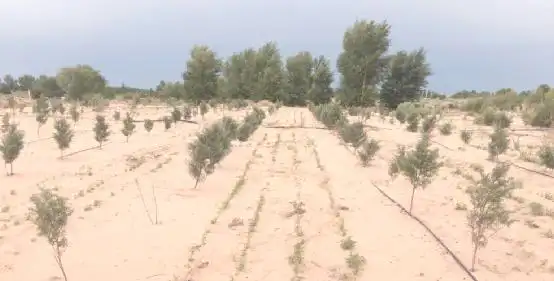
It is proposed to plant 300 sand thorns per acre at a range of 1. 5 m x 2 m. Since the sand thorn tree is a female-to-male strain, the ratio of females to males should be maintained at the time of actual planting, approximately 8:1. The size of the cave is determined by the size of the seedling, usually 35 cm in diameter and 35 cm in depth. Two-year-old seedlings are selected for cultivation, with generally better survival and growth rates。
Plantation techniques and methods
Particular care is needed to avoid the root causes when planting sand thorn trees. If the roots of the seedlings are long, they may be duly trimmed to ensure that they are within the range of 20-25cm. During the soil filling process, seedlings shall be lifted lightly for the purpose of fully stretching the roots. Thereafter, water will be poured in appropriate quantities and the caves will be filled with soil, and the soil will be duly trampled. Finally, a layer of 5-10cm thick loose soil is covered on the top of the caves for wetting and growth。
02 sand thorn growth and management
Growth phase and management
The growth of sand thorns can be divided into four stages: from the very beginning of the precipice period, they pass through the hysteria period, the hysteria period and eventually the recession period. In the first two years of planting, sand thorns were mainly grown by underground roots, while the land sector grew relatively slowly. However, in the third to fourth year, the growth of sand thorns will flourish and begin to bloom. Beginning in the fifth year, the sand thorns will enter the vermin period, with a significant increase in output. It is worth noting that, due to differences in soil conditions and management practices, the timing of sand thorns entering the recession can vary, but generally the tree age reaches 15 years。
The point of growing the branches
When the sarcophagus tree grows to 2 - 2. 5 metres high, the work should be done to cut the top. In doing so, the following principles are to be followed: horizontal, rather than vertical, cutting, removing old branches and retaining new branches, and triming the parts to preserve the strong branches of the vacant areas. At the same time, internal penetration of the canopy is ensured in order to achieve the high yield target。
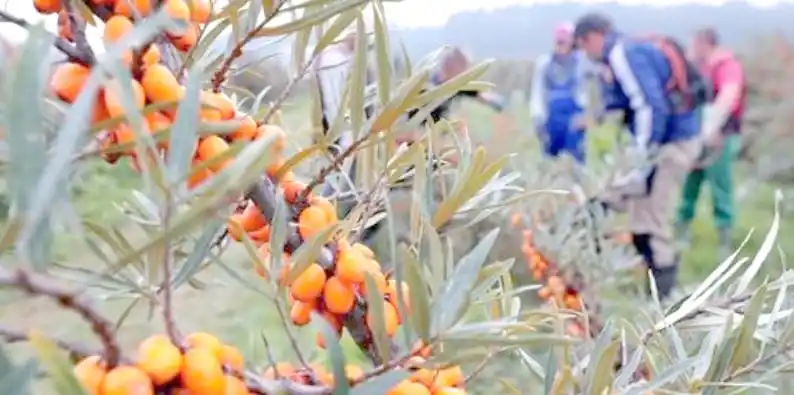
Sarching
The maturity of sandorgan nuts, marked by their distinctive colour and size, is the key basis for determining the harvest period. The harvest period is determined on the basis of the fruit ripening mark and efficiency gains are achieved using a variety of methods. According to studies by the institute of north-west highlands biological research of the chinese academy of sciences, the highest levels of vitamin c are found in sandorgan fruit in maturity and near maturity, the most abundant in carrots in the early stages of maturity of the fruit, and the peak in sandgrain in the two weeks of maturity. Thus, from a nutritional perspective, pre- and post-maturity harvests are most appropriate。

035 mountain thorns
Because of their unique geographical circumstances and climatic conditions, the five mountain areas have become ideal sites for the growth of sand and thorns. The quality of the sand nuts produced here is high, rich in a variety of nutrients, especially sandflake oil, and has high economic value and market potential. This has made the five mountains an important production area for the oil resources of sand and thorn, with significant resource advantages。




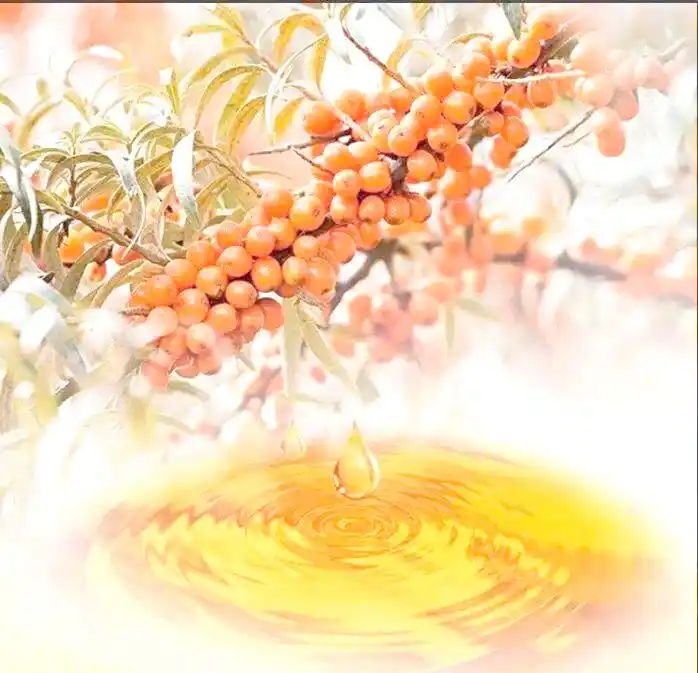

The status of the sand and thorn resources
China is the most widely distributed, diverse and resource-rich country in the world. China's sand and thorn resources account for more than 90 per cent of the world's share, with the central parts of the yellow river being the main source。
Resource advantages
Five districts, located in the north-east of shanxi province, are uniquely geologically suitable for the growth and breeding of sand thorns. The county is situated on the fragrance of the world's sand and thorns, which are more resource-rich than china's community of latitude mountains. In particular, in areas such as gold depots, tamarinds and makhallya, swarms of natural sarcophagus provide an important source of raw materials for the country's sand and thorn industry. After 23 years of growth and growth, companies have built up a well-developed industrial chain, including the “cooperative + farmer + company” and “base + farmer + company”, thus creating a multi-win distribution mechanism。