Currently, the four main applications of power cell components in post-energy car services are:
Battery management and maintenance
Power battery elevator use
Car power separation - power exchange mode
Car service - charge mode
This report will be divided into four applications with an analytical answer。
So what is the current market for new energy vehicle batteries
For c-end consumers, the experience of new energy cars is less favourable than that of fuel trucks, power batteries and safety concerns. For the whole vehicle plant and the battery plant, the continuous evolution of technology has led directly to a significant devaluation of the previous generation's model. There is no quantitative or qualitative assurance for the station。
01 battery management and maintenance
Power cells are at the core of new energy vehicles, and bms is at the core of power batteries, which perform data collection, state estimation, safety protection, energy management, relay control, information control functions to ensure the safety, durability, powerability and quality of power batteries。
/ market size
Bms, as the power cell manager, occupies a high value point in the battery industry chain, not only as a core component for performance assurance in power battery management systems, but also in conjunction with large data platforms for battery life cycle management, life-cycle assessment, failure warning, residual value assessment. There are therefore some technical and human barriers. China's market is expected to reach 50 billion in 2025。
/ competition patterns
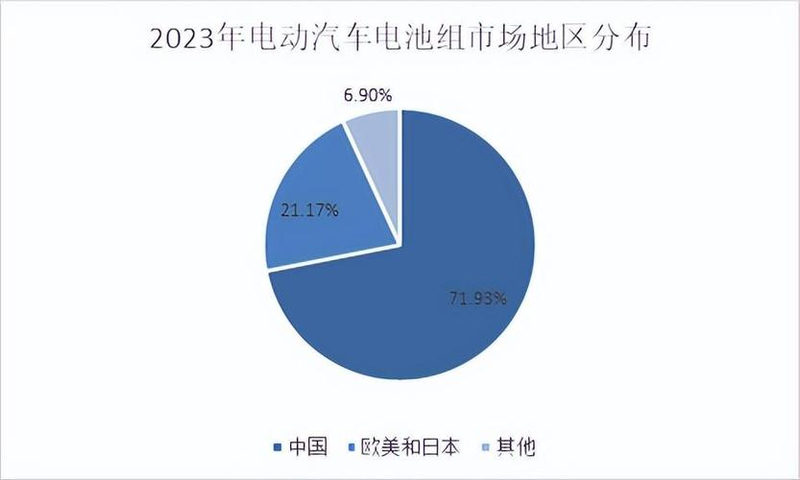
The current pattern of competition, with bms owned by bcms, led by the ninder era, accounts for 50 per cent of market power. While the industry market for professional third party bms is at an early stage, with lower market concentration and generally smaller enterprises, third party bms has increased market share competition with the advantage of technological r&d experience as government support policies and market capacity are gradually released. “bms+pack” can provide customized attribute battery packs to the whole plant, which therefore has a certain market share; the whole plant, because of its unique cost advantages, is internalized and takes over part of the market。
/ trends
The country will introduce bms standards to help universalize and integrate bms products. The technical soc testing accuracy will be further improved by reducing the waste of electricity, reducing detection time and improving detection efficiency. Bms is also moving towards distributed modules to connect, improve reliability and reduce energy consumption. Post-battery market full life cycle management testing and maintenance is achieved by combining large data platforms, vehicle networking, cloud intelligence algorithms. In response to product trends, bms will not only be technically upgraded in the future, but will also interconnect operational data and vehicle-wide parameters for effective harmonization。
/ target analysis
The core concept is to provide battery management systems not only on hardware, but also on software, using ai and ml enabling data platforms, cloud co-management of bms amendments, security early warning, real-time monitoring and analysis of changes in battery state. Partners include battery manufacturers and hosts, tier one, etc。
Macrotech, focusing on new energy post-car market services, new energy vehicle residual assessment and large data analysis of vehicle network. The integration of such resources as mainframe plants, maintenance stations and the establishment of an online, in-line and in-depth intelligent network service platform, not only uses bms for battery life-cycle management, but also relies on data analysis capabilities for the construction of power cell performance residuals assessment models。
The core product, cloud cloud technology, predicts the assessment of battery management by cloud-based smart algorithms, provides a platform for full-scale management, protection and early failure prediction of power cells; provides real-time monitoring analysis for the full life cycle and produces visualized charts for timely feedback. There are advantages in data accumulation and algorithm precision calibration. Partners include hosts, battery manufacturers, etc。
02 powered battery elevator use
The use of decommissioned power batteries can extend the life of the batteries to their full residual value, promote new energy reductions, relieve current recovery pressures resulting from the high volume of batteries decommissioned, reduce industrial costs for electric vehicles and stimulate the development of the new energy automobile industry。
For the industrial cycle in which power battery ladders are used, batteries are normally used in new energy vehicles when their capacity is greater than 80 per cent, but less than 80 per cent, and batteries start to use the ladders at 60-80 per cent, with applications for low-speed electric vehicles, grid storage, communications base stations, etc. Single-cell ladders, 20-60 per cent, are recombined for domestic storage and lighting. When less than 20 per cent is available, raw materials are recycled and effective metal elements are refined。
/ market size
About 200,000 tons of lithium batteries were decommissioned in 2020 and over 700,000 tons were expected in 2025, and the market would be over 20 billion if the ladders were used, which would be beneficial for reducing the cost of new energy vehicles. Decommissioned battery ladders are used to recycle decommissioned power batteries from batteries plants, mainframe plants, 4s stores and consumers, and then to dismantle the battery packs on automatic dismantling lines, obtain battery modules, sort out battery modules, restructure them using high-capacity and high-value modules and add new batteries packages to battery management systems (bmss), battery casings, etc。
/ competition patterns
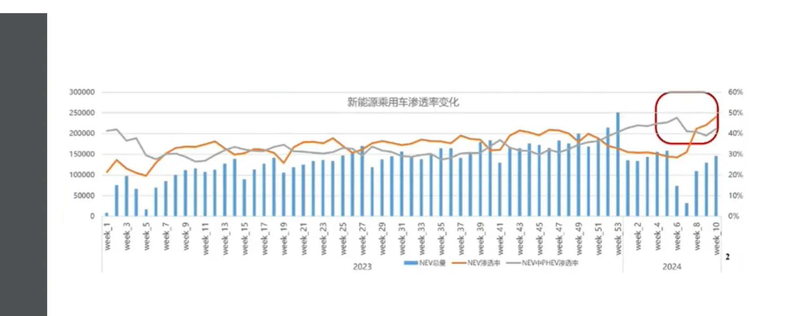
For the enterprise sector, battery manufacturers are divided into self-build recycling systems, such as the ningde era, beehive energy, and chinese-air lithium. There are also third-party specialized recycling and dismantling enterprises, such as grimmy, cedéme and others。
At the technical level, the ladder is characterized by a multiplicity of hunting techniques and high professional barriers, divided into availability, use, worth of use and discontinuation of the four core structures. The institute of technology has developed research and development cooperation with overseas universities and battery enterprises。
/ trends
However, there have been no cases of global maturity as a result of the use of the ladder to achieve key technical underpinnings, such as the need for battery-life data collection, programme design and the development of assessment equipment. The safety and performance of decommissioned batteries vary widely and information is incomplete, making it more difficult to judge. In addition, the industrial chain has not been effectively connected, batteries are still not standardized and safety regulations for decommissioned batteries are not adequate. These challenges are also opportunities for future industry trends。
/ target analysis
Sedmeh, a pioneer in domestic “physical law” recycling technology (physical dismantling + material rehabilitation), with a power cell complex and a fully automated precision dismantling of production lines, with a complete industrial chain of technology development, standard setting, testing services and recycling applications. Strategic cooperation has also been established with the mainframe and battery plants。
New energy sources outside the clouds, primary power cell recycling, complete cycle models for battery recycling, battery dismantling, use of ladders and reuse have been achieved. Partners include, in addition to new energy manufacturers, battery manufacturers, the institute of higher studies and the national electricity testing centre。
Hauppen technologies, mainly run by waste batteries for recycling, use of ladders and green regeneration services. Construction of a green cycle closed biosphere of power cells: battery production (holp international) - automobile manufacturing (new north gas energy) - battery recycling (horp state) - battery raw materials manufacturing (tungsten industry) - battery production (holp international) with technical advantages to pure used cell metal。
03 vehicle and power separation - power exchange mode
There are three main forms of power exchange: chassis, compartment, side. The length of power exchange on chassis, which is safe, closed and hidden, is fully automatic, but is costly and difficult to standardize. Sub-boxing is less secure and closed, with high security risks but low cost and easy to standardize. The side-to-side switch is higher than the chassis switch in terms of privacy and containment, but is costly and difficult to standardize。
/ market size
At the policy level, planning encourages the “car and electricity separation” model and speeds up charging and power switching. Future power exchange stations, which are required to replace gas stations to some extent, are expected to have an additional market space of $80 billion by 2030. The advantages of the power exchange model are obvious, with natural recovery advantages in addressing the pain point of battery recovery; the potential to replace distribution sites, where the collection of batteries increases in quantity, has a scale effect; the reduction of energy supply times, resulting in significant efficiency gains; the extension of cell life and the elimination of short flyer panels; and the combined use of ladders that constitute the “charge-for-charge-storage” closed-ring value chain。
/ competition patterns
The current pattern of competition in the market is dominated by bottom exchange, with 40 per cent of north air and 18 per cent of major tob markets, targeting toc markets. Sub-box and side-to-side power exchanges are mainly applied at the tob end, and account for 30 per cent of the market share due to the ease with which the sub-box exchange is standardized, with bertan and the power sail in the head. Side-to-side power switching also accounts for 10 per cent of the market share of space- and time-based electric power, owing to its highest level of safety。
/ trends
Because of the heavy assets, high costs and operating costs (about $2 million spent on individual power exchanges), investment costs and returns are difficult to develop into sustainable profit patterns. In addition, battery specifications and interfaces are difficult to harmonize, battery performance lifetimes and safety liability issues are difficult to define, while vehicle types and user groups are limited in coverage. Future trends include the roll-out of operational vehicles (travel services, logistics vehicles) to take advantage of regional advantages, industrial synergies and classifications to promote power exchange patterns。
/ target analysis
The chassis switch represents a core product of the aotearoa new energy (30 per cent north) that is a power exchange, and to date, 300 power exchange stations have been put in place to achieve full automaticity, taking only 3min time. New products were released in november 2020, reducing the change time to 20s。
The sub-box exchange of power represents the botanian technology, which was acquired in 2021. In addition to the hardware products of the power exchange plant, cloud data control systems are provided to guarantee the functional operation of the exchange point network。
The side-to-side switch represents a space-time powered project. Blue avenue, on-line in 2017, with a focus on high frequency travel, using the driver service system (dss), a service network driver throughout his life cycle, building a business model for "operate car + power exchange" and promoting power-for-car power switching on-the-ground applications。
04 whole vehicle service - charge mode
Under the new capital plan, more than 12,000 new centralized recharging stations are planned for 2020, more than 4. 8 million decentralized recharging stakes are planned, and more than 36,000 recharging stations will be built by 2025, with a national ratio of 1 to 1. It is expected that by 2025, more than 36,000 charging power stations will have been built and that investment in the chinese public charging stake market will have reached a scale of $18. 76 billion。
/ market size