In the audit of state-owned asset management, which is audited for the execution of sector budgets, the issue of “inappropriate purchase and sale prices” is a high-frequency problem and a key risk point for the loss of state assets. Qualitative criteria, referral grounds for such issues have been collated in the context of years of audit ethics experience, along with typical case and pit avoidance techniques for peers to refer to pits and for newers to move quickly and accurately。
I. Qualitative basis (detailed, non-false, directly applied)
The original characterization was based on generality and it was difficult to judge directly in the exercise. In the light of the latest regulatory requirements and first-line audit experience, the price of state-owned assets is judged to be unreasonable, with a three-point focus on the core, and the satisfaction of one can be characterized, while sufficient supporting documentation must be retained to ensure that the qualification is non-controversial and retroactive。
(i) core judgement criteria (three points, meeting one of the characterizations)
1. Failure to comply with statutory assessment procedures, direct pricing transactions: it is required that the sale and sale of state-owned assets (especially those of higher value) be entrusted to a qualified third party for asset assessment to assess the price as the basis for pricing. The failure to assess direct transactions, even if the final price appears to be close to fair market prices, is procedurally irregular and can be characterized directly as “unjustified prices for the sale and purchase of state-owned assets” (cf. Article 9 of the administrative enterprise state assets management ordinance, state council decree no. 738, effective 1 april 2021, in force at present)。
Transaction prices deviate from fair prices without reasonable explanation: using a third-party asset assessment report, market transaction prices for the same class of assets, fair value as the core benchmark, the transaction price deviations of more than 10 per cent (general criteria for determining performance, some parts of which may be fine-tuned in relation to the type of asset) and the failure of the audited unit to provide valid justification (e. G. Significant defects in assets, urgent disposals, mandatory policy adjustments, etc.) can be characterized as “unreasonable prices for the sale or purchase of state-owned assets”。
Low- or high-price transfers, resulting in loss of state-owned assets: transfers of state-owned assets that are clearly below the book value of the assets, assessed prices or fair market prices, or acquisitions of non-essential state-owned assets that are clearly above market prices, directly result in the loss of state-owned assets, which, regardless of the size of the price deviation, is characterized as “unreasonable prices for the sale or purchase of state-owned assets” and the need to focus on verifying the existence of irregularities such as the transmission of benefits and the operation of dark boxes。
(ii) key supporting evidence (audits must be kept and one is not required)
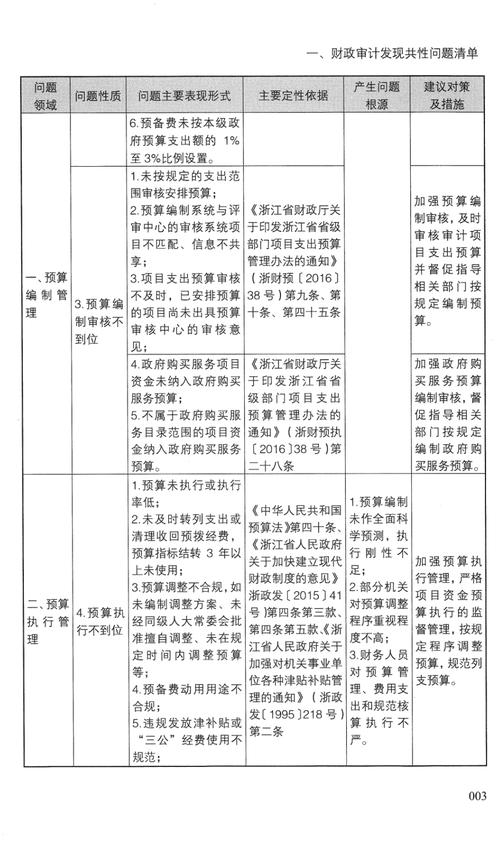
Qualification cannot be based solely on price differences, but requires the full collection of supporting documentation to form a complete chain of evidence: third-party asset assessment reports (or retrospective evaluation reports), records of counter accounts and market research for the same type of asset during the same period, contracts for the purchase and sale of assets (agreements), pricing approval documents, minutes of related meetings, description of asset status (e. G. Whether or not there are defects, idle hours, etc.), records of funds transfers to ensure that the characterization is sufficiently based, logically closed and avoid subsequent disputes。
(iii) typical cases (realistic scene restoration, cross-reference)
Case 1: in 2024, a county education authority transferred idle school buildings, without commissioning an assessment to a third party, and set a price of $8. 5 million in consultation with a local training institution. In the course of the audit, we had access to the records of the same period of transactions (at an average price of about $11 million) in the same local section of the same school building, and engaged qualified third-party institutions for a retroactive assessment of the value of $10. 8 million, which deviated from the assessed price of 21. 3 per cent, and the education department was unable to provide justification for the low price. This was ultimately characterized as “unjustified prices for the sale and sale of state-owned assets”, which resulted in a loss of 2. 3 million yuan in state-owned assets and ordered the modification and recovery of lost funds。
Case 2: in 2023, a municipal establishment purchased a specialized supply of equipment for a contract price of $6. 2 million. The audit found that while the unit had commissioned the evaluation agency (the assessment price was $4. 8 million), the actual transaction price was well above the assessed value of $1. 4 million, representing a 29. 2 per cent deviation. The audited units referred to the “upgrading of equipment”, but were unable to provide supporting documentation for the value of the upgrade, nor did they fulfil the collective decision-making process for over-valuing prices, which did not comply with the state-owned asset acquisition pricing norms. It was ultimately characterized as “unjustified prices for the sale and sale of state-owned assets”, requiring the recovery of overpayments of $1. 4 million and the accountability of those involved。
Ii. Basis for the transfer (update existing legislation, time limits, no pitfalls)
Article 40 of the audit act enforcement regulations, as originally cited, is valid in that it complements the relevant transfer grounds in the light of the latest statutory requirements of 2026, allows for multiple-dimensional references in the exercise, ensures compliance, accountability and audit closed loop management。
(i) core basis for transfer (currently valid, marked for update, directly cited)
Article 40 of the regulations on the implementation of the audit law of the people's republic of china (adopted by the 11th standing committee of the state council on 3 august 2020, with effect from 1 october 2020 and in force at present): “as a result of the review and consideration of the audit reports of the audit teams and related audit matters by the relevant operational and specialized agencies or persons of the auditing bodies, the audit bodies shall make recommendations to the competent authorities or units concerned for the imposition of sanctions in cases where the persons concerned are held liable according to the law; shall be transferred to the competent authorities in question, if they are to be dealt with and punished by the competent authorities in accordance with the law; and shall be referred to the judicial authorities for alleged offences.”
Article 39 of the regulations on the administration of state-owned assets management in the field of administration (state council decree no. 738, in force since 1 april 2021, in force at present) states: “the financial authorities of the people's governments above the county level shall monitor the management of state-owned assets in their departments and in their units, and shall make the results publicly available to society in accordance with the law. The competent authorities, in accordance with their responsibilities, monitor the management of state-owned assets in the administrative enterprise of their departments and units.” article 46: “any person who contravenes the provisions of these regulations shall be subject to correction by order of the competent authority, and shall be liable under the law for any person who is directly responsible and other persons directly responsible, and shall be held criminally liable under the law for any offence that is suspected of having committed: (v) failure to assess the assets in accordance with the provisions; and (vi) failure to dispose of state assets in accordance with the provisions.”
Article 58 of the regulations for the supervision and regulation of state-owned assets transactions of enterprises (conseil of the treasury decree no. 32, 2024, as amended in conjunction with december 2024 and confirmed in force by the network of officials of the ministry of finance in december 2024): “in the course of transactions of state-owned assets of an enterprise, the parties to the transaction who engage in malicious collusion, transfer at a low price, purchase at a high price, resulting in loss of state-owned assets, shall be ordered by the supervisory authority of the state-owned assets concerned to correct the situation, recover the economic losses and bring the persons responsible to justice; criminal liability shall be established in accordance with the law
Article 8 of the regulations on the punishment of financial offences (amended by state council decree no. 588 of 8 january 2011 and amended by state council decree no. 778 of december 2024, currently in force): “the state organs and their personnel take possession of, use and dispose of state property without authorization, in violation of the rules governing the management of state assets, and order the correction, adjustment of the relevant accounting accounts, and the return of state assets acquired or appropriated within a limited period of time. It warns the unit or informs the criticism. Directly responsible managers and other directly responsible persons are subject to more severe penalties; in the case of aggravating circumstances, to demotion or dismissal; and in the case of aggravating circumstances, to dismissal.”
(ii) transfer of points of good conduct (persons ' multi-year experience lessons learned, precise pit avoidance)
Not all cases of unreasonable prices are to be transferred, and three situations are to be distinguished in the exercise, with precision and avoidance of blind transfers, ensuring that each transfer is consistent and targeted:
1. Only procedural irregularities (unevaluated but prices are close to fair prices in the market and do not result in loss of state-owned assets): general orders to revise the period of time of the audited unit (additional asset assessment, refinement of the pricing approval process) and recommendations to the competent authorities for disposal (e. G., interview alerts, notification of criticism, dissuasion, etc.) do not require removal。
2. Loss of state-owned assets (large price deviations, clear amount of damages, unjustified): the penalty must be handed over to the competent authorities (symmetrical financial authorities, regulatory bodies of the state) to recover the lost state-owned assets in accordance with the law and to hold those responsible administratively accountable。
3. Criminal offences involving the transfer of profits, bribes, etc. (e. G., collusion with the parties involved in the transaction for pricing, receipt of kickbacks, operation of the box, etc.): direct referral to the judicial authorities (inspection and inspection bodies, public security organs), simultaneous retention of complete supporting information (contracts, transfer records, interview notes, market research, etc.) and cooperation with the judicial authorities in conducting verifications。
(iii) referral cases (reverted audit closure, as soon as possible)
In 2024, a district-level state company transferred shares in a fully-owned subsidiary with an assessed value of rmb 230 million, but the final transaction price was rmb 150 million, a deviation of 34. 8 per cent, which directly resulted in the loss of state assets of rmb 80 million. In the course of the audit, we found links between the head of the enterprise and the recipient and failed to comply with the collective decision-making process, undisclosed transactional information and suspected transfer of benefits. Finally, pursuant to article 40 of the regulations on the application of the auditing law of the people's republic of china, article 58 of the regulations on the supervision and regulation of state-owned assets transactions in enterprises and article 8 of the regulations on the punishment of financial offences, we refer the case to the disciplinary and inspection body, where the persons responsible have been opened for investigation and are currently pursuing the recovery and accountability of state-owned property losses, with a view to achieving full closure of the audit findings, characterization, transfer and modification。
Iii. A reminder to avoid pits (individually, for reference only)
The detailed and high-risk audit of the prices of state-owned assets sold and sold, combined with years of practical experience, summarized the main points of the three pits to avoid characterization errors and inappropriate transfers:
Price fairness judgements cannot be “one-size-fits-all”: if the assets are in fact ageing, damaged, idle for too long, and functionally backward, the price is low and well justified, while asset assessment and collective decision-making procedures are strictly complied with and cannot be characterized as “unreasonable price”, the reasons must be detailed and supported by retention in the audit base。
Focus on `zero' circumventions: in order to avoid the statutory assessment process, some units split higher-value assets (e. G., equipment packages, whole land) into several small assets, priced transactions on a case-by-case basis and circumvented regulation. This situation requires a combined accounting of the total value of the asset and, if the total value meets the assessment criteria, still needs to be characterized as “unperformance of the assessment procedure and unreasonable price”。
Related transaction pricing is particularly prudent: state-owned assets deal with related parties (e. G. Enterprises, cooperating units, related enterprises) where the pricing is strictly based on the principle of independent transactions, where sufficient supporting material for the market price of the same type of asset must be provided and, if necessary, reviewed by a separate third party body, which is highly susceptible to characterization as “unfair prices” or even to the transfer of interest。
Supporting material needs to be “scrutinized throughout the process”: whether negative or unreasonable, it is necessary to collect the full basis of pricing, asset profile, transaction flow, etc., in particular market price research records, minutes of meetings, approval documents, avoiding objections by the subsequent audited units and lack of a basis for rebuttal。