The issue of payment of property fees in the sub-districts has been a matter of concern to thousands of families, but it has also become a point of communication between owners and property companies, often due to lack of awareness of their responsibilities. A number of owners have doubts in their minds that taxing is a legal obligation and that it is not certain that it will be illegal to pay, and that the property costs will always touch the legal red line if they do not pay. At the beginning of 2026, as the residential sector's policy towards the property service sector was optimized, and as the typical case of disputes over property service contracts issued by the supreme people's court was interpreted, there was a clearer definition of the obligation to pay property fees, cases of legal refusal to pay, and the boundaries of responsibility and liability between the parties. The core centre revolved around the word “competence” so that owners' contributions could be paid clearly, property services were in place and two directions could be achieved。
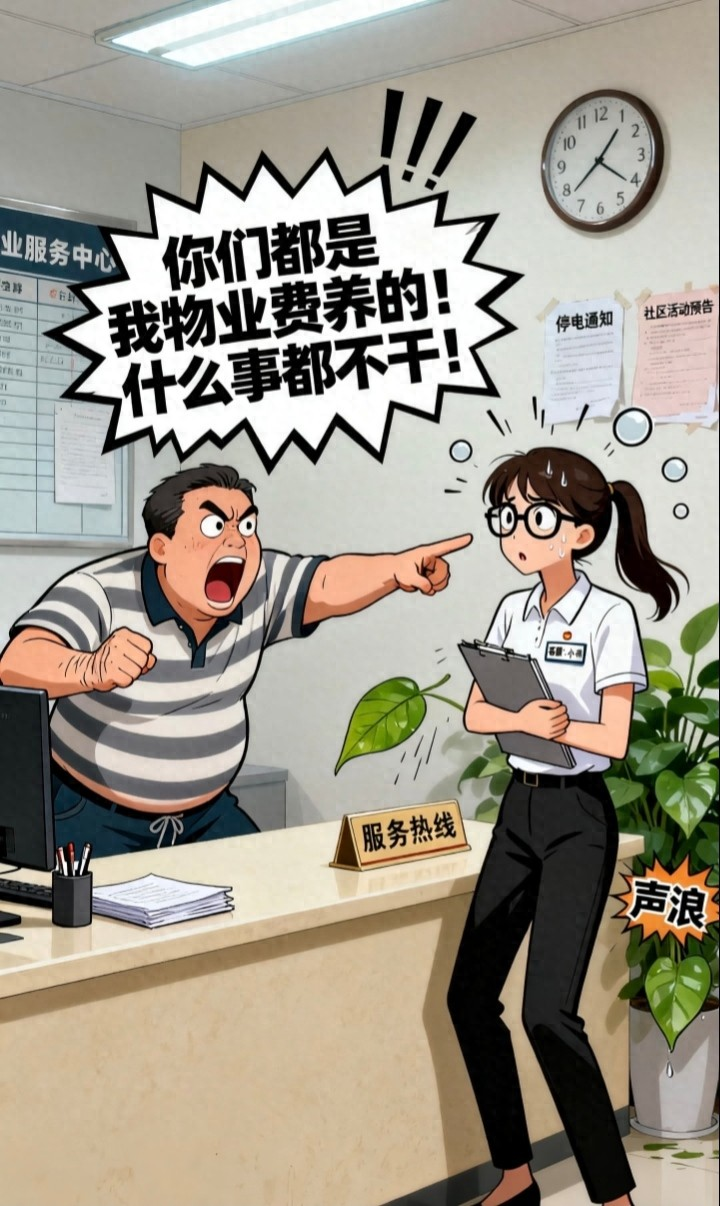
Many would confuse the payment of taxes with the payment of property charges, whereas the legal attributes of the two were fundamentally different. It is a social consensus that the payment of taxes, which is a statutory obligation of citizens under the law on the administration of tax collection, is mandatory and non-negotiable, while property fees are based on contracts for property services between owners and property companies, which are civil contractual relationships and are governed by the civil code. Article 937 of the civil code clearly states that contracts for property services are contracts for the provision of property services by property service providers and for the payment of property fees by owners, which are legally binding on both parties. In simple terms, the payment of taxes is a statutory “must do” and the payment of property fees is an agreed “should do” and, as long as it is a legally valid property service contract, the owner should fulfil the contractual obligation to pay the contributions, which is the first prerequisite for clarifying the issue of property costs。
At the same time, the property regulations specify the employer's contribution obligations in the form of regulations, and the owner's obligation to pay for property services on time while enjoying them. In judicial practice, the typical case issued by the supreme people's court in january 2026 makes it clear that owners cannot refuse contributions on the grounds of vacant houses, lack of physical access to a particular service, lack of use of part of a public facility, etc., provided that the property company fulfils the core obligations of cleaning the public area of the district, day-to-day maintenance of public facilities and management of basic order, in accordance with the agreement and the relevant provisions. After all, the core of property services is the provision of security for the community as a whole, not individualized services for individual owners, and maintenance costs for public facilities such as lifts, fitness equipment, greening, etc. In the sector, which is the basis for ensuring the proper functioning of the community。
This does not mean that owners can only be passively paid, the latest policy of 2026 has been optimized and interpreted judicially, with greater emphasis on the protection of the legal rights and interests of owners, clarifying the circumstances in which owners can legally refuse to pay property fees, and simplifying the process of defending rights, giving owners reason to defend their rights and interests, breaking the “hard or hard” impasse. These legal refusals are based on clear legal and policy grounds, and owners can claim their rights in accordance with the law by retaining the relevant evidence and not by default。
The first is in cases where the house has not been formally delivered, where local governments have made it clear that property costs are borne by developers. If the developers notify the house but there are quality problems such as leaking water, breaking walls, failure to receive the proper information, or failure to notify the owner in writing that the owner does not actually have access to the property services and is automatically exempt from the payment of property fees, they may refuse to pay the fees directly。
The second is that property companies do not enter into legally valid contracts for property services, provide services without authorization and charge fees. Property services are based on the premise that there is a “contract agreement”, either a prior property service contract between the developer and the property company, or a formal contract between the owner's board, the owner's assembly and the property company, property services without a contractual basis and the owner's right to refuse payment, which is also a protection of the owner's right to self-government, while the typical case of the supreme people's court makes it clear that the right of the owner's assembly to select and dismiss the property company is guaranteed by law。
The third is the serious underperformance of the quality of the property company's services, which is also the most common situation for owners. For example, major security hazards such as waste dumps in sub-districts that are not cleaned up for many days, long-term damage to doors resulting in random entry and exit for strangers, failure of elevators for more than 48 hours, failure to repair, failure of fire protection facilities, and failure to repair, may be retained by owners, evidence such as photographs, videos, maintenance records, joint complaints by owners, request verification from street property mediation committees and, upon verification, refuse payment for the corresponding cycle. It should be noted that minor service deficiencies, such as poor routine cleaning and late green cuttings, cannot be used as grounds for withholding payments, and owners may request property improvements or partial deductions instead of full withholding。
The fourth is an unauthorized mark-up, an arbitrary charge, or an unrecorded fee. The rates for property fees are either specified in the property service contract or recorded by the price department, the property company raises the property fee rate without the disclosure of any documents, or additional charges for elevator charges, public maintenance funds, etc., which are already included in the property fee, the owner may refuse to pay the excess, and may also file a complaint with the price department requesting the property company to refund the overcharge. At the same time, the policy trend of 2026 requires that property companies publish a breakdown of public revenues on a quarterly basis and that public revenues, such as district advertisements, public parking spaces, etc., are not advertised and allocated to public maintenance funds as required, and that owners may also waive property fees in accordance with the law。
In addition, the policy of 2026 further clarified the collection boundaries of property companies, delineating the “red line” of the charge and reducing the root causes of conflict. The civil code has long stipulated that property companies are not permitted to impose property charges such as stopping the supply of electricity, water, heating, gas, etc., while the typical case of the supreme people's court in 2026 has further clarified that property companies cannot, even in the face of non-payment of property fees by owners, impose charges such as restrictions on the use of doors, elevators, etc., which in essence violate the owner's separation of ownership of the building and the owner may legally require the property company to restore its functions. The legitimate means of collecting fees by a property company can only be a reminder, mediation in consultation with the owner, or recourse to court or arbitration。
It is worth mentioning that in 2026 the housing sector promoted the optimization of the property services sector, not only for one party, but rather for the establishment of a two-way restraint mechanism for owners and property companies, whereby “contributions” and “services” are genuinely equivalent. In the case of property companies, the policy identifies a number of offences that will be severely targeted, including unauthorized diversion of public maintenance funds or revenues, failure to disclose the content of services and fees, failure to respond to reasonable complaints against owners for more than 15 days, recruitment of unqualified personnel for key positions such as security and elevator protection, and the conduct of quarterly special inspections by local construction offices, which will be subject to corrective action, fines and revocation of certificates of qualification in serious cases。
At the same time, the ministry of housing and construction is promoting the construction of a unified national credit evaluation system for property services, which allows owners to rate and file complaints on the internet. Property items with a rating of less than 60 points will be placed on the priority watch list, subject to penalties such as fines and restrictions on bidding for new projects. The results of the evaluation of the owners will directly affect the market reputation of the property sector and undermine the quality of its services. Article 943 of the civil code clearly requires that property companies regularly disclose to the owner matters of services, fees, public revenues, the use of maintenance funds, etc., so that the owner “discrepancies and consumption”, which is also a statutory obligation of the property company。
For owners, access to rights protection should be accompanied by a sense of “contributional contributions”, recognizing that property fees are the economic basis for the proper functioning of the district. It is important not only to safeguard the common interests of all owners but also to safeguard the value of their own property. In the face of problems in property services, owners should also reject the extreme form of “undue refusal to pay property fees” and defend their rights through reasonable means, such as feedback to the owners' committee, which consults with the property company to correct the situation, or by filing a complaint with the neighbourhood conciliation committee, the property authority and, if necessary, by legal means。
From the point of view of community governance, the establishment of a regular communication mechanism between property companies and owners was also promoted in 2026, with street and community-based councils playing a full coordinating role, setting up communication platforms and leading both parties to a change of venue. The system of monthly “owner-property” communication meetings in a number of sub-districts allows property companies to regularly inform them about their services and maintenance plans, and allows owners to express their claims and suggestions in a timely manner, so that conflicts can be resolved in their infancy. After all, the community is the home of the owner and the place where property companies provide services, and the harmony of property services has never been a unilateral matter requiring the joint efforts of the property company and the owner。
Property companies need to bear in mind that the core of property services is “services” rather than “fees”, to fulfil their contractual obligations in a timely manner, to respond to owners' claims and to make every piece of property's cost valuable; owners also need to understand the complexity and integrity of property services, to fulfil their contractual obligation to pay and to express their claims rationally. A little more understanding, a little more communication and a little less confrontation will make the small areas a real place to live. The policy's continued optimization has also created a more equitable and transparent platform for communication and advocacy between the two sides, so that the payment of property fees is no longer a problem for the people but a link to the harmonious development of the communities。
Topical discussion: do you have a communication mechanism for owners and properties in your neighborhood? What practical skills do you have in relation to the payment of property fees and services? You are welcome to share your views and experiences in the comment area。
Focusing on me, sharing practical legal knowledge, life policy interpretation and community living goods on a daily basis, teaching you about the lives of people around you, rationally defending their legitimate rights and interests, and learning more about the practical skills of community governance。