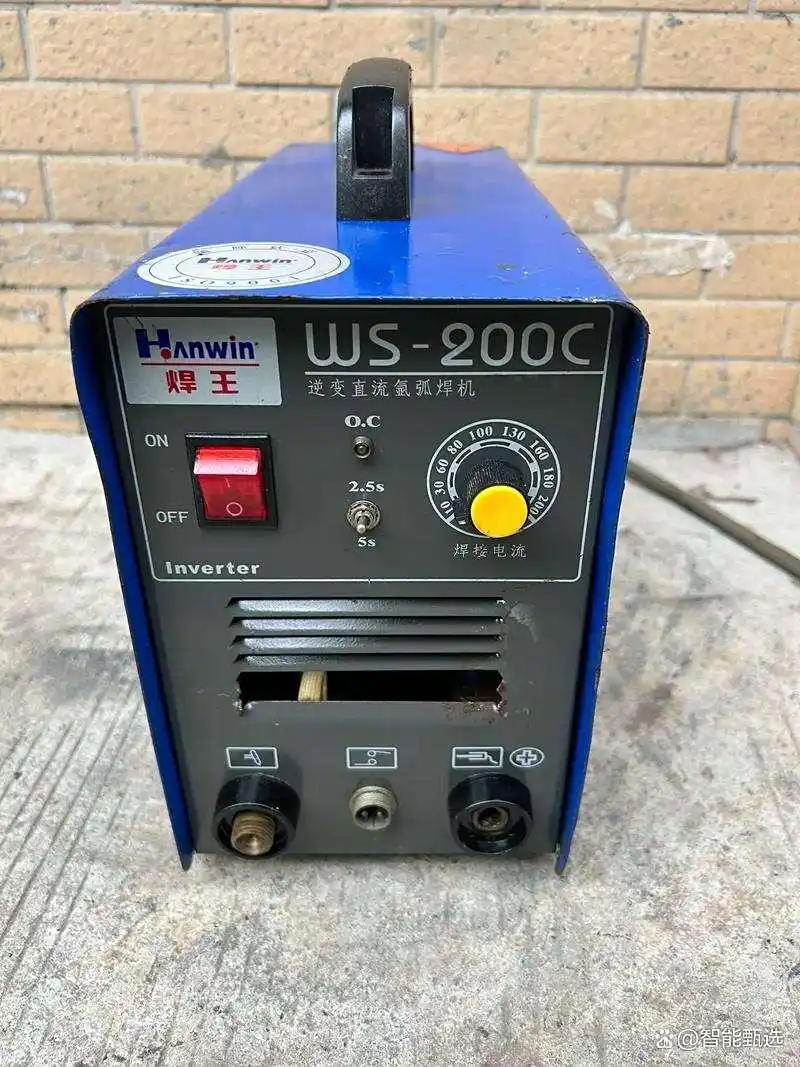
Welding units, which are the core equipment in industrial production, have a direct impact on the efficiency of welding operations because of their failure to function normally with electricity. More than 60 per cent of the welder malfunctions are related to power systems, circuit elements or operating parameters. This paper combines industry maintenance cases and technical principles, and provides a step-by-step solution to the 12 core causes of the power welding process。
Power system failure: “first level” for current transmission
1. Power input anomalies
Typical performance: power light is not on and equipment is not responding. Cause analysis:
Powerline break-ups lead to poor exposure (for example, in one case of maintenance, 220v power lines were broken from internal copper lines due to long-term bends). Air switches or melters (often not replaced in time after overloading or short circuits). Inputs do not match the voltage (e. G. 380v equipment is wrongly connected to 220v power). Solutions:
Power line resistance values (normally less than 0. 5 times) are detected using a universal meter to replace broken cables. Check whether the rated current of the air switch matches the equipment (e. G. 250a welders need 315a air switches). Confirms that the voltage marking is consistent with the actual input and, if necessary, the pressurizers are installed. Internal power module failure
Typical expression: indicator light is on but no output voltage. Cause analysis:
Whole-stream bridge piled through (e. G., in a zx7-250 welder, full-stream bridge diode short circuit led to the disappearance of dc250v output). Filter capacitation failure (the capacity of electrolytic capacity decreased to less than 20% of the nominal value). Switching power chip damage (often caused by erosion of circuit boards in a wet environment). Solutions:
Following the dismantling of the equipment, the complete stream bridge was tested on a diode slot to detect reverse electrical resistance (normally it should be endlessly interchangeable with hundreds of om). Replacement of the same-specified capacitor (e. G. 470 μf/400v electrolytic capacitor needs to be strictly matched with the pressure resistance value). The use of heat wind guns to replace damaged power chips (e. G. Top 247y needs to be sensitive to weld temperature control). Control of circuit failure: the “transmission hub” of the fire command
3. Driving circuit failure
Typical expression: fan functioning without welding currents. Cause analysis:
Igbt-drives (e. G., pc817-operate output end voltage below 12v). Driving electrical retardation (often 10 /2w resistance values drifted over 20 times). Protects circuit error actions (e. G. Throughput protection thresholds set too low). Solutions:
The signal waveform (normally 15-25 khz square wavelength) is detected with a oscilloscope. Replacement of the same parameter-driven resistance (metallic membrane resistance to ensure stability). Adjustments to protect circuit level units (e. G. R27 can be adjusted to match current gauge calibration). 4. Disruption of the master control board
Typical performance: parameters display abnormal and irreconcilable. Cause analysis:
Eeprom storage chip data lost (often due to illegal shutdowns). Crystal oscillation frequency deviation (e. G., 8 mhz crystal oscillation actual frequency deviations exceeding ±50 khz). Reverted circuit failure (e. G., 10 m f-composed failure resulting in insufficient reposition voltage). Solutions:
Rewrite the master control program using the programr (repeated original parameters). Replacement of the same frequency crystal and calibration system clock. Tests of compound circuit voltage (normally between 4. 5 and 5. 5 v). Power element damage: a "core engine" for current expansion
5. Igbt module penetration
Typical expression: an instant jump or smoke. Cause analysis:
Dispersion of heat leads to excessive temperature rise (e. G., over 70 per cent containment of the dispersor fins). Fence voltage anomalies (e. G., drive signal voltage exceeding ± 20v). Load short-circuit shocks (e. G. Welding short-circuits without timely power cuts). Solutions:
Clean up the radiator and replace the thermal silicate (silicate of conductor >3w/m k to be selected). Adjusting the power of the circuit to limit electrical resistance (e. G., changing r12 from 10 to 15 k). A fast-melting device (e. G. 600v/100a specification). 6. Holistic diode short circuits
Typical expression: output voltage fluctuates and is accompanied by a noise. Cause analysis:
Reverse voltage exceeded (e. G. Opting for 1,000 v diodes but actually bearing 1,200 v reverse voltage). Electricity overloading (e. G., constant welding of steel plates above 3 mm without adjusting the current). Discretion design defects (e. G. Insufficient area of contact with diodes and radiators). Solutions:
The replacement is about to restore the diode (e. G. Mu860 needs to ensure reverse recovery time <50ns). Welding currents are restricted (e. G. Maximum currents of 250a). Improved dispersing structures (e. G., increasing the number of dispersors or switching to liquid cooling systems). External interference: environmental and operational “hidden killer”
7. Welding parameter setting error
Typical expression: electrode fires but cannot be quoted. Cause analysis:
Electricity is too small (e. G. Less than 80a when welding 2 mm steel plates). The voltage does not match (e. G., when mma welds less than 20 v). Propulsive currents are insufficient (e. G. Gas welding currents are set below 10a). Solutions:
The current is adjusted to the thickness of the welding material (formula: i = kd, k takes 35-50, d is plate mm). Appropriate voltage set (billed position voltage = 0. 04 x current + 16 ± 2). Increased push current (aerobic welding is recommended in 15-25a). 8. Environmental humidity excess
Typical performance: the rate of failure in the rainy season has increased significantly. Cause analysis:
Insulation resistance decreased (85% wetness) to less than 0. 5 m on circuit boards. Refrigerated water leads to short circuits (e. G., transformer circuits forming conductive circuits). Solutions:
Add a dehumidifier (e. G., control of the environmental humidity of the equipment in storage at 40-60%). Three anti-painting paints (optional ip67 protection class co)I don't know. Add heating modules (e. G. Ptc ceramic tablet maintenance equipment > 5°c internal temperature). Systematic routing: “diagnostic pathways” from phenomenon to substance
Appearance inspection: confirmed that the power lines, electrodes were intact and the equipment had no burn marks. Power test: entering voltage, current output voltage (dc250v ± 10%) using a universal meter. Signal tracking: the oscilloscope detects the signal wave shape (frequency, range, space ratio). Component replacement: a replacement test for suspected malfunctioning elements (e. G. Igbt, flow bridge). Parameter calibration: adjustment of current/voltage display values using standard loads (0. 3% error). Preventive maintenance strategy: “gold law” to extend the life of equipment
Daily inspection: clean-up of equipment dust (focusing on dispersing fans, vents). Monthly maintenance: detection of ground electrical resistance (should be < 4 times) and consolidation of all lines. Major annual repairs: replacement of aging electric capacitor (full replacement of electrolytic capacitors with a life exceeding five years). Operational training: ensure that the operator has the correct parameter setting method (e. G. Welding should be kept 65-75°) through systematic failure diagnosis and preventive maintenance, welding without fire can be reduced by more than 80 per cent. In the case of complex malfunctions, it is recommended that the equipment manufacturer or specialized maintenance agency be contacted to avoid secondary damage due to inappropriate operations. In the context of industry 4. 0, smart welders already have a self-diagnostic function (e. G., by pushing down fault codes through app), which will further improve the efficiency of equipment maintenance。