Keyword: #industry boom #
In the late autumn season, the village of ting village in maoshan town was drunk in sweet fruit. On the grape shelf, a string of fruit crystals fell down and the farmers stepped up their picks; the area of foreign trade, where the automatic separation line was busy, with fine packaging, a single weight and a single number of grapes, was going to singapore。
Large areas of the marginal slopes, where traffic is not well located, have become “ding ding dynasty” in the past. Thirty years ago, the villagers planted their first vine, from which they began their “sweet business” and went through a number of stages of development, such as the establishment of the “professional partnership association”, the “five unity” in technical management, the “puerto ii” talent development, and the construction of the “ting's grape” brand. Today, 1,097 grapes are grown throughout the village, with per capita income exceeding $50,000, and the fragrance of fruit flows into more than 2100 shops across the country and continues to raid international markets。
“new farmers”:
You can't grow a product until you've given up
Wang zheng is busy almost every day in the ting hsing village. Ordering orders, picking grapes, serving tourists ... Starting in july when grapes matured, the appointment number has not been broken。
Forty-one-year-old wang zheng is a true “portuguese ii”. Twelve years ago, she saw the growing fire in the development of the grape industry in the village and decided to return to start a business and run 20 acres of grape sheds with her father. As “new farmers”, wang zheng began by using technology and quality as a breakthrough: “customs experts often talk about technical points, they tend to derecorate on our grape shelf, and they also cut out a “model vine” to facilitate our usual reference.”
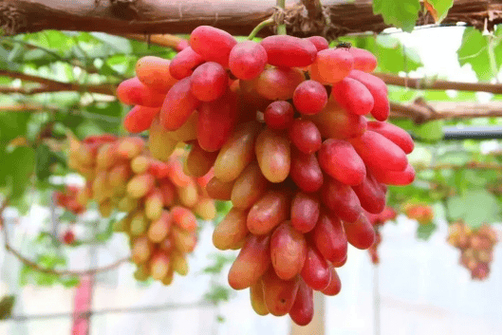
It is important to “feat” quality fruit. Wang laughter said that the trick of her growing grapes was to leave the house, with only good fruit and good fruit. “my vineyard shed has been reduced from 60 acres to 30 acres today, and the variety has been reduced from dozens to the present two types of `red milk grapes' `sunshine roses'.” she gave the example of "sun roses" on her grape shelf, which, in order to ensure a good supply of fruit, had to cut out the weak branches and keep only the strong ones and only 35 in each string. 60 fruit, weight at more than a pound and sugar at more than 18 degrees。
Pay attention to the details, precision breeding, the gold content of wang's grapes is “high and high”, and the fine grapes are worth $40 per pound, with a yield of more than $40,000. Wang qun is not prepared to expand its size and variety at this time, but rather to adhere to scientific techniques and maintain the quality of grapes. In addition, efforts have been made to make new technologies and ideas available to more growers。
Today, there are more than 40 “portuguese ii” farmers who are serving as “farm mentors” at no cost and who, in person and hand, pass on scientific and efficient farming methods taught by agricultural experts to farmers throughout the village。
Village staff:
Establishment of “tingsung standards” mission development
From the 2 acres of plume grapes of the family, it has grown to over 20,000 acres of vineyards throughout the village。
“the well-diggers will not forget the water, and ting zheng knows how long it will take to find a way to develop without the first attempt of the old people.” the secretary-general of the ting jiang village party pointed to a “raisin” in front of the village and told the research team that this was the first vine planted by the lao people's democratic republic in the same year, and that it has now become “totem” for the entire village。
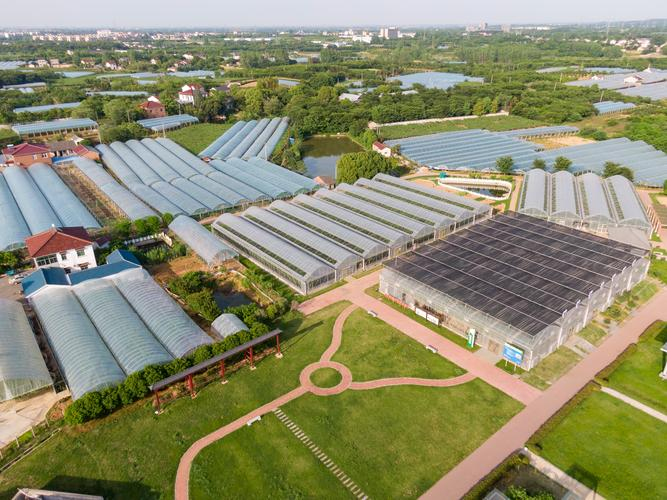
“the fact that more than 1,000 grape growers are fighting alone will affect their overall competitiveness and will make it difficult to run the brand of `ting chau', which is the only way to move forward.” since 2016, the village “two committees” have led the formation of the “tinghams of grapes cooperation union” to harmonize the five areas of breeding, production resources, technical training, quality standards and brand sales, to establish “tingham standards”, to initiate a “quantity-to-mass” leap in the country's grape industry, to focus on the management of production, to provide timely and professional work on weeding, tweeding, fruit-cutting, etc., without arbitrary expansion, to control the acre within 1,000 kilograms, to focus on the quality of fruit, and to raise the yield by $4,000 per acre。
Optimization of management, precision of approach, establishment of a scientific management mechanism and continuous improvement of “brand function”. In recent years, the federation's “one-stop shop” has updated data on the production and marketing of workers and kept production in order; in collaboration with the institute of science and research, it has set up a system of “chief specialist team + local extension team + several model households” services; and the united agricultural and business institute has launched “foundable farmer” financial services, which help farmers to access credit services free of collateral at interest rates of less than 5 per cent per annum, with 244 members currently receiving $22. 87 million without collateral。
“the ting dynasty grape industry has been transformed from nothing, from thick to fine, from line down to line, from internal to outward sales.” zheng zheng said that ting jiang's grapes had been created as a national geographical marker protection product, had been selected for the national agricultural product regional brand catalogue, and had become a partner in over 2,000 businesses throughout the country, such as the horses and golden eagles。
There are new plans for the next step. “on the one hand, active extraction and development of 24 derivative products, such as grape yeast, raisins and raisins, on the other hand, the development of a `raisin+' eco-tourism line to enhance tourist experience. Quietly。
Indigenous peoples:
Don't forget old people's "ploughing."
“only $1 or $2 a pound of grapes used to be sold, it's almost $10 now, and some new varieties are worth $20. The 72-year-old ting xiaoxuan was the first group of villagers to follow the old local grapes and was both a witness, a participant and a beneficiary in the development of the ting ting shing grapes。
The majority of the land in the family was planted by their sons, and they kept almost 10 acres of their own, “which is good for them and which is all for exercise. Besides, now the grapes are growing into a simple pattern." he told the team that his grape acres were worth nearly tens of thousands of dollars and that his sons were better and more efficient。
“for 60 days of drought this year, the harvest was saved by bringing water to our villages for irrigation. There are also initiatives such as the integration of seedlings in the village, the harmonization of production resources and the harmonization of marketing, which also reassures the villagers.” despite this, fertilizer costs alone are 20-30 per cent less than in the past. Having heard of the village's development of rural tourism and village history, he hopes that the village's “two committees” will show the story of the older generation alive and in its entirety, inspire the village's young people to take on the grape industry, and expect more visitors to appreciate the difficulties of farmers and value the meal in the bowl”, “we crop people have a sense of gratitude and fear for agriculture `breeders', land beneath their feet”
[expert comment]
Researcher at the centre for research and research on social sciences in china during the new age of xi jinping, jiangsu province
High-value-added niche industries are new engines for overall rural revitalization. The village of ting jiang has built the “sweet land of chinese grapes” with a “one grape” to the world and to create a happy “sweet life” for all villagers. One is to insist on the path of high-quality development. Quality, quality and standard-setting enable such high-quality agricultural products to rapidly occupy markets and become industry champions, bringing more benefits and returns to a wide range of operators. The second is the provision of “one dragon” social services. High returns tend to imply high risks, and precision agriculture requires sustained investment and support from talent, finance, technology, marketing, etc., to overcome a dilemma through joint missions, creating co-benefits of regional flight。
Joint research group, jiangsube village