My family, if you don't turn around and play games today, you can't talk to me about one of the hottest signals in the city
Perhaps some families do not usually care much about the property, but do they think it's a small thing not to sell it? But i'm telling you, it's not a small matter, whether you want to buy a house, sell a house or just eat a melon to watch the market, because it's directly related to our common people's homes, our property, and you'll definitely say, “that's the way it is”。
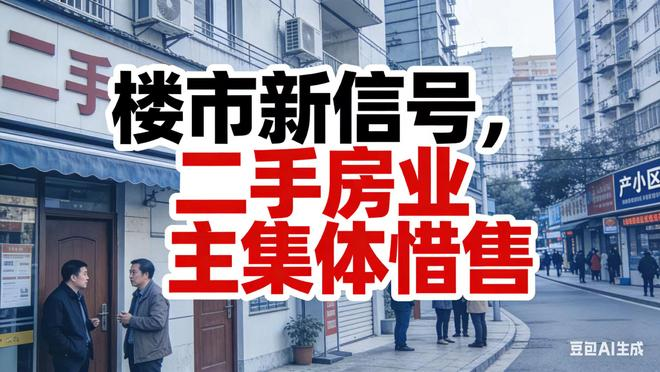
Let me tell you the real truth, not the data set, in what we can understand. I've been talking to a couple of my real-estate associates lately, and they've been throwing a shit: it's harder to cut prices with second-hand owners than to go to heaven
Last year, you went to the used room and said to the owner, "big brother and sister, if the price is less, i'll fix it." the owner probably would have talked to you, and even offered to give you $35,000, fearing that the house would fall on his hand. But it's not the same now. The owner's offer is too tight. You want to cut down thirty-five thousand, people don't listen to you, or even say, "no more, keep it."。
And it's not an isolated phenomenon, it's happening in key cities across the country. In the first-line cities, the number of second-hand rooms in beijing has been declining for four consecutive months, with more than 3,000 sets missing in february alone; shanghai is far more exaggerating, with the number falling in nine months since last june, and now the number of second-hand rooms in the market is decreasing, leaving only four months to be lost。
The same is true not only for hangzhou, suzhou, hoi fat and tianjin, the second-line cities that we have heard so much about, but also for the second-hand rooms, where the numbers go down. And some of the neighborhoods that we usually focus on, such as huanko tung tung city in guangzhou and vanko gin bay in kowloon lake in nanjing, have fallen so hard the last two years that they are now stable that they are no longer the kind of "one-size-fits-all" business, and owners are no longer desperate to sell。
One might ask, "what is wrong with the owners? You want to hold the house in your hand? It's not the owners who don't want to make money, it's them who do the math, and it's not even gonna work out, and you wouldn't sell it. Today i will talk about the reasons behind this。
The first point, which is also the central point: selling houses is tantamount to “scratching” and possibly even putting money on the back. Who wants to do something stupid
We ordinary people buy houses, mostly on a loan, pay down a lifetime of savings, and the money left is for decades and monthly. To take one real example, one owner bought a house in 2018 for $5 million and loaned 3. 5 million, the prices of which have been falling for years, leaving only $3. 8 million。
If he sells the house now, gets $3. 8 million, pays the bank a loan of $3. 5 million, and the remaining $300,000 is not enough for the down payment he paid, let alone the monthly payments and taxes he has paid over the years. It was said that he had worked hard for several years to sell the house, not only to earn money, but also to lose a large sum, possibly even to pay for the difference。
Family, would you sell it? Surely not. Instead of selling it, you should either keep it or rent it. At least the house is still there, or an asset, so that you don't lose it. This is the truest mentality, and the owners, who do not want to sell it, cannot afford it. They have to choose to lie down, hold the house in their hand and wait for a better deal。
The second point is that the cost of housing has become lower and rents are available for the month and there is no need to sell。
I wonder if you have noticed that the interest rate on mortgages has been declining for the last two years, that it used to be bought at more than six o'clock, that it was available for tens of thousands per month and that it was particularly stressful; but it is not the same now that the average interest rate on new mortgages has been reduced to around 3. 06 per cent for the whole country, and the interest rate on public debt has been lower at 2. 6 per cent。
The monthly supply has become less stressful, and rents have risen steadily in many sub-regions, especially in some core areas, with rent returns of over 3 per cent or higher. In other words, the owner rents out the house and collects rents per month, almost offsets the monthly supply and in some cases earns more。
Previously, the house had been “burdened” and paid for itself every month; now, the house had become “passive income” and the rent covered the monthly supply and even the balance. In such cases, owners are certainly reluctant to sell their houses, and unless it is urgent, who would sell an asset that would generate income for themselves
Thirdly, the mood in the market has changed, and the owners have stopped panicking and are no longer in a hurry to materialize。
For the first two years, the market had been in bad shape, saying that “the house is going down” and that many owners were panicking that they could not sell their house, so they were willing to sell it quickly, even if they had to。
After several years of adjustment, the most expensive and frightened owners have sold their houses long ago, and the remaining owners, either in the form of a high down payment, with little pressure on loans, or because the house is their own first-demanding house, which is not sold at all, are particularly capable of carrying them。
Moreover, the stock market has recently improved, with other sources of investment in the money in your hands, a reduced sense of wealth anxiety and optimism about future expectations, no longer feeling that “the money will be safe only if the house is sold”. So the sense of urgency of “must sell immediately” is gone, and the owners have become less comfortable, preferring to keep the house and not sell it at a loss。
After all, let's say again, what are the implications of owners' reluctance to sell
The first effect, the second house market, is no longer a “buyer's decision”. When we used to buy houses, we could pick them up slowly, because the owners were rushing to sell, you didn't buy them, and others bought them, and the owners had to compromise; but now it's different, there's less stock, there's less supply, there's less good housing, there's less demand for good housing, and there's no hurry for the owners, and the buyers and sellers are starting to test each other and play。
It's hard for you to go to the second-hand room later, and it's hard for you to find out. If you really want to buy it, you'll have to accept the owner's offer, or you'll have to cut the price at a small scale. The day when you cut the price at 100,000 is almost gone。
The second effect is that the rate of decline in housing prices has slowed and the market has begun to “floor”. Two years ago, the price of the house fell so badly because of the panic of many owners, the price of everyone, the price of me, and the price of me. But now the owners are reluctant to sell their houses, and the pressure to sell them is low, so the house price is stable。
Of course, i'm not saying that the house prices are going up, but that the kind of “one set is cheaper” rush is over. Now, it's like looking for a “balance point”, slowly holding it steady, depending on whether it can rise or not, but at least it won't fall one day as before。
The third effect is that the division of the city will become increasingly apparent. What do you mean? It is either that all houses will be stable, the core cities, the core areas, the good-quality neighbourhoods, that prices will be stable first, and may even rise slightly, because they are scarce, owners will sell, and more people want to buy them; but the prices may continue to fall because no one wants them, and the owners will have difficulty selling them。
In short, the gap will increase in the subsequent market, where “good houses are becoming more valuable and poor houses become harder to sell”。
Finally, tell you my personal point of view。
In the first sentence, the owners do not want to sell their houses, and they cannot really be blamed for saying, “don't want to lose”. It's the most normal, real mind i would have done if i had been the one to buy a house that we'd spent our entire lives saving and for decades。
In the second sentence, the day of the collapse of the city is over, but it is not about to rise and the future is about “stable” and “diverse”. We ordinary people don't have to panic about falling house prices, and don't have to think about buying a house that's rich。
Are there any such owners around you? Like your neighbor, who was going to sell the house and now he's not, or you go to the used room and you've seen the owner bite the price? You can talk about your experiences in the comment area and your views on the matter。
Look at me, and i'll talk to you later, and in this situation, what do we ordinary people think about real estate, how to hold our own house, not to step on the pit, not to get lost。