What more do we need to take into account in determining the project
04
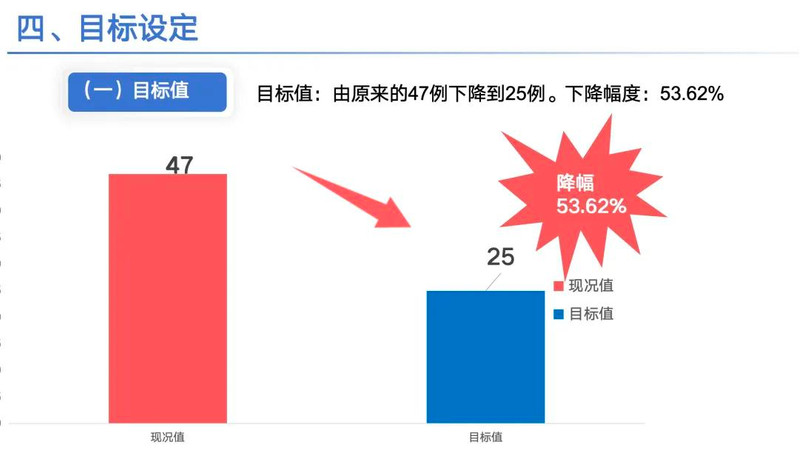
Target-setting
An improved assessment of the current status of the measurement indicators in the selection of themes sets clear and logical objectives. Goals should be clear, challenging and achievable。
05
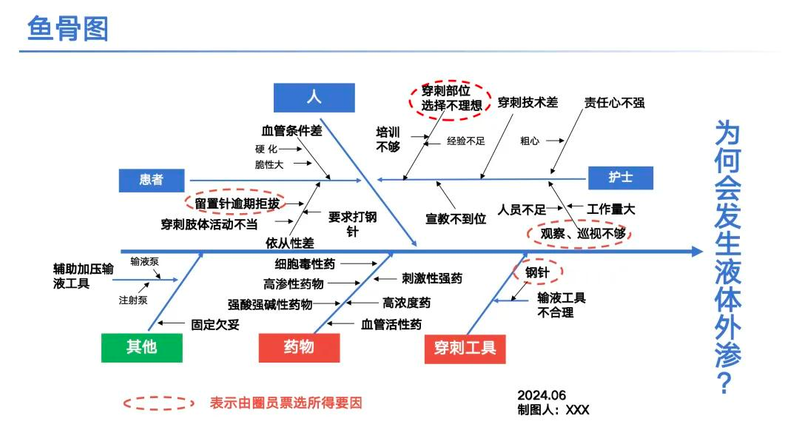
Parsing
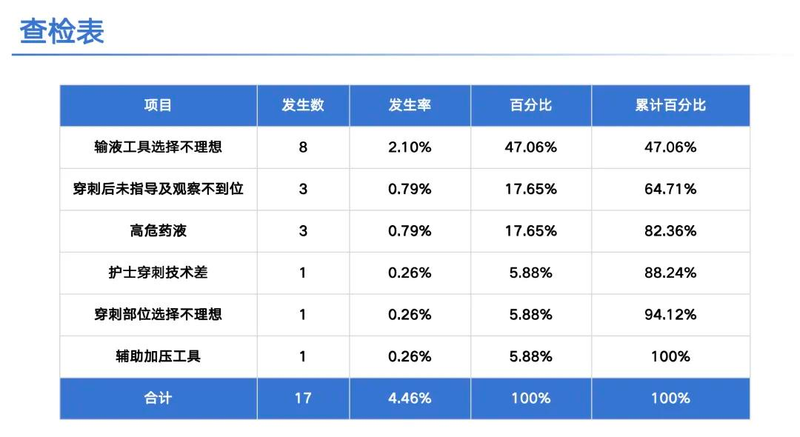
Objective: to analyse the priorities for improvement and identify the root causes of the problem。
Step (1) reason analysis: all factors that may cause problems, including large causes, middle causes, minor causes, etc. (2) are subject to rounding: reasons that we subjectively consider to be important on the basis of an empirical vote or an award circle (3) are authentic: reasons that have been validated through the “three currents” principle
Tools: fish bone maps, checklists, plato, etc。
06
Response development
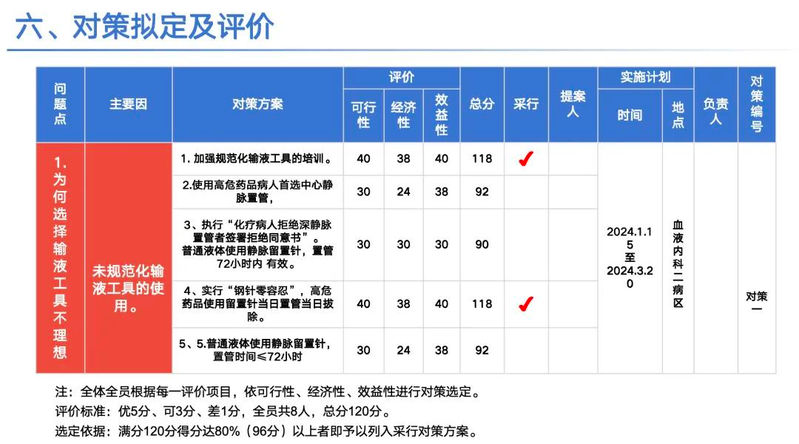
Objective: to develop responses for genuine causes, ensuring that they are practical and permanent。
Steps: (1) policy development and analysis (2) policy evaluation and screening (3) policy integration and sequencing (4) policy implementation plan development
Methods of reflection: ecrs act, hope list, shortcomings list, etc。
Steps in policy development
07
Response implementation and review
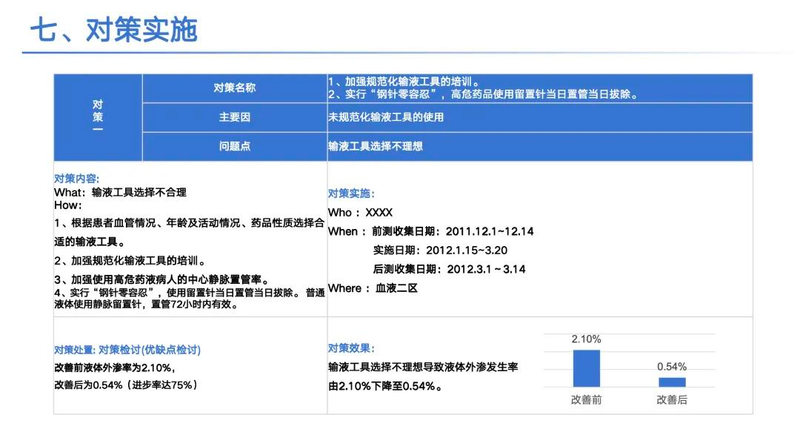
We have developed and consolidated our responses into a broad set of elements that we have set in order to achieve the goals we have set, and we have begun to implement these responses, which are the d-point of the qcc step and are also in line with pdca during the implementation phase of the response, which can be divided into four parts: the content of the response, its implementation, its effectiveness and its handling。
What are the remaining concerns in implementing the response
Order of implementation: first, first, first, first, then long: when the content of the response is not interfered with, it can be implemented in parallel with special circumstances: when the implementation of the response is difficult, long, and when other responses are not interfered with, it can be implemented earlier. Conversely, delays or adjustments to the content of the response are required。
08
Effect confirmation
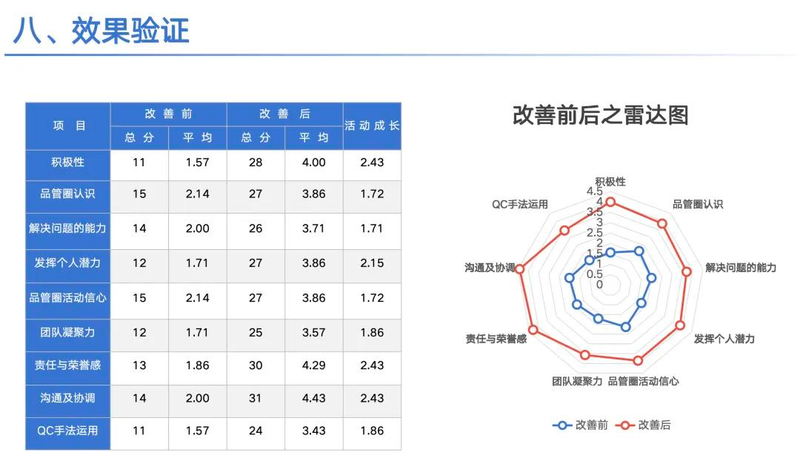
Impact confirmation: the clinical data are extracted from each response to compare the status of the improvement。
Tangible results are recognized: comparison of the value of improved, improving and improved clinical data after the last response is implemented。
Calculation of target and progress rates:
Target achievement above 150 per cent: low target and low confidence
Target achievement is below 80%: due to lack of identification, barriers to implementation and ineffective response
Intangible results: total and average of activities, composition of activities。
09
Standardization
Effective improved response is incorporated into the section's standardized document as a daily monitoring and management project to ensure a more stable implementation of the response over the long term. For excellent projects, an application may be made for inclusion in a standardized document of the department of nursing or the hospital。
Principles of standardization: four
Normalization: is the optimization of processes, improvement of quality or clinical path, standardization of operations。
Harmonization: uniform requirements for duplication of work, quality assurance of medical services, duplicate workflow。
Specification: is the main form of quality standards, which in essence is the technical stereotyping and quantification of substances。
(a) serialization: the same work chain will be standardized in a standardized format, bringing together technical quality and quality of service series standards。
10
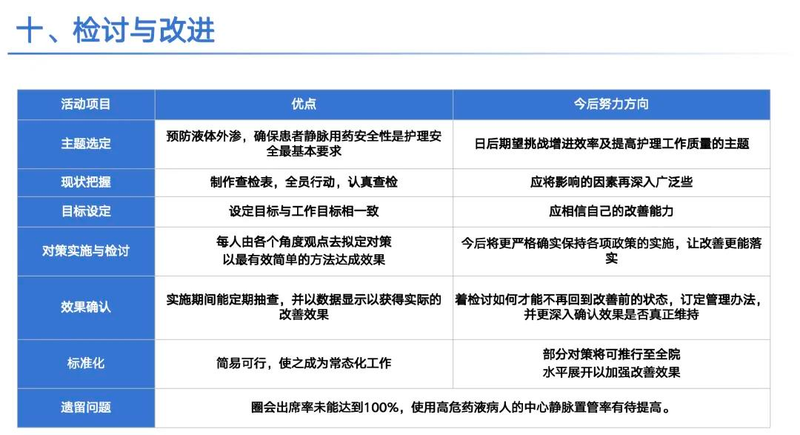
Review and improvement
Objective: to provide a review, reflection and evaluation of the entire community of practices, using the pdca cycle for continuous improvement. Note: ensure that the conduct of the hands-on activities continues along the path of continuous improvement, leading to continuous improvement and breakthroughs in quality。