Private liu
Digital technology is deeply reshaping the global cultural ecology, and the promotion of cultural and scientific integration has become a major theme of the times. In march 2024, when he visited hunan, general secretary xi presented two “consolidation propositions”, which called for “exploring effective mechanisms for cultural and scientific integration”. The integration of cultural science and technology involves both the technological activation of cultural resources and the preservation of cultural roots and the nurturing of cultural diversity. In recent years, ethical principles have evolved and policy documents have been issued, but problems such as ai's modification of the classics and deep forgery continue to occur and there is a gap between governance principles and governance effectiveness. To address these problems, it is necessary to change the neglect of processes in existing governance and to establish process-oriented institutional thinking and approaches。
From principles to mechanisms:
A paradigm shift in the approach to governance
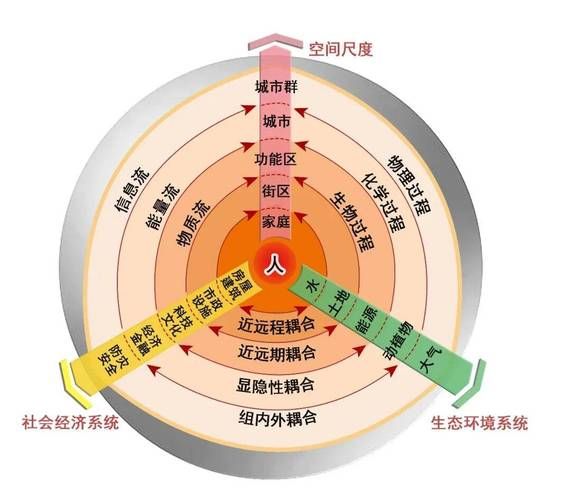
For a long time, the dominant paradigm of ethical governance of cultural science and technology can be summed up as a “principle thinking” in the belief that ethical issues can naturally be resolved if values such as the promotion of human well-being are established and accompanied by an ethical review system architecture. But the ethical interests and responsibilities in the field of cultural science and technology are so diverse that black box-based causal judgements cannot adequately respond to the institutional questions of “what conditions, how, what consequences”. Foreign scholars have pointed out that an effective interpretation goes beyond answering “what happened” and, more importantly, “what happened through what”. Domestic experts have further clarified that the so-called social mechanism is a set of causal relationships with fixed patterns of interaction under control, and that only by opening the black box of the process can there be a real understanding of how governance works and how governance fails, and that successful experiences can be translated into replicable methodologies. The guidance on promoting the deep integration of culture and science, issued by the ministry of science and technology and others, clearly proposes the institutionalization of the reform of cultural science and technology mechanisms. The institutional thinking is precisely the extension of this idea in the field of ethical governance, and it moves the analytical focus from “what principles, what systems” to “how they work”。
At the heart of the institutional thinking lies the idea of “actors — motivations — transmissions — conditions — stability”, the composition and operation of the mechanism, and the construction of a set of analytical tools that can be used for diagnosis and design. The actors ask questions about the identification of key actors, such as government regulators, platform enterprises, algorithms engineers, content creators, the public; motivation questions about identifying the sources of governance power, market incentives, technical constraints, public opinion and legal accountability; curator questions about the specific path that targets from the decision-making to the executive, from the regulator to the ward; condition questions about the circumstances in which ethical review is strictly enforced, and the conditions under which algorithm bias is magnified or corrected; stabilization questions about the self-maintenance logic and why specific governance measures continue to be effective. These five questions reflect the four-fold methodological value of institutional thinking: moving the surface problem from “what problems” to “how problems are produced”; breaking through the static perspective of the system, focusing on the process of dynamic interaction between actors in a given relationship; moving governance away from the moral imperative of “should” but rather from the logic of interests and motivations of those who confront the actors; and dissolving complex issues and delinking ambitious governance objectives from operational, traceability and accountability. The paradigmical answer is “what should be done” and the institutional answer is “how to do it”, a shift that is part of the methodology of “exploring effective mechanisms”。
Use institutional thinking to address dilemmas
A five-dimensional review of current practices of ethical governance in cultural science and technology based on institutional thinking reveals a number of issues of concern. At the level of actors, governance is currently more dependent on government regulators, the functions of enterprises, industry organizations and the public at large are not fully developed, and enterprises are more passive regulators than embedded subjects of governance. In terms of dynamic dimensions, the power is derived mainly from executive orders and special management, the relative weakness of market incentives, technical constraints and social oversight, the motivation for governance mainly from the government, the insufficient participation of other actors, and the rebound in post-treatment issues. In terms of transmission dimensions, policy requires poor transfer of regulation from central to local, government requirements on how to translate into business behaviour and lack of institutionalized transmission mechanisms. In terms of the dimension of the conditions, there is a lack of clear operational criteria for enterprises to “high-risk” ai applications and when to “melt” and the trigger for ethical review is vague. In terms of stability dimensions, the effectiveness of governance is largely driven by the stages of “leadership focus” and “specialization” and has not yet resulted in stable institutional safeguards; there are gaps in the chain of accountability, where there are deployments without inspection, inspections without disposal, disposal without traceability and closed loop accountability needs to be improved. The current weakness in the ethical governance of culture and technology lies not in the absence of principles, but in the inadequacy of mechanisms. Moving from thinking on principles to thinking on mechanisms is an important way to move governance from “soft constraints” to “hard building”。
A governance exploration exercise based on the five challenges
The “five questions” of institutional thinking are both analytical frameworks for the diagnosis of governance dilemmas and operational tools to promote practice. On the basis of these five dimensions of governance exploration, the marseilles (hongsa) video-writing estate has initially validated the applicability of the institutional thinking framework. At the level of actors, the park has developed a governance pattern of “government guidance, academic support, business performance, social supervision”, which transforms more than 5,000 enterprises in the park from regulatory subjects to governance actors; at the level of power, it introduces technical constraints and market incentives, changing the way in which it used to rely solely on executive orders; at the level of transmission, it has put in place a pre-compliance review mechanism that embeds compliance requirements into the technical process of content production, making compliance a mandatory node, leading to a shift in the transmission path from linear chains to embedded processes; at the level of condition, it clearly proposes “four bottom lines” for data ethics, algorithmic ethics, intellectual property rights, cultural security, so that the triggers of governance at all levels can be clearly identified; at the level of stability, the park has incorporated ethical requirements into the enterprise's examination, technical standards and judicial practice, and has explored a shift from “sportal management” to “day operations”. The conversion has already been effective: the hunan regional centre for the ethics of science and technology (rcst) has been set up in its campus, has moved ahead of the ethics review service, has facilitated the completion of the algorithms and key data elements registration for enterprises such as hunan wide electricity, and has reduced the ethical filing cycle from one to three months to three to seven days. This diagnosis, which starts with the “five questions”, explores the governance of a mechanism designed for “four values”, allowing governance processes to move gradually towards systematization and operationalization in the implementation of each inquiry。
[screw by professor, ph. D., university of south china. This is the results of the project of the national social science fund entitled “multi-purpose of ethical responsibility for artificial intelligence and co-governance” (25bkx024)