Watering is a vital management measure during cucumber cultivation, which directly affects the growth and development of cucumbers, the quality of production and the occurrence of pests. Scientificly sound watering needs to take into account a combination of factors such as the cucumber's strength at different stages of growth, soil conditions, weather changes and temperature. The following is a detailed description of the technical aspects of cucumber watering from the four key points of attention。
I. Attention to the long-term: supply of water on demand, precision control of the growth rhythm
The differences in cucumbers over different stages of growth are the central basis for determining the timing and volume of water. Only a flexible adjustment of water-watering strategies to take into account long-term trends can create an appropriate growth environment for cucumbers。
The cucumbers are weak and the root systems are not fully developed during the nursery period, and the water intake needs to be strictly controlled. If the young leaves are green, luminous, luminous, staggered and staggered, the water supply is considered appropriate, and if the leaves are yellow, atrophy, or if they are small and weak, they may be due to water shortages or overwatering. The application of the principle of “small water intubation” should be followed at this stage, so that the soil surface is humid enough to avoid the root causes of the flooding. In order to promote the recovery of root systems, the delayed planting period can reduce water recharge as appropriate, pending the emergence of new leaves and a return to normal growth patterns before increasing water supply。
At the beginning of the flowering period, the cucumbers were flourishing and the demand for water increased significantly. At this time, the expansion of the area of the leaves, the increase in light cooperation, and the growing expansion of the fruits, if the water supply is inadequate, will lead to shorter periods, lower sit-in rates, deformities of the fruits and poor taste. To determine whether the water is sufficient at this stage, it can be observed that the leaves are relatively dynamic in the morning and slightly down in the afternoon; if the leaves are severely atrophy and not recovered in the evening, water shortages are indicated. The water should ensure that the soil is hydrated, but not excessive, and if there are fibrosis and umbilical diseases in the fruit, it may be due to uneven or excessive water levels. At the same time, the frequency of water recharge will have to be adjusted to the rate of growth of the fruit, and the rapid expansion of the fruit will allow for an appropriate increase in the frequency of water recharge to ensure continuous water supply。
Attention: real-time monitoring to balance soil moisture
Soil slurry refers to the amount and distribution of moisture in the soil, which has a direct impact on the water intake capacity of the cucumber root system and the effectiveness of nutrients in the soil. Accurate management of change is the basis for scientific watering。
The methods used to monitor the incubation are varied and intuitive: the extraction of soil 5 - 10 cm of the farming layer indicates a good state of well-being if the soil is held tightly in groups and falls lightly; if the soil is held in powder form, it does not hold in clusters, it means that the soil is dry and needs to be watered in a timely manner; if the soil is sticky, it is not easy to disperse or even seepage in clusters, it means that the water is overdrive, and the water should be stopped and the ventilation and moisture should be strengthened. It is also possible to monitor soil water content in real time with the use of specialized tools, such as soil aphrodisiac sensors, which require timely recharge when the farm soil contains less than 60 per cent of water; and control of water when above 80 per cent。
The characteristics of different soil types vary, and water is treated differently. The sandy soil has good aerobic properties, but poor water retention, rapid changes in the state, drought vulnerability, and water irrigation should be based on the principle of “a small number of times” to avoid rapid loss of moisture; the visceral soil is strong, but it has poor aerobic properties, slow changes in the acreage, and can be duly prolonged to prevent soil accumulation; the soil is relatively stable to protect its fertility, and can be relatively stable, and the water can be watered in a manner consistent with actual monitoring。
In addition, attention needs to be paid to the depth of the soil. If the surface soil is dry but the deep soil is humid, it can reduce the amount of water irrigated, as appropriate, so as to avoid the disturbance of the growth of the deep roots following the surface watering because of the lack of oxygen; if the deep soil is dry, the water will need to be increased to ensure that the moisture permeates the main distribution of the root system and to promote the deep growth of the root system。
Iii. Caution with weather variability: time-appropriate to reduce adverse weather impacts
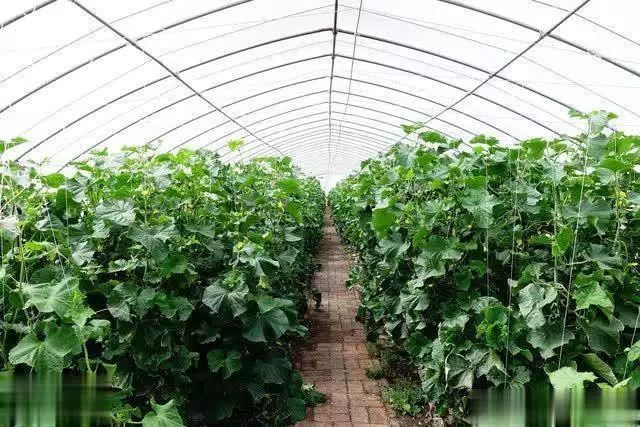
While the sheds are somewhat resistant to external weather changes, weather conditions can indirectly affect the water demand and watering effects of cucumbers by affecting environmental conditions such as temperature, humidity and light inside the sheds. Therefore, water must be watered with close attention to weather changes and with flexibility to adjust the timing and manner of the water。
It is an opportune time for water to be watered when the temperature in the shed is high, there is sufficient light, cucumber light cooperation is strong, evaporated and water consumption is high. However, the water should be watered away from the high-temperature period and at 9 - 10 a. M., at which point the temperature in the shed is gradually rising, and water can be evaporated in time to regulate the humidity in the shed, avoiding the stimulation of the roots by the high-temperature water. When water is poured at noon and the temperature of the soil drops sharply, it affects the physiological activity of the root system and leads to a decrease in the capacity to absorb water。
Water should be reduced or delayed when cloudy or cloudy weather, insufficient lighting, lower temperatures, less cucumber evaporation and less water consumption are present. Increased moisture in the shed, lower soil temperature and vulnerability to cucumber disease, such as froste, as well as as grey disease, can be caused by blind watering. When the sun goes down in succession, water should not be poured in large quantities immediately, and a small amount of water should be replenished to allow the cucumber to adapt gradually to environmental changes and to prevent the strains from contracting as a result of sudden increases in moisture。
In the rainy and snowy weather, special attention needs to be paid to changes in the mood in the shed. Rain and snow sheds have low temperatures and high humidity and, if the soil is in good condition, water should be stopped; if water is necessary, it must be provided after the rain and snow have stopped and the temperature in the shed has recovered, with low water levels, timely ventilation and drainage after watering and lower humidity in the shed. At the same time, it is necessary to clean up the snow area of the shed in a timely manner after the rain and to prevent the low temperatures in the shed from affecting the soil and the growth of cucumbers。
Iv. Temperature: harmonizing water temperature and safeguarding the physical function of the roots
Temperature, or soil temperature, is closely related to the growth and development of the cucumber root system, respiratory effects and nutrient absorption. Waters that ignore changes in temperature can have adverse effects on root systems and thus hinder the growth of cucumbers。
The cucumber root system has a suitable growth temperature of 20 - 25°c. When local temperatures are below 12°c, the root system has reduced its physiological activity and its ability to absorb water is significantly reduced; when above 30°c, the root system has increased its respiratory activity and is prone to oxygen deficiency. Water needs to be watered in such a way as to ensure that water temperatures are close to the temperature of the ground, and to avoid excessive variability in water temperatures and temperatures that stimulate root systems. When water is used in wells or piped water, it is less hot in winter, it is required to pre-heating the water into the shed's reservoir, before it can be poured up when the temperature and temperature of the water do not exceed 5°c; it is higher in the summer, with the option of watering in the morning or evening to reduce the effect of excessive temperature on the root system。
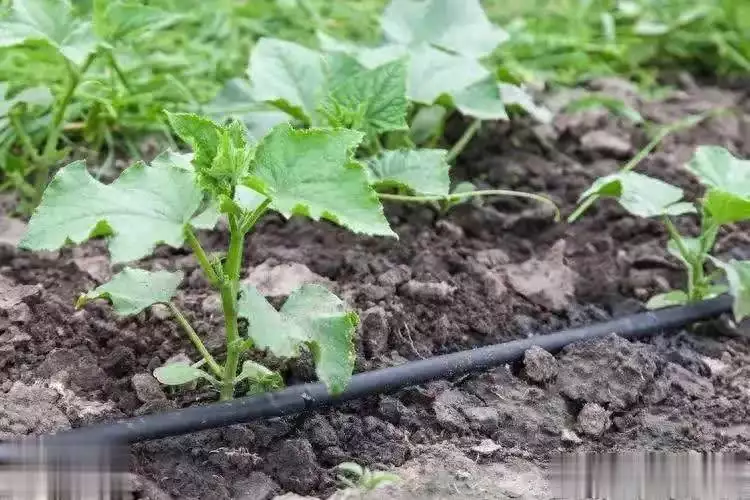
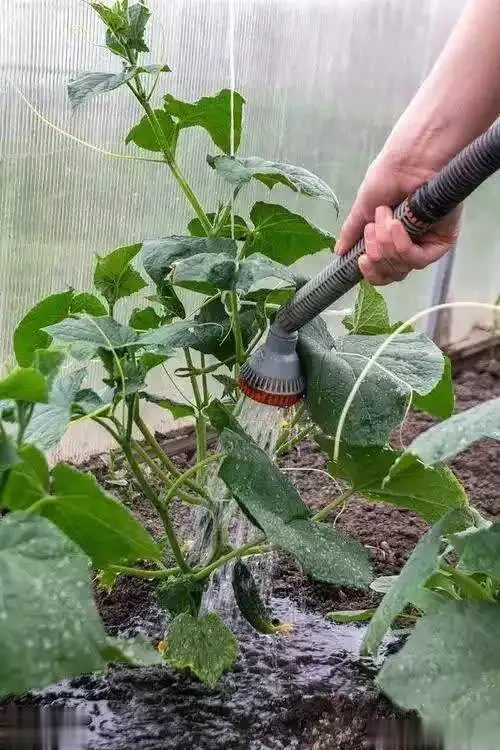
The effect of water irrigation on the temperature is greater. Large flooding can dramatically reduce the temperature of the ground, especially during the cold seasons, seriously affecting root growth. The use of water-saving irrigation, such as drip irrigation and spraying, can slowly supplement the moisture and avoid large fluctuations in the temperature. The drip irrigation can directly transport the moisture around the root system and reduce the impact on surface temperature in the soil; it can evenly distribute the water by controlling water volume and nozzle height, while also regulating the temperature in the shed。
Temperature patterns vary from season to season, and water is watered with targeting. In winter and early spring, when the temperature in the shed is low, the water should be watered in the morning of the sun, at which point the temperature is gradually rising, which can slowly pick up through ventilation; it can then cover the surface of the soil, reduce the heat dispersion of the soil and stabilize the temperature. During the summer and autumn, the indoors are warmer, and water can be poured in the evenings, using water evaporation to take some of the heat away, to reduce the temperature and to avoid pressure from the root. In addition, the temperature is low after successive rainy weather events, and the water must be watered before it is warmed by ventilation, heating, etc。
In short, the cucumbers in the shed need to combine organically the four main elements of long-term, cucumber, weather change and temperature, with flexibility to adjust the timing, frequency and quantity of water to the actual situation. Only scientific water can provide a stable water environment for the growth of cucumbers and achieve their high-quality production. In actual production, growers also need to learn from experience to optimize water-water management measures, taking into account local climatic conditions and soil characteristics, to ensure maximum efficiency in the production of cucumbers in the shed。

The rules of fishing, skill and wisdom, when you fight

This is a new, upgraded version of fishing operations 3


2026 web game full superhot web game node