In the age of the internet, we receive countless information every day through different channels, but that information is messy, and we need to build our own knowledge systems to grow faster. That is also what many bloggers have been emphasizing。
Today, we share the relevant elements of knowledge systems. Of course, before you look at this article, you can look back at the previous article, "if the logic is clear."
What is knowledge system management
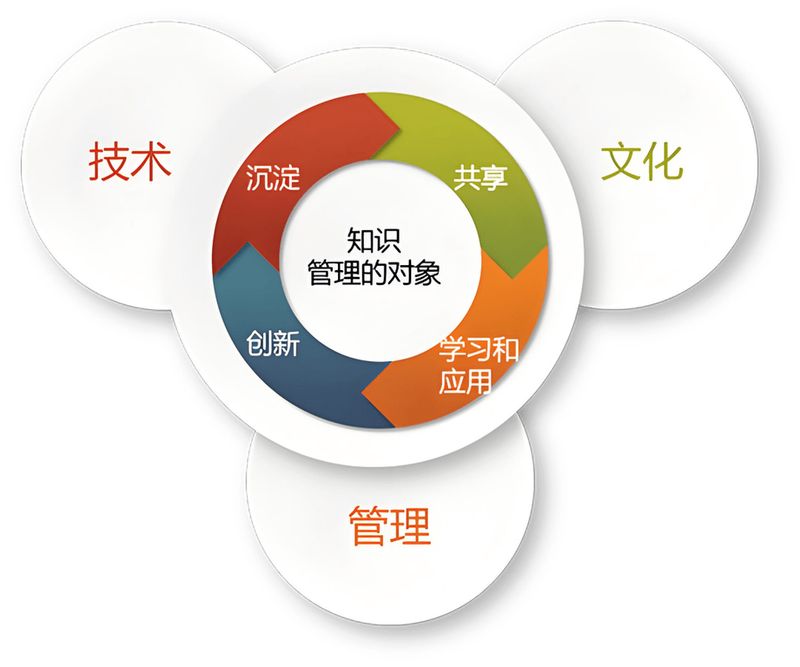
Concept: knowledge systems are knowledge structures and relationships within the organization. It could include classifications, organizations, relationships and concepts of knowledge. Simply put, it is to systematize loose knowledge and internalize knowledge into skills。
Knowledge system management is not intended for capacity enhancement
2. Knowledge systems are not mere collections, taking notes
Knowledge systems are logical frameworks that need to be followed
Characteristics of knowledge systems
01
Targeted
Targets refer to orientation focus and system focus。
02
System
The system refers to a well-structured and hierarchical structure, and the better the balance and the greater the degree of aggregation of the first two layers。
03
Level
Knowledge is stratified, and each layer of knowledge synergeticly supports the ability to export it。
Knowledge systems are self-similar from micro to macro-structure, from framework to theme and from themes to subdivision of knowledge points。
Knowledge is interconnected, and the closer it is, the stronger the memory, the smoother the extraction。
04
Relevance
It is impossible for you to learn all the knowledge, and it is necessary to understand the new knowledge with the knowledge that already exists, and the formation of a system is not a dead end, but a three-way connection. Linkage can be based on two basic ways, related to disciplines, for example, when looking at a particular message, thinking “what does xxx have to do with psychology, xxx with management, and xxx with human resources?” does xxx have to do with my own problems。
How to build knowledge systems

01
Targeted
If we want to build knowledge systems, we need to first make a few points。
Whether or not this knowledge is to be learned, what is the ultimate purpose and to what extent it is to be learned. Simply put, before building a knowledge system, we need to define our goals first, because the building of a knowledge system is not instantaneous and can be better done with clear directions and objectives。
02
Frame
When the goal is achieved, we will begin to build a framework of knowledge that is not a disjointed point of knowledge, but a network of knowledge。
When we don't know about a certain industry, we can build a simple cognitive system through an introductory book in this direction. For example, we operators can use books like "leading from scratch, light of operation."。
Generally speaking, there are a number of basic principles in setting up the framework。
1. The initial selection of books is generally based on introductory textbooks, and the best courses are taught, followed by high-scoring publications。
2. There is no choice but to read a number of textbooks in this direction and to create an initial well-established awareness。
3. Important: the framework must be systematic, and the knowledge point of one aspect is not insignificant。
03
Fill
Once the framework is in place, it's the information input。
This is when we can use mind maps, like xmind. By classifying different knowledge nodes, we then begin input of corresponding information. The relevant knowledge is placed on the knowledge tree. Information gathering is done every moment. Gradually, our framework has become more full。
04
To summarize
If knowledge doesn't work, it's a bunch of useless information. Especially when our framework is getting thicker and thicker because of the collection of knowledge. It was time to take stock of knowledge, so that not only could knowledge be better understood, but more experience could be gained by taking stock of its own shortcomings。
05
To output
Teaching the knowledge acquired to others is an output of a deep understanding of knowledge. If you can explain a point of knowledge clearly to your friends, and friends can understand it, it means you already have it。
To that extent, it has largely become the industry's ip。
06
He's an expert
The overall framework of the knowledge system remains the same, but knowledge needs to be iterative, as in the case of marketing management, which has been reproduced in 16 editions. The same is true of our knowledge, which, although the bottom-down logic remains the same, in the years of the internet, there are many new things coming out every year, and we need to deal with our knowledge systems in an iterative manner。
Some common tools (on demand)
Collection tool
Collate
Output
I'm sorry, todo
Summary
The construction of a knowledge system is in fact a process of in-depth learning, after which learning needs to be followed by a review of their behaviour. Whether it is extracting a summary or afterward, it is to better shape its own knowledge system. Our cumulative knowledge has been made more advantageous by constantly showing new things. In this way, the change can take place even further。