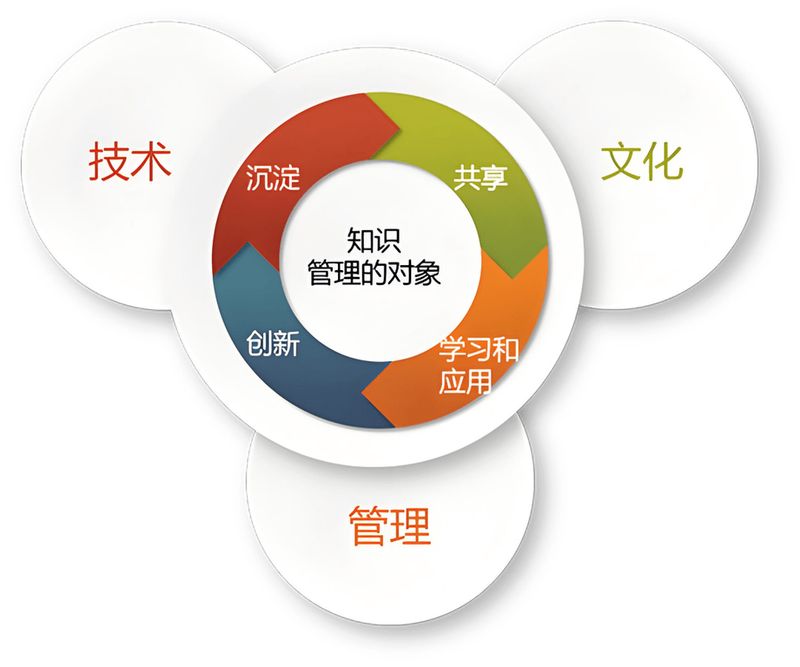
How can we organize and use knowledge in ways that make the accumulation of experience more effective
First, we need to be clear that knowledge is subjective. How can knowledge be subjective? Knowledge is a reflection of the objective world. It's relative. We learn to inculcate knowledge in the brain. But a huge problem you ignore is that you ignore the infinite complexity of the world and the subjective dynamics of those who are the subjects of awareness。
The intellectual conception of constructionism sees knowledge as the individual's construction of knowledge, that is, the individual's creation of meaning for the world. Everyone imagines the outside world in their own way, and your vision and learning of anything new is based on your collective experience of the world. Thus, learning is the movement of the original concept. The most efficient way to learn, then, is to clearly build a framework for their own experienced knowledge systems, and to learn new knowledge is to modify and adapt it on the basis of the original framework。

The three criteria that an individual framework must meet are: first, holistic. Your knowledge framework must be knowledge-based, intrinsically linked and serve the same goal; second, adaptive. Where learning is in conflict with old knowledge, it can be readily adapted to ensure support for new goals; third, convertibility. If targets change, the framework can rapidly shift towards new goals。
The framework of the personal knowledge system is different from that of the discipline, where the knowledge system is more focused on all the elements that cover the discipline, and the framework of the individual knowledge system, where knowledge should be directed towards the same goal。
The individual knowledge system framework can be divided into three main types:
First: a knowledge system framework based on work processes. This framework underpins the other two. The marketing process, the problem-solving five-step approach, etc. Fall into this area. For example, you're a salesman, and a sales process can be built in such a way that you're prepared to ask for a follow-up to the solution. If you change jobs, you need to adjust the original framework to what kind of people your clients have become, what their needs are, what their characteristics are, and how to impress them. If you need to write tweets, you need to know what kind of people your users are, how to analyse user needs, what their characteristics are, and how to write moving papers. As long as you do the highest level of abstraction in the framework of the workflow, you grow extremely quickly。
Second, based on a framework of expertise in operational areas. If you want to be a grass-roots manager, the workflow architecture framework is enough, and if you want to be an expert in a field, a framework of expertise is needed. The most important thing in the framework of expertise is to find the underlying logic。
Third, competency-based knowledge systems based on career objectives. This framework builds on the first two frameworks by adding core qualities, generic competencies, professional skills and necessary knowledge. Core qualities, such as your good habits and soft power; generic competencies, such as your mode of thinking; professional skills and the necessary knowledge, must revolve around your job objectives. With your promotion, your knowledge system has been updated and revised to make it more complete, effective and mobile。

100 new ones