Building knowledge systems requires a framework, depth, linkages and continuous updating。
A lot of friends would like to go into the architecture of knowledge to satisfy you. This article will focus on building knowledge systems and hopefully help build them。
I've met a lot of hardworking and learning people who like to read, read articles, watch videos and communicate with their masters. However, only a small number of them became “cows” in all walks of life, and most did not become specialists in their respective fields. While they have learned a lot, they have become all talk-outs and have no way of solving problems。
What's the reason
The main reason for this is that the knowledge previously learned exists in a fragmented and fragmented form and does not form a knowledge system。
The highest level of adult learning should be the search for a model of thinking that suits them and the building of a knowledge system that belongs to them, rather than pursuing more knowledge。
Instead of pursuing a fragmented, fragmented, isolated and fragmented knowledge point, we should first seek to link the existing knowledge points together and consolidate the scattered knowledge points into a pyramid that, through follow-up and continuous learning, seeks to build a fine pyramid。
This fine pyramid is the knowledge system that will be our way of thinking, helping us to use our own knowledge in a flexible manner, and even helping us to explore what is not, and then to improve our wisdom, abilities and lives。
Through a great deal of research and practice, i believe that building knowledge systems requires setting frameworks, digging deep, finding connections and continuously updating four steps。
The goal of learning is to solve problems in a given area, and building knowledge systems is to build the capacity to address the problem, which can take three forms: process, professional and business。
Process-type, workflow-based competency systems
The process-based knowledge architecture framework is the lowest knowledge system framework, by combing the processes required to complete one matter and the competencies required for each process. For example, the sales process, the project management process and the five-step solution approach are all process-based knowledge systems frameworks。
The knowledge system for selling visits, for example, revolves around six steps, including research, presentation, search, advice, confirmation, proposals. The competencies required include how to investigate client operations, strategic information, decision-making chains, etc., how to use the fab law to provide a simple and clear presentation of the business/products, how to use the search, recommendation combination to find a customer pain point, and to provide suitable advice to the client, and to identify needs with the client through written forms such as mail, tweets, etc., leading to the introduction of scenario-based programming proposals in preparation for the next reporting。
Ii. A professionalized framework based on expertise in individual areas
It is no problem to develop a “flow-of-the-process knowledge system” to become a good cadre of staff。
If you want to go further and become an expert or senior person in your field, it is not enough to master a “process-based knowledge system” approach, but also a “professional knowledge system” approach。
Professional knowledge systems require, first, the identification of the patterns of the nature of the knowledge that underlies it, and then the application of the principles, methods, techniques, tools, tools, etc. Of the five tiers of the model to comb the system of expertise。
For example, the level of knowledge about people's motivation is to support the achievement of strategies to promote enterprise growth; the level of the law is to motivate employees to fight and value creation to determine the distribution of value; the level of the arts is to be found in specific incentives, such as wage incentives, promotion incentives, equity incentives and some spiritual incentives; the level of the instrument is to be found in some of the tools used in incentive programmes, such as the point factor assessment model, which is a commonly used tool for assessing job values; and the level of incentives for standard firms, such as the huacheng, american, manko incentives programme, which is available on the internet or in published books。
Iii. Business model, building capacity knowledge systems based on the scope of work
Business-based knowledge systems are the best knowledge systems framework at the individual level of the workplace. He builds a system of competencies based on his personal responsibilities, such as the ability of sales personnel to visit clients, coordinate personnel and control projects. The knowledge system at this level integrates universal and professional competencies into an organic whole。
Deep in depth, we need to build roots based on our own knowledge and then expand learning and knowledge systems. The whole process was based on two steps, building knowledge networks。
I. Building a knowledge base as an expert in small areas
The most effective way to build a knowledge system is to build the base of knowledge systems in areas where they are good and then slowly expand their base of knowledge to form systems。
The most rapid and easy to succeed is the establishment of a root base in an area of its own expertise. Once a field is truly mastered, it is the whole process from learning to application, which provides a good basis for the subsequent expansion of knowledge systems. The fastest way to succeed is to succeed once。
Expanding knowledge systems based on the knowledge framework
When a root base is established, a mature methodology can be applied to continuously expand its knowledge base and knowledge points。
A knowledge point research methodology is presented here。
(i) knowledge systems can be combed with a knowledge framework, as stated above, and not repeated。
(ii) for individual knowledge points, three-dimensional analytical approaches can be used to learn, with internalization and application of knowledge, information analysis and collation, inquiry and reflection experiences。
1. Internalization and application of knowledge
We do not have to absorb all the content that we receive, but we need to extract the knowledge points that we need from the content that we receive and internalize it into something that we want, based on the problems we want to solve or the ability to upgrade. Here's a proposal for a three-step approach, "inner-specific, associated."。
Inside: describe points of knowledge in your own language. When a new knowledge point is encountered, learn to describe it with its own knowledge point, an initial understanding of the knowledge point。
View: think about the application of the knowledge point. Think about the application of the knowledge point itself, and imagine the use of the knowledge point。
Joint: joint experience, optimizing their knowledge systems. Linking the knowledge point to its own experience and thinking about how it was addressed in the past, and what are the advantages and disadvantages of the new approach if it is used to solve the problem。
2. Analysis and collation of information
For the analysis and collation of knowledge, a tool is recommended here, “compensation, application of borders”. Among them, the analysis of information uses the term “proximate causes” and the collation of information uses the term “applying borders” as follows:
Former: pre-car experience. What problems did the author encounter in order to come up with this knowledge point。
Cause: congenitality. What are the preconditions for the author to sum up this knowledge point, and are there any other preconditions
Later: to see what happens. What good would it do me if we looked at this knowledge point
Outcome: eating its own fruit. What would happen if this knowledge point was not used to address the problem
Adaptation: counterproductive. Are there any examples to the contrary that do not support this knowledge point
Usage: conditions applicable. What are the conditions for the use of this knowledge point and under what circumstances can it not be used
Edge: knock on the side. Is there a similar knowledge point, what do they say
Context: knowledge boundaries. What is the difference between different points of knowledge and where is the border
3. Follow-up and reflection on experiences. The knowledge and understanding are constantly being improved through constant reflection, introspection and practice。
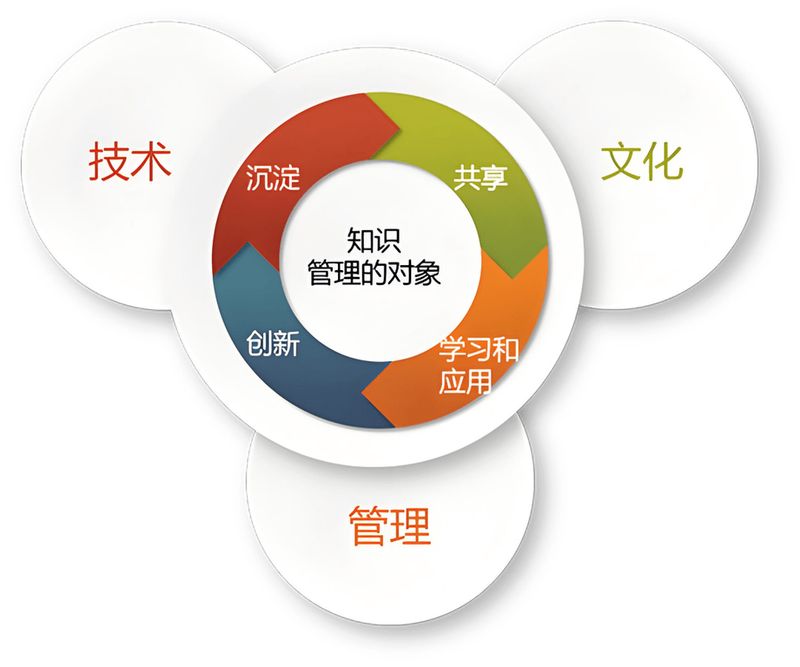
The building of knowledge systems is a sandstorming process, with individual knowledge points, simple knowledge systems and specific methods of refining, linking, extending, testing and synthesizing knowledge, thus bringing the knowledge points closer together and developing the institutional framework。
Refinement: based on the knowledge framework, knowledge points are collated and screened to remove useless, disruptive content, to clarify the logical relationship between the knowledge points and to modularize them into a piece of “knowledge building blocks”。
Ii. Linkages: structural and systemic thinking about knowledge, building linkages between knowledge building blocks and creating an initial knowledge network。
Iii. Extension: an extensive reflection of key knowledge points in the knowledge modules to examine whether they can be expanded beyond the target knowledge areas, thereby testing what they can relate to and what they cannot relate to, thus identifying and defining the boundaries and conditions of the knowledge points and making the knowledge system evolve。
Iv. Test: test their knowledge and understanding through external sharing。
5. Convergence: is the process of integrating all knowledge related to the target area “from point to line, from line to face, from face to body”. Discrepancies of knowledge are then grouped under different knowledge “lines”; then knowledge lines are grouped under different knowledge “faces”; and finally, knowledge layers are grouped under one unified body of knowledge。
Knowledge of a time-sensitive and high-quality nature is continuously being absorbed through professional dissertation journals, professional media coverage and excellent self-media opinion reviews. So you need to do the following five things:
As a first step, there is a need to abandon the reading habits of “undesired use of mobile phones”。
Step two, "sweep the title" reading, quickly finding useful articles。
The third step is to summarize and output the information。
The fourth step, reading with a “chosen content”。
Step five, weekends, elaborate reading of some deep text。
At the end:
There's a lot of ways to internalize before it's yours
The article is a continuation of the previous issue of “how to build a knowledge system”, which you can read together and which is better understood。