Since march, the domestic market for raw pigs has continued to deteriorate: on the one hand, the price of raw pigs has fallen to a historical low of 2018 after a double squeeze between oversupply and weak demand, falling at the $11/kg threshold; and, on the other hand, the cost of corporate feed has risen steadily, driven by soybean and maize prices, and the entire industry has been in deep loss。
In the face of a persistent downturn, the policy end has begun to release the “top-down” signal, from a downward adjustment of the sow column to control targets, from a request for a header to reduce the annual outlet, to a tightening of financial support for farm expansion, to the promotion of precision insurance coverage for pigs, and the construction of a comprehensive policy bottom-up system。
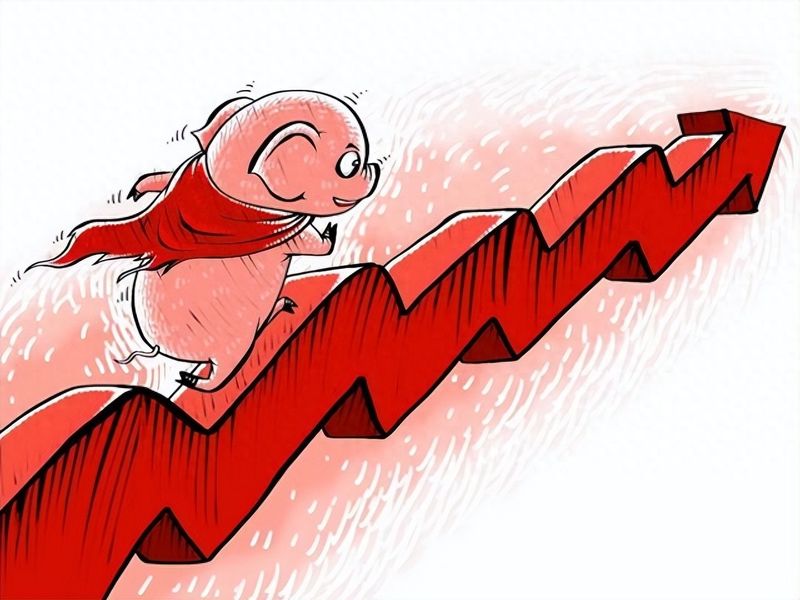
The price of pigs continues to fall, and the industry is in total loss. Loss
The data show that, as of 19 march, the price of three extra-national pigs had fallen to $10. 26 per kg, a decline that had reached a peak of nearly 23 per cent in the year, exceeding 30 per cent in the same year. This price level not only pierced the industry's cost line, but also approached historical lows in 2018。
Looking back at historical trends, the lowest pig price in nearly a decade was 9. 92 yuan/kg in the second quarter of 2018, and the current price is only 0. 3 yuan/kg short of the lowest point in history, and the industry's “psychological defence” is undergoing a huge test。
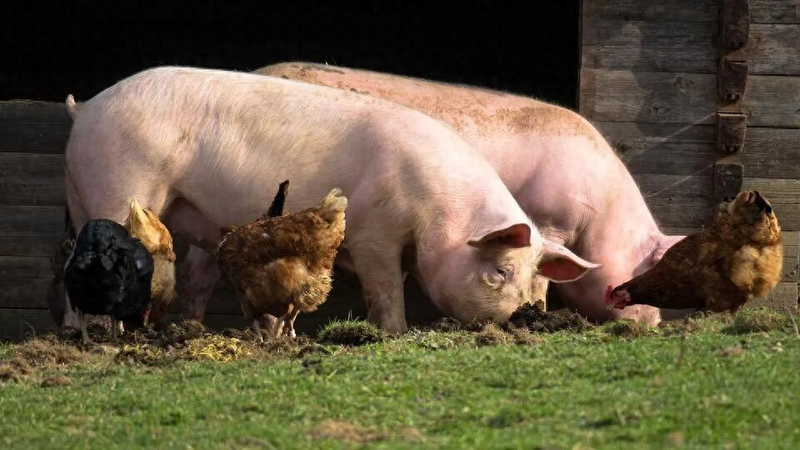
“the pig farming industry as a whole is in a state of loss.” jody, a widely distributed futures pig worker, described the industry as having lost since the end of september 2025 and as having had a short profit in january 2026, but the spot price had accelerated after spring break and the industry as a whole had entered the cash-flow loss phase。
The pig market is equally chilly. Monitoring data issued by the ministry of agriculture and rural development on 18 march show that the prices of pigs fell in 25 provinces throughout the country during the second week of march, with average prices falling by 2 per cent compared to the previous week, or 27. 1 per cent。
The futures market also reflected the pessimistic expectations of the market: the bulk of the 2605 contract had fallen in four consecutive trading days, with the bulk of the 2605 contract closing price of $10335 per ton as at 19 march, down 7 per cent from 13 march and the bottom 10250 per ton since the contract was launched。
In sharp contrast to the continuing bottom-scan prices, the cost of feed is still rising. According to statistics, the price of the soybeans increased cumulatively by 11 per cent during the year and maize by 8 per cent during the last six months. Judy states that prices of soybeans and maize have been increasing in recent times, rising steadily over the last two months, further pushing up farm costs and resulting in a continued deterioration of farm profits。
Piggy's "%" increase and down
The persistent low price of pigs is directly reflected in the sales data of listed pigs。
According to statistics, the january-february sales bulletins disclosed by 19 listed pigs showed that there were 3,043,000 pigs accumulated during the period, an increase of 9. 9 per cent over the same period. However, corporate sales revenues have generally declined。
In january and february, respectively, revenues from sales decreased by 11. 93 per cent and 23. 98 per cent, mainly as a result of the fall in average prices for the sale of commercial pigs. Winning's share in february earned $3. 956 billion, a decrease of 15. 58 per cent and 15. 79 per cent, respectively, in comparison to the ring, with the lowest income level since the same period in 2025. New hope for a 7. 42 per cent decrease in sales revenue in february. From january to february, tang god sold 87. 46 million pigs, an increase of 1. 99 per cent over the same period, but sales revenues decreased by 22. 74 per cent over the same period。
Faced with the cold winters of the industry, the “winter-for-winter” bottom card was displayed in the front of the head。
In a recent exchange with institutional investors, wind's shares said: “the company has evolved over more than four decades and has accumulated experience with multiple full cycles and is ready for the idea of persistent low prices for pigs. At the same time, the company's current costs for pig and chicken farming are at the bottom of the cycle in the industry's first tier.” the company disclosed that its debt ratio had dropped to about 50 per cent by the end of 2025 and was scheduled to fall further to 48 per cent by 2026. More importantly, corporate chicken farming can contribute to a more stable cash flow by maintaining reasonable profitability。
The attitude of the maharahara shares is “no cyclicality, no price guess, no cost and no management cycling”. The company revealed that cash reserves were currently sufficient and tens of billions of yuan of letters of credit had not been used and that funds were safer. The future company's profitability lies in the continued increase in profitability within the existing farming scale, as well as the expansion of slaughtering operations and the creation of profitability。
It's a policy to release a tote signal
At a time of deep losses in the industry, the policy end began to release strong “trace” signals。
At the beginning of march this year, the ministry of agriculture and rural affairs, in conjunction with the national commission for development and reform, convened a special meeting of seven large pig-farming enterprises, which proposed that the production capacity control of pigs would be further enhanced, that it would be able to regulate the load of pigs, or that it would be revised downward to about 36. 5 million, and that it would establish a filing system to further pressure the management of the production capacity of enterprises. At the same time, the use of financial resources has been tightened and there is a clear principle of not supporting the expansion of production in pig farms, with a view to improving efficiency. In addition, insurance has been further optimized in the near future to promote accurate insurance coverage in the field of boar insurance。
On 19 march, the relevant departments met again to ask enterprises to set targets for their reduction commitments and to reduce the annual volume of entries based on the completion of the reduction of the energy-intensive sows。
Looking back at the history of policy regulation, on 1 march 2024, the ministry of agriculture and rural affairs published the programme for the implementation of the regulatory plan for the production of pigs (revised in 2024), which brought the target for normal stock keeping of capable pigs nationwide down from 41 million to 39 million. By the end of 2025, there were 3,961 such cases。
Based on the cyclical pattern of the “capable pig column affecting the production of pigs about 10 months later” and taking into account current efficiency factors, it is assumed that the third quarter of 2026 is expected to witness a rounding of pig prices, with the average price of pigs projected at approximately $13/kg for the whole year of 2026, approximately $12/kg for the first half of the year and a rebound to $14/kg for the second half of the year。
However, public pigs are generally cautious about cyclical reverses. The head of one of the country's pig companies told the shanghai securities journalist that the business was moving at a slower rate than expected, and that the company's profit space would be further compressed with higher feed costs and higher farm costs。
“the market has optimistic expectations, but the reverse signals are not clear and can only be seen while walking.” according to the head of the pig business, “the real reverse is the substantive production capacity, and the industry is still in the cyclical bottom grinding phase”