I'm a reporter
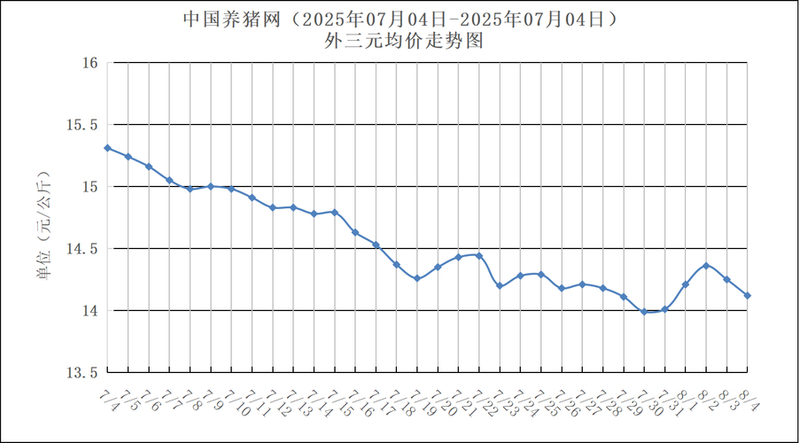
On 20 march, monitoring data from the chinese pig web show that the average price of three foreign dollars for raw pigs was 10. 24 yuan/kg, a decline of 18. 6 per cent in the ring ratio, a decline of 30. 53 per cent over the same period, and an increase in supply and demand patterns in the second half of the year as production capacity de-mandates。
“the current low prices of raw pigs are largely influenced by the double impact of cyclical energy releases on the imbalance between supply and demand. On the supply side, based on a 10-month production conductive cycle, the high level of availability in the second quarter of 2025 provided the basis for a high level of operation for the current production of pigs; in addition to the accelerated expansion of deregulation, which had been facilitated by the continued profitability of the industry, the increase in the size of farming had slowed the process of dedevelopment of production capacity and allowed the high level of supply to continue.” shanghai steel university's pig analysts told the daily issuer of the securities journal that, as a whole, supply-side rigid growth and the pace of exits have accelerated, with a combination of demand-side seasonal weakness, contributing to oversupply in the raw pig market and to low prices。
It is argued that the long-term elasticity of the boar market depends on the ultimate extent of the evaporation of production capacity, a process that depends on policy direction and market availability. The focus of current observations should be on returning to market-de-capacity progress, i. E., to pay close attention to the effects of loss depth and duration on the actual reduction of capacity. In the short term, spot price containment is evident due to the combination of three-fold factors that are influenced by post-secticular passive accumulations, high feed costs and low consumption seasons。
Teng yu jian explained that, in a situation where the market for raw pigs was generally abundant and the price of pork continued to decline, the consumer was expected to be vulnerable, there was a general loss in the slaughter of raw pigs and a low overall willingness to build a business bank. As of the twelfth week of 2026, the capacity of the slaughtering enterprise's frozen stock had increased by 1. 70 percentage points over the same period last year. This is due mainly to the current low consumption season, slow movement of white bars, a continuing decline in fresh sales, inadequate terminal capacity and the forced passivity of some products into banks, which pushes up stocks of frozen goods. Despite the increase in the stock ratio, the current stock build-up remains reactive and enterprises are less willing to build active banks。
The continuing decline in the price of raw pigs has given renewed attention to listed companies with farming operations。
Wynner foods group inc. (hereinafter “win’s shares”) records of investor relations activities show that investors are concerned that the prices of raw pigs have fallen significantly and how companies have responded. In response, wind's shares were described as ready for thought, and the company's current cost of pig and chicken farming is at the level of the first ladder in the industry, which is the bottom line of the company's life cycle. In addition, companies consistently adhere to the business principles of “sustainability, risk control” and integrated fund management. At present, companies are well-funded and have lower debt ratios in industry. By the end of 2025, the corporate debt ratio had fallen to around 50 per cent. In 2026, the company plans to further reduce the debt ratio to around 48 per cent, continuously improving financial security and risk resilience. Finally, the company's pig and chicken industries operate better against price volatility risks in a single business. At present, the price of pigs is low, but corporate chicken farming is reasonably profitable and can contribute to a more stable cash flow。
The shanghai steel union's pig analyst, yang zhi, told the daily issuer of the securities journal that pig farming enterprises needed to do their downfalls, wind control and upgrades in an effort to control their own subsistence costs; that, in addition, the wind chain needed to regulate production capacity on a regular basis, line up in a timely manner, secure biosafety lines and reserve sufficient cash flows; and that the upgrade would require a full industrial chain to drive digitalization and green farming and obtain a premium through the creation of special pork products。
(editor chaugawa)