The account processing of annual company meals will take place in two steps and will require attention to tax compliance. As follows:
Step 1: payment of time-consuming accounts
When the company pays for its annual meal, it shall reflect the non-monetary benefits provided by the enterprise to its employees through the accounting of the subject “staff pay payable - employees benefits”. The accounting entry is:
Loan: payable to employees — employee benefits
Loans: bank deposits
This step recognizes the benefit expenses of the enterprise to its employees and records the outflow of funds。
Step 2: cost-sharing to sectors
The cost of meals is to be apportioned among the corresponding cost categories according to the actual user departments. For example, the costs incurred by management for meals are charged to “management costs”, sales to “sales costs” and production to “manufacturing costs” etc. Recorded as:
Lending: administrative/sales/manufacturing costs, etc
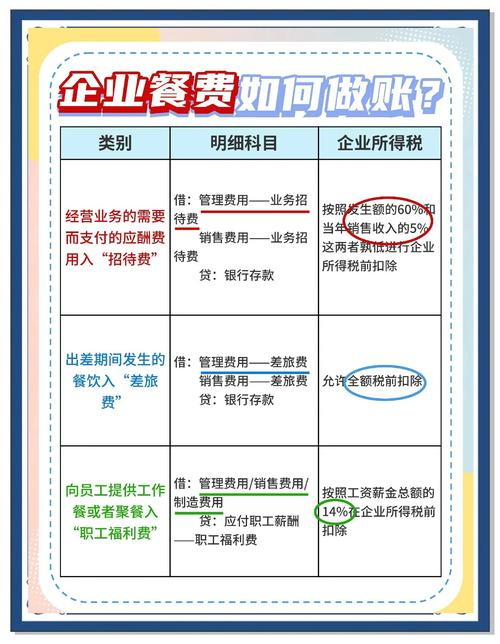
Loan: payable to employees — employee benefits
This step links welfare expenditure to specific operations and is in line with the accrual principle。
Tax treatment needs focus
Under the personal income tax act, benefits (including in cash or in kind) granted by an enterprise to employees are, in principle, subject to the payment of individual taxes on wages. However, in principle, individual income tax is not levied if the benefit has a collective, indivisible and non-quantifiable character (e. G. Annual group meal). Thus, the company's annual meal fee, if it meets the above conditions, is exempt from a surcharge tax and, in the case of a separate payment in the form of a red bag, gift card, etc., is added to the payroll tax。
Attention
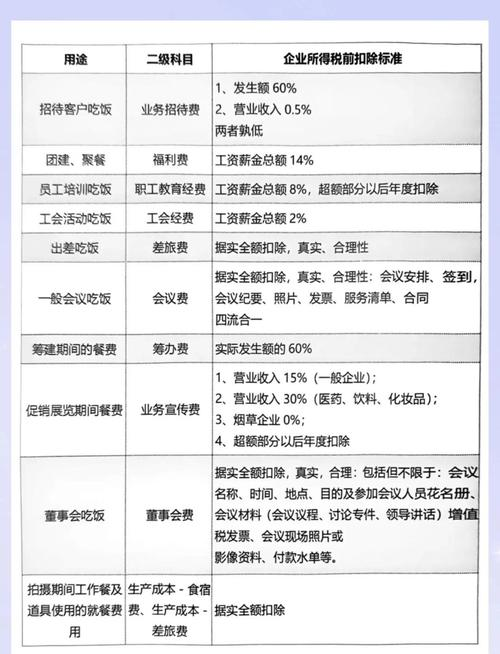
Complete supporting documentation, including invoices, payment records and schedules of contributions, is required for the processing of accounts. Tax compliance needs to be explained in conjunction with local tax authorities, and prior consultation is recommended for confirmation. Where the cost of meals involves an external customer or non-employee, it should be accounted for in “business hospitality” and accounted for separately, with tax treatment different from employee benefits。
By regulating account processing and tax compliance, financial risks can be effectively avoided and the accuracy of an enterprise's tax declaration ensured。