Everyone has heard the old saying, “golden twos, once the cannon goes off” since childhood, and it seems to be widely recognized that the middle east region, in the event of a turmoil, is likely to push the price of gold up. Just last week, a number of people closely followed the news of the israeli air strike on iran, and then came in with determination to copy it, but the end result was that they were actually hit in the face by the market。
The war in the middle east region has been raging, with iran claiming to hunt down us-israeli officials, and the houthi armed forces raging in the red sea. At a time when geohazard risks are rising sharply, cash gold has experienced a dramatic fall of 42 years, with a drop of more than 10 per cent in just one week, breaking the critical price of $4350, which has led to the stow-in-the-walling of the loosers who enter the “shelter” name. What the hell happened? Is the risk avoidance properties of gold no longer working
This decline was far greater than expected: since march 14, when the historic height of us$ 5040 per ounce was touched, cash gold had shown a very rare pattern of eight successive vaginal lines, and by march 23 its price had fallen to us$ 4337. 97 per ounce, falling by more than 10 per cent in one week, leading to the largest single week of decline since 1983, with silver falling by more than 15 per cent in the same period, leaving the entire precious metal plate in the wave of sales。
The dramatic fall in this round has led to a very passive situation for the dispersed families who were emboldened by the idea that “the situation in the middle east would inevitably rise”. Numerous investors have suffered setbacks: some have entered the market at a price of $4,800 for gold, but the losses have increased, while others have chosen to add gold to the etf, which eventually faces a deficit of more than 10 per cent and can only wait passively。
Statistics from wind show that within a week alone, the size of seven gold etfs in the country has been reduced by more than 24 billion yuan, and that a large fraction of the capital invested by the diaspora has become the backbone of agency deliveries。
Many people's perception of gold is still confined to the old saying of “discretionary gold”, while ignoring that the core pricing logic of gold is not risk avoidance, but real interest rates. As an asset with no interest, the opportunity cost of holding gold is the risk-free interest that can be earned by depositing the money in a bank or buying the national debt, so the price of the gold has always been negatively correlated with the real interest rate: the higher the interest rate, the higher the cost of holding the gold, the greater the pressure on the price。
This chaotic situation in the middle east coincides with the opposite of this core logic. The conflict has just begun, not as a fear of risk, but as an inflationary panic。
As the middle east is a key global producer of crude oil, the escalation of the conflict has directly pushed up oil prices, thus setting back the market’s inflation expectations: the us producer price index rose to 3. 4 per cent in february, significantly exceeding expectations, and the core personal consumption expenditure deflation index reached 2. 7 per cent, further away from the fed’s 2 per cent target。
The initial reaction of the market was not to avoid risk by buying gold, but rather to the perception that “inflation has rebounded and the fed is bound to be afraid to implement interest-rate reductions or even the possibility of an increase”。
For the second time in a row, as expected, the fed stopped the interest rate reduction operation and raised inflation expectations. The market had expected multiple interest rate reductions during the year, but now, according to data from chia-business, the probability of annual interest rate reductions was less than 10 per cent, with the first rate reductions delayed from june to september。
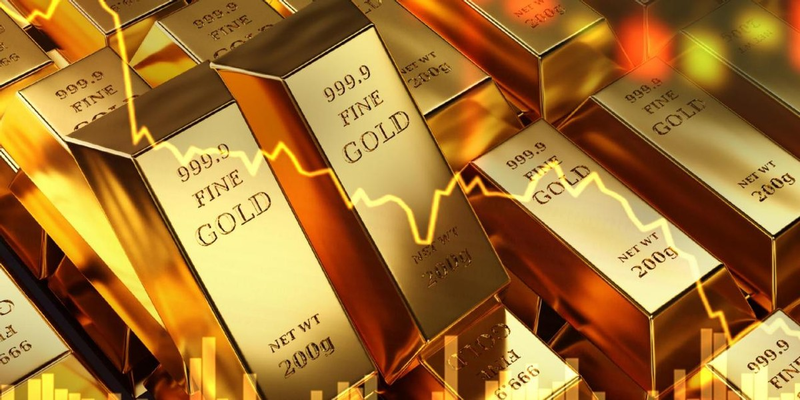
Once expectations change, the rate of return on united states dollars and united states debt rises rapidly: the rate of return on united states debt has risen to over 4. 25 per cent over the 10-year period, and the dollar index is firmly above the 100-point mark. The purchase of united states debt receives more than 4 per cent of risk-free interest per year, while the purchase of gold is not only free of interest but also involves the payment of custodial costs, with funds naturally choosing。
The venture capital did not go to gold, but to the dollar, the dollar debt, the crude oil market, and the logic of the gold's risk avoidance, which was directly masked by the profits of high interest rates. Kassem analysts concluded that the main course of trade in the current market has shifted from short-term exposure to short-term risk-outs to the macro-logic logic of inflation that drives central banks to tighten, which is also the key reason for this abnormal drop in gold prices。
In addition to the negative effects of monetary policy, this decline is a key reason, namely, that the risks in the middle east have long been pre-empted by the market。
Financial markets have always been expected rather than what actually happened. As soon as the conflict began in late january, speculative funds began to pre-empt, with gold prices climbing from $4,000 to $5040, an increase of $1,000 that pre-positioned all possible extreme risks。
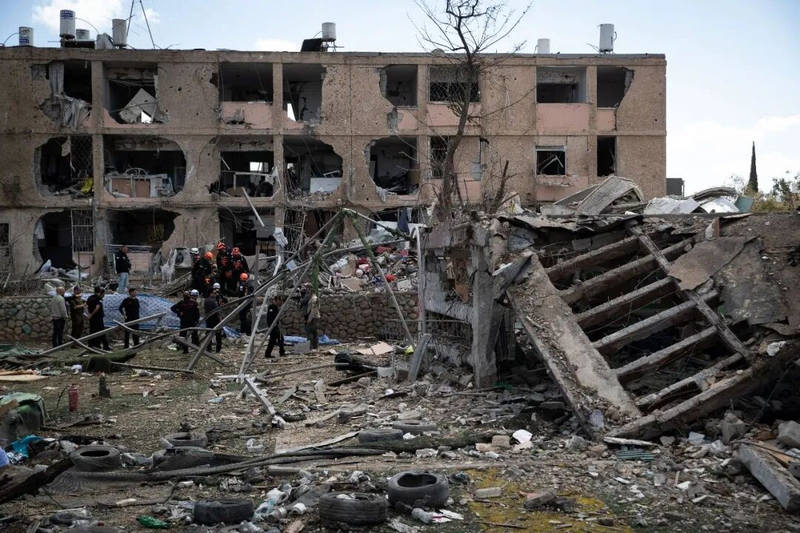
When the conflict actually escalates, the market unexpectedly realizes that none of the worst situations that have previously been the subject of widespread speculation have really happened. Prior to that, the funds that had been hidden had immediately begun to deliver, and the shift from the old silo to the sale board had led to a pedestal that had led to a collapse of markets. Those who were slow to react were rushing into the market to pick up the wheel after seeing the news of the conflict, and they happened to take over the board from the agency。
More particularly, during this double-bonding process, gold was temporarily used as a “discount machine” at some stage. This is reflected in the fact that investors often choose to supplement the bond by selling the best liquid gold in their possession when the stock and bond markets both fall sharply and panic is rising rapidly. Moreover, the greater the panic, the greater the tendency of investors to sell gold for cash, which led to the appearance of a “controversial fall” that was not normal。
Many people are panicking: does the fall in gold prices mean that the cattle market has ended? This is not the case, and most institutions hold the view that the sharp decline in gold prices is merely a deep reversal in the process of rising, and that none of the core logic underlying the price of gold in the long run has been broken: geopolitical risks have tended to normalize, central banks have a demand for money, and the long-term trend of the fed to maintain high interest rates remains unsustainable。
Many agencies from wall street still maintain long-term prognosis and feel that there is room for a recovery in gold prices after short-term shocks recede。
But this in no way shows that the bottom-up can be done without thinking. From a short-term perspective, the downward trend is not over, and the falcon signals released by the federal reserve, the strong us dollar, continue to have an impact, and the price of gold has, technically, fallen to a critical supporting position。
At this point in time, blind access to markets is easy to buy, like those in the diaspora, as prices fall, leading to deeper exposure. It would be really prudent to wait for the price of gold to shock and build the base of an inter-zone of $4400 to $4,600 before gradually phasing out the medium- and long-term holdout。
When this sentiment is overstretched in advance, there are no many cases in which investment is taken for granted, and it is not possible to enter the market blindly on the basis of an old saying alone. The risk avoidance act that you consider may be simply a pre-emptive act for others。
# i'm going to the best-chosen-people writing contest #