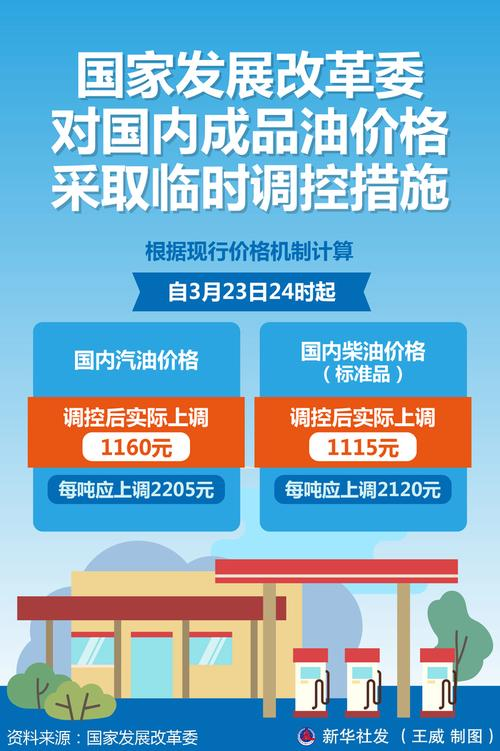
On the afternoon of 23 march, the national development reform commission issued a message on interim measures to regulate the price of domestic finished oil, based on maintaining the current framework of price mechanisms. According to the current price mechanism, the domestic price of gas and diesel fuel (standards) should be increased by $2205 and $2120 per ton, respectively, starting at 2400 hours on 23 march, and then actually adjusted by $1160 and $1115。
After the decomposition of the price increase, the price of domestic gas and diesel fuel (standards) was increased by about $0. 87 per litre, or 0. 95 per litre, or 0. 85 per litre less than the price of non-regulation。
Oil prices are rising and falling, and they are moving. A lot of people are concerned about how our domestic price of finished oil has been adjusted. There are two areas of focus。
First, it is linked to international oil prices。
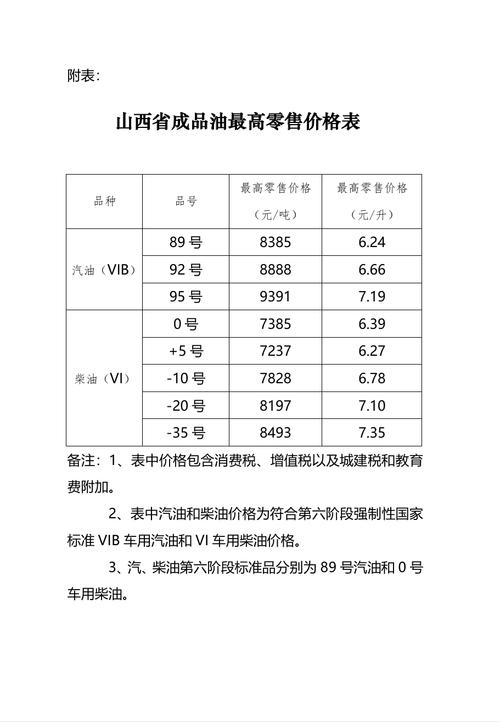
The domestic oil price mechanism for finished products provides that the maximum retail prices for gas and diesel are adjusted every 10 working days on the basis of the international market price of crude oil。
It should be noted here that domestic and diesel prices are tied to the average price of a basket of international crude oil, and price adjustments are influenced by a variety of rather than an international crude oil price. The magnitude of the adjustment is not simply determined by changes in international crude oil prices at individual points or in a few days, but by a comparison between the average international crude oil basket of 10 working days before the adjustment and the average price of 10 working days before the last adjustment。
Second, implement inter-zonal regulation。
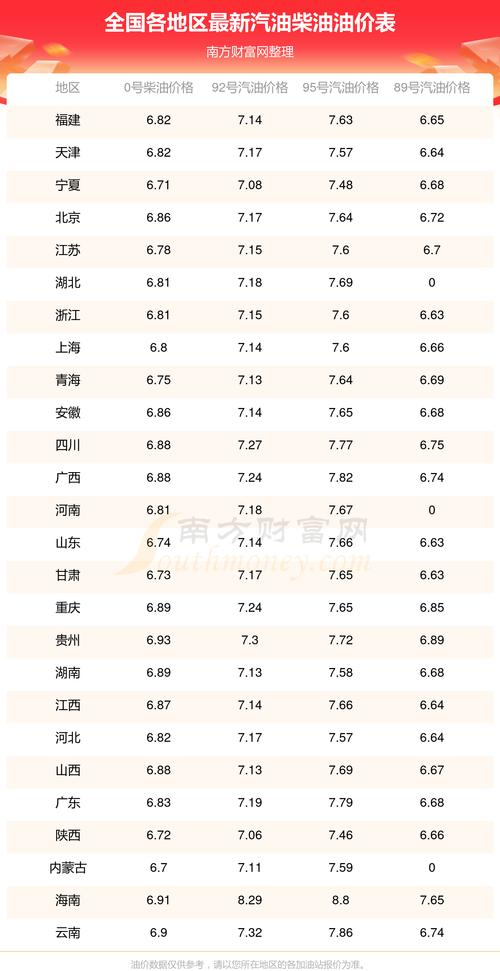
When the price of the international crude oil basket is higher than $130 per barrel for the 10 working days prior to the adjustment (i. E., generally known as the “ceiling price”, the corresponding domestic average retail price for gasoline 92 is approximately slightly above $10 per litre) or less than $40 (i. E., commonly known as the “floor price”) the state will adopt price regulation measures。
Inter-zone regulation is detailed in articles vi and vii of the oil price management scheme。
Article vi makes it clear that when international oil prices are lower than $40 per barrel, the price of domestic finished oil is not reduced; when it is higher than $130, it is not adjusted or reduced in principle。
Article vii also states that the price of finished oil can be regulated in exceptional circumstances, such as exceptional fluctuations in oil prices on international markets。
These provisions, which take into account the interests of consumers and producers, would avoid a significant rise and fall in the price of domestic finished oils as a result of the large drop in crude oil prices on the international market。
Earlier, in 2022, when international oil prices had risen significantly as a result of the russian-ukrainian conflict, the national commission for development reform had made it clear that, after international oil prices had exceeded the regulatory ceiling of $130 per barrel, domestic prices of finished oil had not increased for a short period (not to exceed two months) and that there was a phased subsidy for oil refineries。
The experts considered that the temporary regulation of domestic oil prices for finished products had helped to mitigate the impact of the rapid increase in international oil prices, ease the burden on downstream users and guarantee a smooth economy and social livelihoods。